Subtotal $0.00


Medova is a convenience services to the adaptability, Spacious modern villa living room with centrally placed swimming pool blending indooroutdoor
Medova is a convenience services to the adaptability, Spacious modern villa living room with centrally placed swimming pool blending indooroutdoor
SUMMARIZE THIS POST WITH
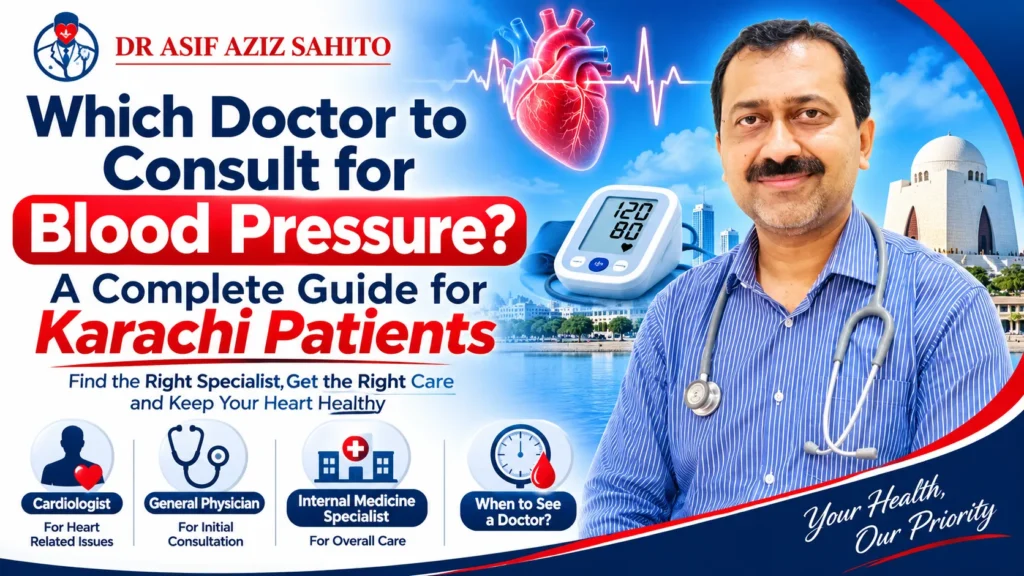
Are you worried about your blood pressure? Are your readings often too high or too low? You may wonder which doctor to consult for blood pressure and when you need medical help.
The answer is simple. An internal medicine doctor, also called a consultant physician, is often the right doctor to visit first for blood pressure problems. These doctors diagnose and manage high blood pressure, low blood pressure, and related health conditions.
Some patients may need a cardiologist, kidney specialist, or another expert. Your symptoms and medical history help determine the right choice.
If you live in Karachi, finding a qualified doctor is an important step toward better health. This guide explains which specialist to see, when to seek help, and what to expect during treatment.
Medical Disclaimer: This article provides general health information. It is not a substitute for a medical diagnosis or personal treatment advice. Seek emergency care for severe or life-threatening symptoms.
High or low BP readings can affect your health. Get expert medical guidance and take the first step toward better blood pressure management.
For most adults, an internal medicine doctor or general physician is a good starting point for blood pressure care.
These doctors check your blood pressure, review your symptoms, and look for possible causes. They can also prescribe medication when needed and monitor your health over time. Your doctor may refer you to another specialist if your condition is complex.
An internal medicine doctor treats health problems that affect adults. This includes hypertension, diabetes, heart disease risk factors, and other long-term conditions. You should consider visiting one if your blood pressure stays high, changes often, or causes symptoms.
An internal medicine doctor for high blood pressure can also help if you have more than one health condition. For example, a person with both diabetes and hypertension needs a treatment plan that considers blood sugar, kidney health, and blood pressure together.
A cardiologist focuses on heart and blood vessel conditions. You may need a cardiologist if your doctor suspects a heart problem or if you have a known heart condition that needs specialist care.
A referral may also help when blood pressure remains difficult to control despite appropriate treatment. However, you do not need to visit a cardiologist for every high blood pressure reading.
The right doctor depends on your symptoms, medical history, and test results.
Doctor or Specialist | Main Role | When to Consult |
General Physician | Initial assessment and routine care | First-time BP concerns or regular checkups |
Internal Medicine Doctor | Diagnosis and long-term BP management | Persistent high or low BP, diabetes, or multiple health conditions |
Cardiologist | Heart and blood vessel care | Suspected or existing heart disease |
Nephrologist | Kidney disease and BP management | Kidney problems or difficult-to-control hypertension |
Endocrinologist | Hormone-related conditions | Suspected hormonal causes of abnormal BP |
Obstetrician | Pregnancy-related care | High blood pressure during pregnancy |
Key takeaway: Most adults can begin with a general physician or internal medicine doctor. Specialist care is needed when a specific medical condition requires further assessment.
High blood pressure, also called hypertension, occurs when the pressure of blood against artery walls remains too high. Blood pressure has two numbers. The top number is systolic pressure. It measures the pressure when your heart beats.
The bottom number is diastolic pressure. It measures the pressure when your heart relaxes between beats. For example, a reading of 120/80 mmHg means your systolic pressure is 120, and your diastolic pressure is 80.
The World Health Organization commonly defines hypertension as readings of 140/90 mmHg or higher, confirmed through measurements on different days.
Some guidelines, including American guidelines, use lower thresholds to identify hypertension. Your doctor will consider the guideline, your overall health, and your cardiovascular risk. A single high reading does not always mean you have hypertension.
High blood pressure often develops without clear symptoms. Over time, uncontrolled hypertension can damage blood vessels and important organs. It increases the risk of heart disease, stroke, kidney disease, and other serious health problems.
That is why regular BP checks matter, even when you feel healthy. Early diagnosis allows your doctor to create a suitable treatment plan and reduce your future health risks.
You should arrange a medical consultation if your readings remain above the recommended range. For example, repeated clinic readings of 140/90 mmHg or higher need medical assessment. Lower readings may also need attention if you have diabetes, kidney disease, or a high risk of heart disease. Do not wait for symptoms before seeking advice.
Most people with hypertension have no symptoms. However, very high blood pressure may sometimes cause concerning symptoms. Seek urgent medical help if you experience:
Important: A reading above 180 systolic or 120 diastolic with symptoms of possible organ damage is a medical emergency. Go to the nearest emergency department immediately.
If your reading is extremely high but you feel well, repeat it after at least one minute of quiet rest and contact a healthcare professional promptly if it remains very high. Do not try to lower severe blood pressure rapidly using extra medication unless a doctor instructs you to do so.
If you are searching for which doctor to consult for low blood pressure, a general physician or internal medicine doctor is a suitable first choice.
Low blood pressure is called hypotension. It is commonly defined as a reading below 90/60 mmHg. Some people naturally have low blood pressure and feel well. Others develop symptoms that need medical attention.
Low blood pressure may cause dizziness, blurred vision, weakness, nausea, or fainting. Symptoms may appear when you stand up after sitting or lying down. This is sometimes called postural or orthostatic hypotension.
Possible causes include dehydration, medication effects, blood loss, and certain medical conditions. Your doctor may check your BP while sitting and standing. They may also review your medications and medical history.
Treatment depends on the cause. It may involve adjusting prescribed medicine, treating dehydration, or managing another health condition. Never stop blood pressure medication without medical advice. If low blood pressure causes fainting, severe confusion, chest pain, or signs of shock, seek emergency care.
A proper diagnosis involves more than one BP reading. Your doctor will ask about your symptoms, family history, lifestyle, and current medications. They will also check for conditions that may affect blood pressure.
Your doctor may suggest several tests based on your condition.
Repeated readings help confirm whether your blood pressure is consistently high or low.
You may be asked to record readings at home over several days.
A portable device measures your blood pressure throughout the day and night.
Tests may assess kidney function, blood sugar, electrolytes, and other health markers.
These can help detect signs of kidney damage.
An ECG records the electrical activity of your heart. It may help identify certain heart problems. Not every patient needs every test. Your doctor will select tests that match your health needs.
Many factors can increase the risk of hypertension. Age, family history, diet, physical activity, and existing medical conditions may all play a role. Common risk factors include high salt intake, excess body weight, smoking, limited physical activity, diabetes, and kidney disease.
Some people develop high blood pressure because of another medical condition. Doctors call this secondary hypertension. For example, kidney disease and certain hormonal disorders can increase blood pressure. Finding the possible cause helps your doctor choose the right treatment.
Stress can raise blood pressure for a short time. However, a high reading during a stressful day does not always mean you have long-term hypertension.
If your readings remain high, medical assessment is important. Stress management can support heart health, but it does not replace prescribed treatment.
Treatment depends on your BP readings, age, medical history, and risk of complications. Some people improve their blood pressure through lifestyle changes. Others need prescription medication as well.
Your doctor may recommend medicines such as ACE inhibitors, angiotensin receptor blockers, calcium channel blockers, or certain diuretics. The choice depends on your health, other medications, and possible side effects.
Yes. Healthy daily habits can help lower blood pressure and support medical treatment. Useful steps include:
In Karachi, common foods such as salty snacks, pickles, fast food, and heavily salted meals can make it harder to manage sodium intake. You do not need to give up every traditional meal. Small changes in portions, cooking methods, and salt use can make a difference.
Home monitoring helps your doctor understand how your blood pressure changes outside the clinic. It is especially useful when your BP readings differ between home and medical visits. Follow these steps for more reliable results.
Your doctor may ask you to check BP in the morning and evening for several days. Do not make medication changes based on a single home reading.
Searching for the best doctor for blood pressure in Karachi can bring up many clinics and specialists. Rather than relying only on online rankings, focus on the doctor’s qualifications, clinical experience, and ability to manage your condition.
A suitable doctor should explain your diagnosis clearly and involve you in treatment decisions. Good blood pressure care also includes follow-up visits, medication reviews, and guidance on healthy habits.
Consider whether the doctor has relevant medical training and experience in managing hypertension. Look for a registered medical practitioner and verify their professional credentials through the Pakistan Medical and Dental Council (PMDC).
You should also consider clinic location, appointment access, and whether the doctor manages related conditions such as diabetes or kidney disease. For many patients, long-term follow-up is more useful than a single consultation.
Karachi has general physicians, internal medicine consultants, cardiologists, and other specialists working across hospitals and clinics. If you are searching for a BP specialist doctor near me or doctors that specialize in high blood pressure near me, begin by identifying the type of medical care you need.
Patients with routine hypertension can often start with an internal medicine consultant. Those with suspected heart or kidney complications may need additional specialist care.
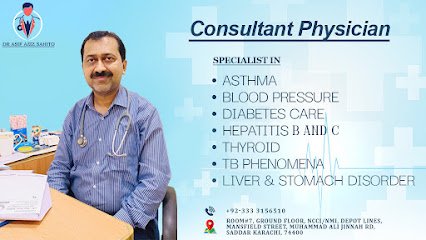
Dr. Asif Aziz Sahito is a Consultant Physician in Karachi. His official website describes experience in managing hypertension, diabetes, thyroid conditions, and other general medical concerns. His website also lists blood pressure treatment among his clinical services.
For adults who need assessment or ongoing management of hypertension, a consultation with Dr. Asif Aziz Sahito is one option to consider. You can learn more through his About Us page or visit the Blood Pressure Treatment in Karachi service page.
Clinic Location: Room #7, Ground Floor, NCCI/NMI, Depot Lines, Mansfield Street, Muhammad Ali Jinnah Road, Saddar, Karachi.
Phone: 0333 3156510
Contact the clinic to confirm appointment availability before visiting.
Your first appointment usually begins with a review of your symptoms and health history. The doctor will ask about previous BP readings, medicines, family history, and lifestyle.
They may also check your weight, pulse, and blood pressure. If needed, further tests will help assess your heart, kidneys, or other possible health concerns.
Bring any previous BP records, recent laboratory reports, and a list of your medications. Also mention supplements and over-the-counter medicines.
Tell your doctor if you have diabetes, kidney disease, heart problems, or a family history of hypertension. These details can help the doctor plan your care.
An internal medicine doctor or general physician is often the best first choice for routine high blood pressure care. A cardiologist or another specialist may be needed for certain complications.
Start with a general physician or internal medicine doctor if you have no known serious heart condition. Your doctor can refer you to a cardiologist when appropriate.
A general physician or internal medicine doctor can assess low blood pressure. Treatment depends on your symptoms, medications, and the underlying cause.
Yes. A clinic reading of 140/90 mmHg meets a commonly used hypertension threshold. However, diagnosis usually requires repeated measurements or home monitoring.
Blood pressure can often be managed successfully with lifestyle changes and medication. Some patients need long-term treatment. Do not stop medicines simply because your readings improve.
Yes. A reading at this level needs prompt attention. If you also have chest pain, breathing difficulty, weakness, vision changes, or other severe symptoms, seek emergency care immediately.
Yes. Hypertension can affect younger adults. Family history, weight, lifestyle, kidney disease, and other health conditions may contribute.
The ideal schedule depends on your age, health, and risk factors. People with diagnosed hypertension may need regular home monitoring and follow-up visits as advised by their doctor.
Some people can manage their blood pressure through lifestyle changes alone. Others require medication. The decision depends on confirmed readings and overall cardiovascular risk.
Internal medicine doctors practise at hospitals and private clinics throughout Karachi. Dr. Asif Aziz Sahito is one consultant physician whose published services include blood pressure management.
Knowing which doctor to consult for blood pressure helps you take the right step toward better health. For most adults, a general physician or internal medicine doctor is a suitable starting point. These doctors can assess high or low blood pressure, recommend tests, and guide treatment.
If you have heart disease, kidney problems, or complex symptoms, your doctor may recommend a specialist. Regular monitoring, healthy habits, and timely medical advice are important for long-term blood pressure control.
If you are looking for a consultant physician in Karachi, you can consider booking an appointment with Dr. Asif Aziz Sahito to discuss your blood pressure concerns.