Subtotal $0.00


Medova is a convenience services to the adaptability, Spacious modern villa living room with centrally placed swimming pool blending indooroutdoor
Medova is a convenience services to the adaptability, Spacious modern villa living room with centrally placed swimming pool blending indooroutdoor
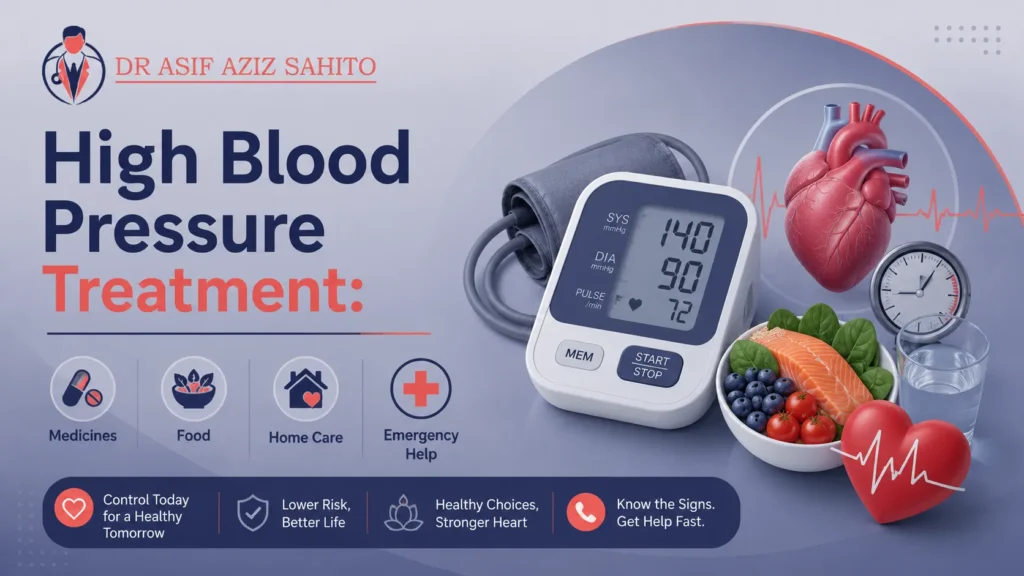
The best treatment depends on how high your blood pressure is, whether it stays elevated over time, your age, cardiovascular risk, kidney function, diabetes status, pregnancy status, and other medicines or health conditions. No single treatment is best for everyone. For many adults, treatment involves a combination of:
WHO recommends lifestyle measures for people with hypertension, while many patients also require medication to achieve adequate control.
The real goal is not to make one blood-pressure reading look normal. It is to keep blood pressure controlled over the long term and reduce the risk of complications such as stroke, heart disease, and kidney disease.
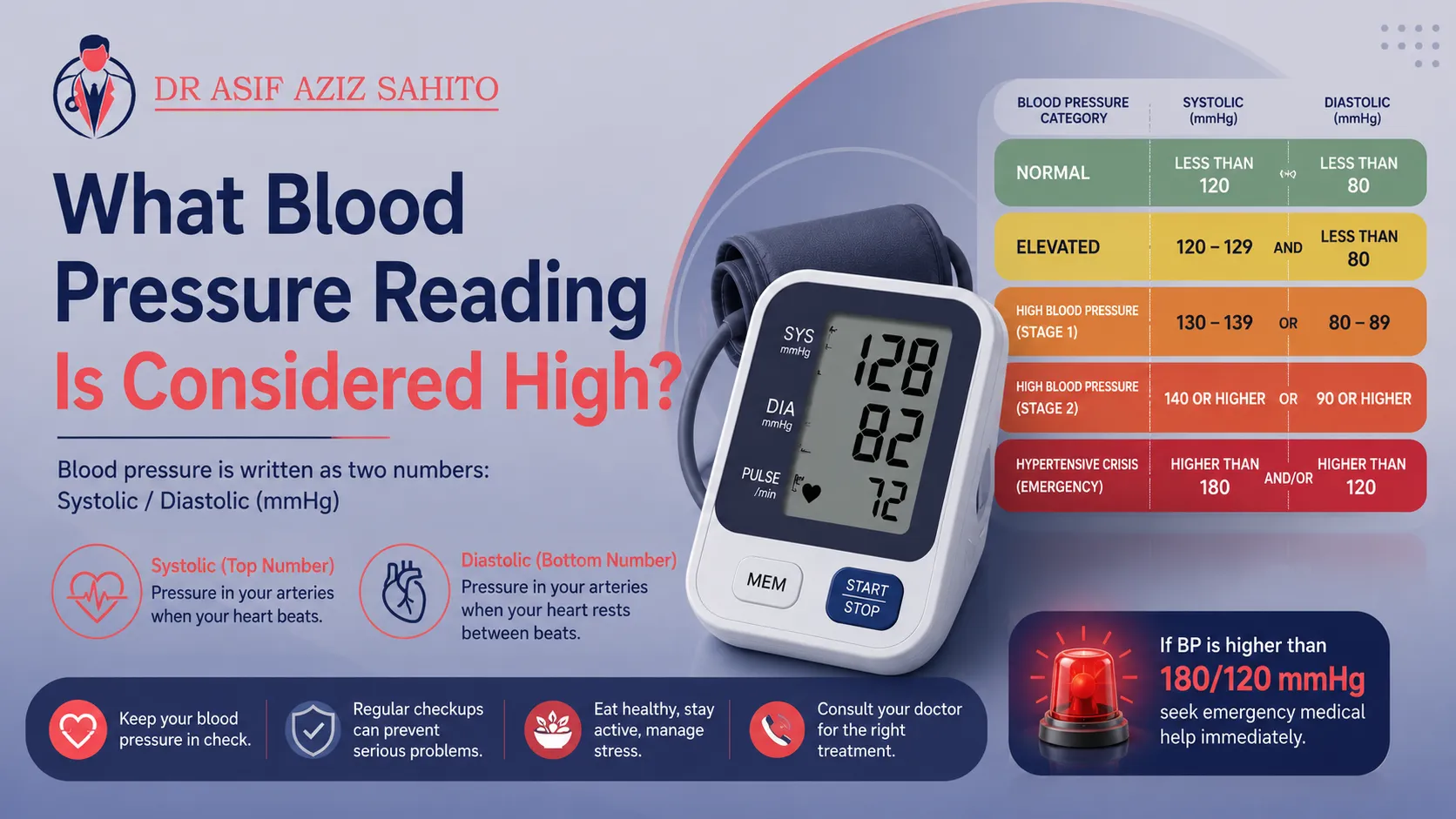
Blood pressure is written as two numbers, such as 130/80 mmHg. The first number is systolic pressure, which represents the pressure when the heart contracts. The second is diastolic pressure, representing pressure between heartbeats.
Different medical organizations use somewhat different classification systems. For example, the American Heart Association classifies 130–139 systolic or 80–89 diastolic as stage 1 hypertension, while WHO commonly defines hypertension in adults as 140/90 mmHg or higher when measured on two different days.
That difference matters: one blood-pressure table should not be treated as a universal diagnosis.
Blood pressure reading | How it is generally viewed | Practical next step |
Below 120/80 | Generally normal | Continue healthy habits |
120–129 systolic and below 80 diastolic | Elevated under AHA categories | Improve lifestyle and monitor |
130–139 systolic or 80–89 diastolic | Stage 1 hypertension under AHA categories | Discuss repeated readings and overall risk with a healthcare professional |
140/90 or higher | Hypertension under WHO’s commonly used definition | Arrange appropriate medical evaluation |
Above 180/120 | Severe elevation | Repeat the reading and assess for symptoms; seek prompt medical advice |
Above 180/120 with concerning symptoms | Possible hypertensive emergency | Seek emergency medical care immediately |
The table is a general educational comparison, not a substitute for diagnosis.
No. There is no scientifically established method that permanently cures chronic high blood pressure in three minutes. This is particularly important if you searched for “how to cure high blood pressure in 3 minutes.”
Stress, talking, recent exercise, pain, caffeine, or incorrect positioning can temporarily raise a blood-pressure reading. Sitting quietly and measuring again correctly may therefore produce a lower number. But that is not the same thing as curing hypertension.
For example, imagine someone normally has readings around 125/80 but checks their blood pressure immediately after climbing stairs and sees 155/95. That reading deserves context. Resting for a few minutes and repeating the measurement correctly can provide a more useful picture of their actual blood pressure.
On the other hand, someone whose readings repeatedly remain high at rest may need proper evaluation and treatment. A lower reading after resting is useful information, not proof that hypertension has disappeared.
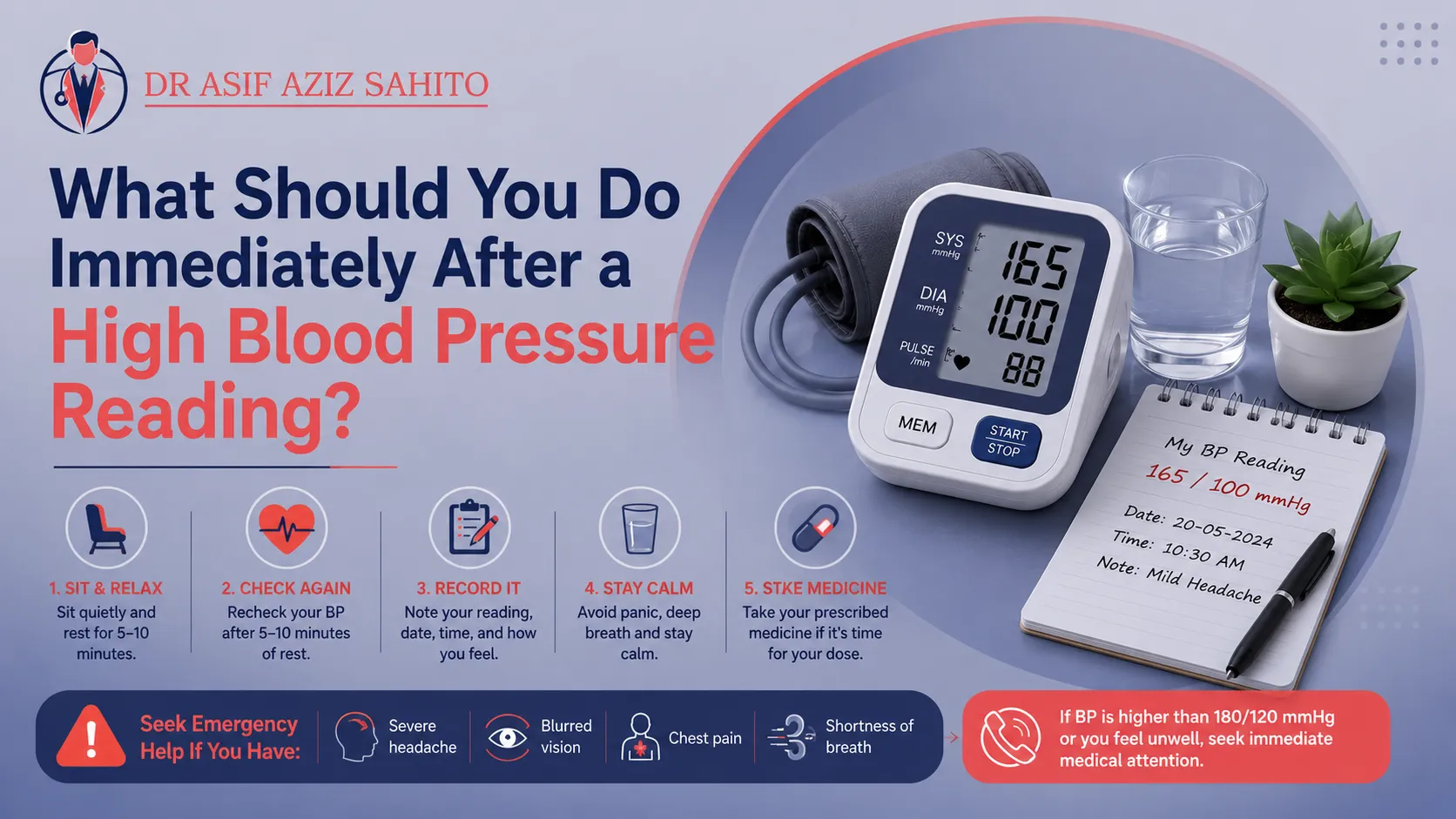
A single unexpectedly high reading is not automatically an emergency. If you feel well and the reading is higher than usual, sit quietly and repeat the measurement using proper technique. The AHA recommends repeating a very high reading rather than relying on a single measurement.
If the reading remains significantly elevated, contact your healthcare professional for guidance rather than experimenting with home remedies or taking extra medication.
If your blood pressure suddenly reads above 180/120 mmHg, wait at least one minute and measure it again. If it remains that high, the next step depends on whether you have concerning symptoms.
If you have symptoms such as chest pain, shortness of breath, back pain, weakness, numbness, vision changes, or difficulty speaking, seek emergency medical care immediately.
If the reading remains above 180/120 but you have no concerning symptoms, contact a healthcare professional promptly. Severe hypertension without symptoms is different from a hypertensive emergency and may be managed with timely outpatient medication adjustment rather than automatically requiring hospitalization.
Yes, home management is an important part of hypertension care, but it does not mean treating serious hypertension without medical supervision. If you have already been diagnosed with high blood pressure, home care can help you and your doctor understand how well your treatment is working.
The AHA recommends home monitoring for people with hypertension and advises using an automatic, upper-arm cuff-style monitor. Home monitoring should be used to supplement rather than supplant regular medical care. A useful home routine includes:
A blood-pressure diary can be more informative than a single number because it shows patterns over time.
Even a good blood-pressure monitor can give misleading results if it is used incorrectly. Spend a few minutes sitting quietly before taking a reading. Keep your back supported, place both feet flat on the floor, support your arm at approximately heart level, and avoid talking during the measurement.
Use a properly fitting upper-arm cuff and follow the manufacturer’s instructions. If a reading is unexpectedly high, repeat it rather than immediately assuming that your usual blood pressure has suddenly changed.
A validated monitor is preferable to choosing a device solely because it is inexpensive or advertised as convenient. The 2025 AHA guideline also cautions against relying on cuffless devices such as smartwatches for accurate blood-pressure measurement until their reliability improves sufficiently.
Food can make a meaningful difference to long-term blood-pressure control, but no individual food should be treated as an emergency medicine.
A heart-healthy eating pattern generally emphasizes vegetables, fruits, whole grains, beans, lentils, nuts, seeds, and other minimally processed foods while reducing excess sodium and unhealthy fats.
For adults, WHO recommends consuming less than 2,000 mg of sodium per day, equivalent to less than 5 grams of salt per day.
The advice becomes more practical when it reflects what people actually eat. In a Pakistani diet, sodium can easily add up through foods such as achar, papad, salty snacks, packaged sauces, instant noodles, processed meats, restaurant meals, and heavily salted curries.
You do not necessarily need to make your food bland overnight. A more sustainable approach is to gradually reduce added salt and become more careful with foods that contain hidden sodium.
For example, instead of automatically adding extra salt to a meal, taste it first. When eating outside, ask whether less salt can be used where practical. Choose fresh foods more often than heavily processed snacks. WHO notes that excessive sodium intake raises blood pressure and recommends limiting salt intake to less than 5 grams per day in adults.
Certain foods may form part of a healthy diet, but they should not be presented as replacements for proven hypertension treatment. Garlic, lemon water, certain teas, fruits, or other traditional remedies may be popular online, but none should be relied upon to rapidly treat dangerously high blood pressure.
The same principle applies to supplements. A product being described as “natural” does not automatically mean it is safe, effective, or suitable alongside prescription medication. If you take blood-pressure medicine, tell your healthcare professional about supplements or herbal products you use.
There is no universal best medicine for high blood pressure. Doctors choose treatment according to the patient’s blood pressure, cardiovascular risk, kidney function, diabetes status, age, pregnancy status, other medicines, and possible side effects. Common first-line medication classes include:
Medicine class | Examples | How they generally work |
ACE inhibitors | Enalapril, lisinopril | Help relax blood vessels and reduce the effects of a hormone system that raises blood pressure |
ARBs | Losartan, telmisartan | Block angiotensin-related effects and help relax blood vessels |
Calcium-channel blockers | Amlodipine, felodipine | Help relax blood vessels |
Thiazide or thiazide-like diuretics | Hydrochlorothiazide, chlorthalidone | Help the body remove sodium and water, reducing blood pressure |
WHO identifies these classes among the main options used in pharmacological treatment of adult hypertension. The appropriate medicine and the appropriate dose are individual.
Suppose two people both have a reading of 160/95. That does not automatically mean they should receive the same medicine. One person may have kidney disease. Another may have diabetes. Someone else may be pregnant or taking other medicines that affect treatment choices.
The doctor may also decide that one medicine is appropriate, that two medicines are needed, or that the treatment should be adjusted after reviewing repeated readings. WHO’s hypertension guideline specifically addresses when medication should be initiated and how treatment can be selected and intensified.
Not unless your healthcare professional has specifically given you instructions to do so. This is one of the most important safety points in home hypertension management.
If your usual blood-pressure medicine is prescribed once daily, taking an additional dose because one reading is high can potentially lower your blood pressure too much or create medication-related problems.
Likewise, never use another person’s blood-pressure medicine. If your readings are repeatedly above your target, the appropriate solution is usually to review the treatment plan with your healthcare professional rather than repeatedly changing doses yourself.
Yes. Lifestyle changes can meaningfully improve blood pressure and cardiovascular health. WHO recommends regular physical activity, healthier eating, weight management, reduced sodium intake, and avoidance of tobacco as part of hypertension prevention and management.
For adults who can safely exercise, WHO recommends at least 150 minutes of moderate-intensity aerobic activity per week, or 75 minutes of vigorous activity, along with muscle-strengthening activities on two or more days per week. That does not mean you need an expensive gym membership.
Walking, swimming, cycling, household physical activity, and other suitable forms of exercise can contribute to a more active lifestyle. If you have been inactive for a long time or have significant heart or other health problems, ask your healthcare professional what level of exercise is appropriate.
Hypertension does not have one single cause. Some risk factors cannot be changed, including age, family history, and certain underlying conditions. Others can be modified.
Factors associated with higher blood pressure include excess sodium intake, physical inactivity, overweight or obesity, tobacco use, harmful alcohol consumption, and certain medical conditions. WHO also identifies diabetes and kidney disease among important co-existing conditions.
Sometimes high blood pressure is related to an underlying condition or medication. Possible contributors can include kidney disease, sleep apnea, certain hormonal disorders, and some medicines or substances.
This is one reason treatment should not be based solely on a blood-pressure number. A proper medical assessment can help identify factors that may be contributing to the problem.
A simple decision framework can prevent two common mistakes: panicking over one abnormal reading and ignoring a genuinely dangerous situation.
What you see | What to do |
One higher-than-usual reading but you feel well | Rest, check your technique, and repeat the measurement |
Repeatedly high readings | Arrange medical evaluation and keep a record of readings |
Above 180/120, no concerning symptoms | Repeat after at least one minute and contact a healthcare professional promptly if still high |
Above 180/120 with chest pain, breathing difficulty, weakness, numbness, vision changes, difficulty speaking, or another serious new symptom | Seek emergency medical care immediately |
The AHA specifically recommends repeating readings above 180/120 and distinguishing severe hypertension without symptoms from hypertensive emergency with concerning symptoms.
The number becomes especially concerning when it is accompanied by symptoms suggesting acute organ damage. Seek emergency care if severely elevated blood pressure occurs together with symptoms such as:
These symptoms can occur with serious cardiovascular, neurological, or other emergencies. Do not wait at home to see whether the number falls.
If you are in Karachi and experiencing a medical emergency, the Sindh Emergency Rescue Service (Rescue 1122) lists 1122 as its emergency number. The Government of Sindh also lists Sindh Emergency Rescue Service under emergency contacts.
For a potentially life-threatening situation, seek emergency medical assistance rather than attempting to treat the blood pressure with food, supplements, or an unprescribed medication.
There is no single timeline. Some blood-pressure medicines begin working relatively quickly, while achieving stable control can require follow-up, dose adjustment, or more than one medication. Lifestyle changes also work over time. This is why a person should not judge treatment based only on what happens during the first day or two.
A doctor may review several home readings and other health information before deciding whether treatment is working adequately. The 2025 AHA guideline emphasizes standardized home monitoring as an important part of improving blood-pressure control.
Sometimes lifestyle changes can make a substantial difference, particularly when blood pressure elevation is mild and overall cardiovascular risk is relatively low. But lifestyle changes do not guarantee that medication will be unnecessary.
Many people with hypertension require prescription treatment in addition to lifestyle measures. WHO specifically notes that many people who make healthy lifestyle changes will still need medication.
If your blood pressure becomes normal while taking medicine, that does not necessarily mean the condition has disappeared. It may mean your treatment is working. Do not discontinue medication without consulting your health care provider.
A useful medical appointment is not just about getting a prescription. Consider asking:
What blood-pressure target is appropriate for me?
Targets can vary according to individual risk and medical conditions.
Do I need medicine, lifestyle changes, or both?
The answer depends on your readings and overall cardiovascular risk.
How often should I measure my blood pressure at home?
Your doctor can tell you when and how frequently to monitor it.
Could another condition or medicine be affecting my blood pressure?
This can be particularly relevant when blood pressure suddenly becomes difficult to control.
What should I do if my blood pressure suddenly rises?
Having a clear plan before an emergency occurs can prevent dangerous improvisation.
People often make treatment harder by focusing on quick fixes instead of long-term control. One common mistake is checking blood pressure immediately after exercise, stress, or rushing around and treating that number as a complete picture.
Another is stopping medication because the person feels fine. Hypertension frequently has few or no noticeable symptoms, so feeling healthy does not prove that blood pressure is controlled. A third mistake is treating food or supplements as emergency medicine.
And perhaps the most dangerous mistake is ignoring severe blood pressure accompanied by symptoms because someone is waiting for a home remedy to work. Good hypertension management is usually much less dramatic: measure accurately, understand your pattern, follow the treatment plan, and know when to escalate care.
For someone already diagnosed with hypertension, consistency matters more than complicated routines. Take prescribed medication at the scheduled time. Follow the blood-pressure monitoring plan provided by your healthcare professional.
Choose meals with less salt and more minimally processed foods. Build regular physical activity into your week. Keep appointments and bring your blood-pressure record with you. Over time, these small decisions can become more valuable than searching for an instant solution every time the monitor shows an unexpected number.