Subtotal $0.00


Medova is a convenience services to the adaptability, Spacious modern villa living room with centrally placed swimming pool blending indooroutdoor
Medova is a convenience services to the adaptability, Spacious modern villa living room with centrally placed swimming pool blending indooroutdoor
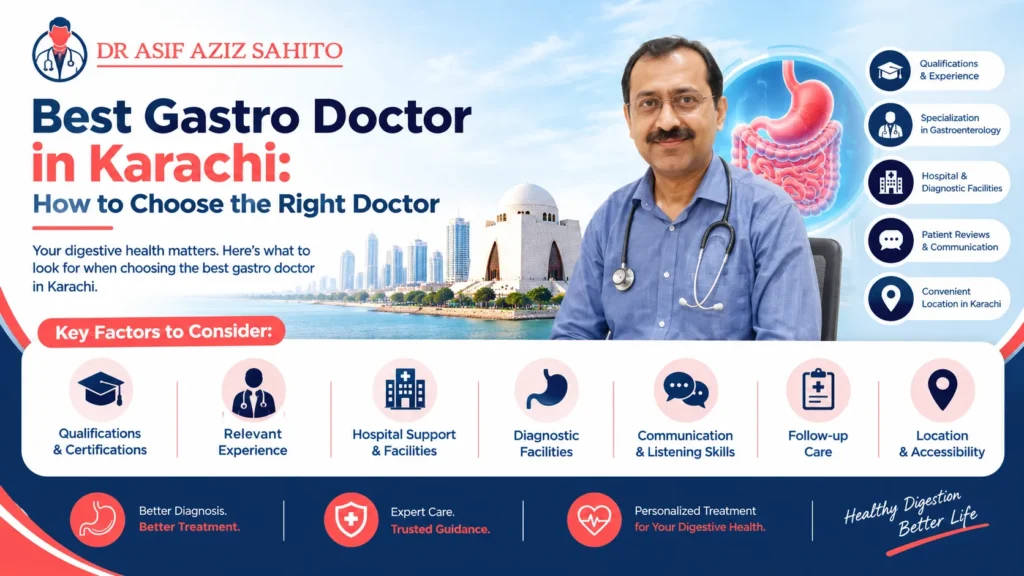
There is no single doctor who is best for every patient. The right choice depends on your health problem. It also depends on the doctor’s training and experience.
For example, a patient with acid reflux may need a doctor who treats upper digestive problems. A person with liver disease may need a doctor with liver care experience. Complex bowel disease may need a different type of specialist.
So, do not choose a doctor based only on ratings or popularity. Look at the doctor’s qualifications, area of practice, and experience with your condition.
A good hospital setup also matters. Some patients may need tests such as an endoscopy, colonoscopy, blood test, or scan. The best choice is often the doctor who has the right skills for your specific health problem.
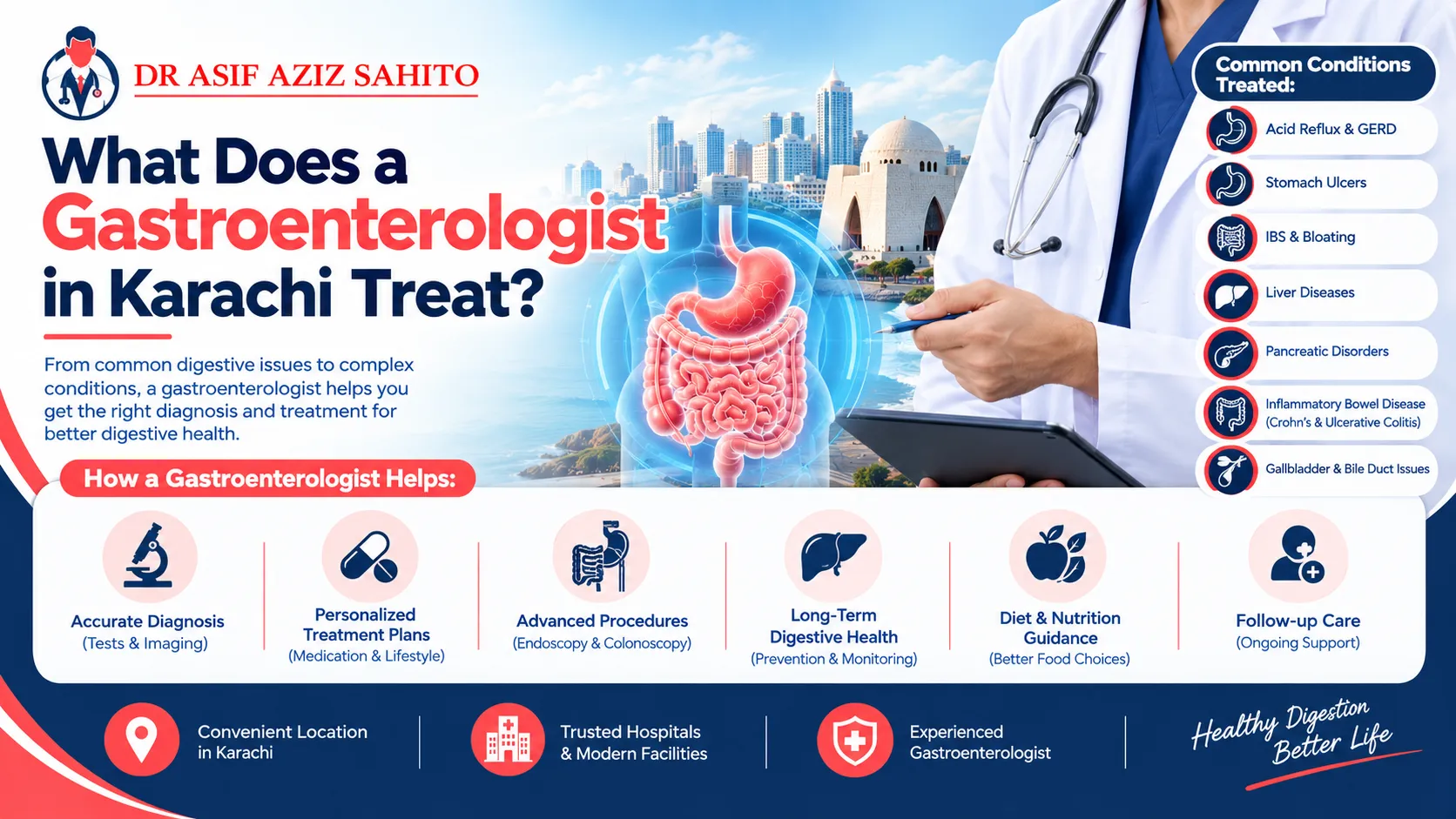
A gastroenterologist treats diseases of the digestive system. The digestive system includes the esophagus, stomach, small intestine, colon, rectum, liver, gallbladder, pancreas, and bile ducts. A gastroenterologist specialist in Karachi may help patients with many common and complex conditions.
These include acid reflux, GERD, gastritis, stomach ulcers, IBS, constipation, diarrhea, and digestive bleeding. Gastro doctors may also treat Crohn’s disease and ulcerative colitis.
Many gastroenterologists also care for liver problems. Some have added training or experience in hepatology, which focuses on liver disease. Your symptoms help the doctor decide what type of care you need.
A mild stomach problem may improve on its own. But symptoms that keep coming back should not be ignored. You may need to see a gastro doctor if you have:
You may also need specialist care if you already have a liver or digestive disease. The key point is how long the problem lasts and how severe it is. A doctor can check your symptoms and decide if tests are needed.
Some digestive symptoms need urgent medical care. Seek urgent help if you vomit blood or pass black or bloody stools. Severe or fast-growing stomach pain also needs quick medical review.
Fainting, confusion, severe weakness, or being unable to swallow liquids can also be warning signs. These symptoms can have many causes. They may need emergency care rather than a normal clinic visit.
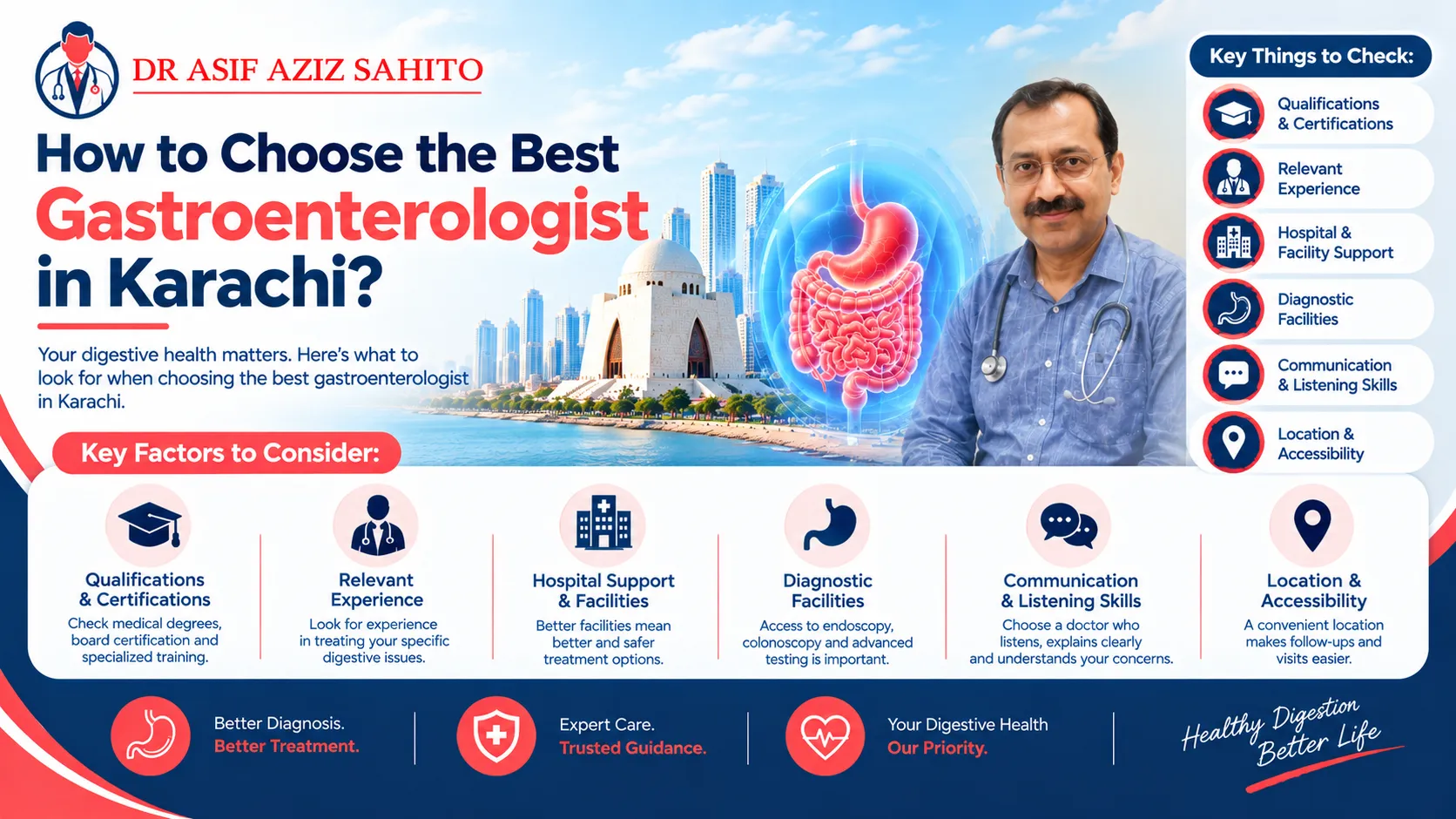
Start with the doctor’s medical training. Check whether the doctor has recognized qualifications and relevant experience. Then see if the doctor’s area of practice matches your problem. For example, liver disease may need a doctor with strong liver care experience. Long-term bowel disease may need a specialist who often treats intestinal disorders.
Do not judge a doctor only by online reviews. Reviews may tell you about the patient experience, but they cannot tell you which doctor is right for your medical condition. Good communication matters too. Your doctor should listen to you and explain things in simple terms. You should understand why a test or treatment is being suggested.
Before booking an appointment, check these points:
These points can be more useful than simply searching for the top gastroenterologist in Karachi.
Your symptoms can help you decide what type of doctor or service to look for.
Main Health Concern | Experience to Look For | Tests That May Be Considered |
Frequent acidity or heartburn | GERD and upper GI care | History, exam, and sometimes endoscopy |
Ongoing stomach pain | General gastroenterology | Blood tests, scans, or endoscopy |
Trouble swallowing | Esophageal and upper GI care | Endoscopy or other tests |
Long-term diarrhea | Intestinal disorders | Blood and stool tests |
Blood in stool | GI and bowel assessment | Exam and sometimes colonoscopy |
Crohn’s disease or ulcerative colitis | IBD care | Blood tests, stool tests, imaging, or endoscopy |
Hepatitis or liver disease | Liver and hepatology care | Blood tests, scans, and liver assessment |
Pancreas or bile duct problems | Pancreatobiliary care | Imaging or advanced procedures |
These are examples only. You may not need every test shown in the table. Your doctor will choose tests based on your symptoms, age, health history, and exam.
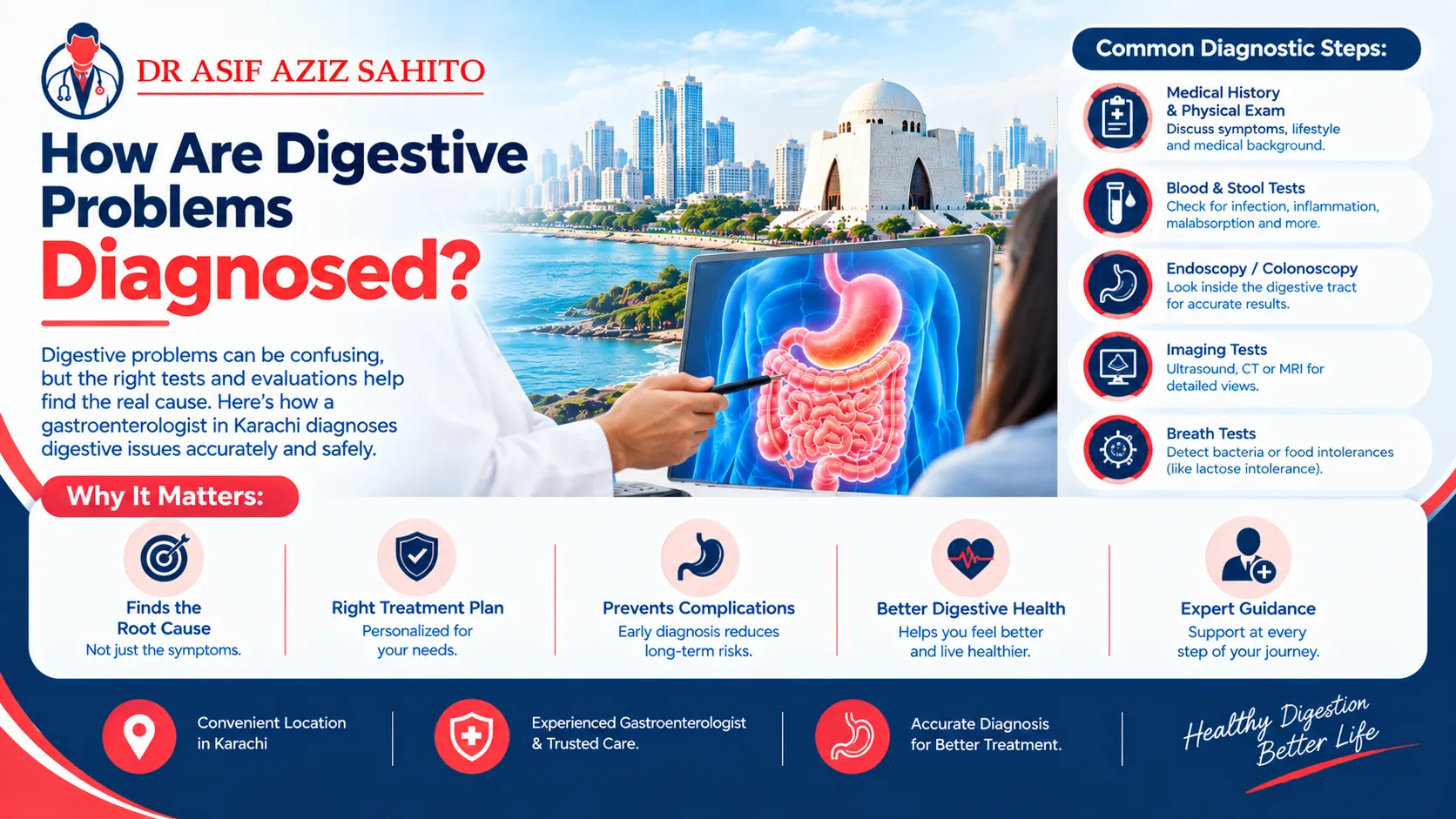
The first step is usually a medical history. Your doctor may ask when the symptoms started. They may ask where you feel pain and whether food makes it better or worse. The doctor may also ask about your bowel habits, weight, medicines, and past health problems.
A physical exam may come next. Some patients need blood or stool tests. Others may need an ultrasound, CT scan, endoscopy, or colonoscopy. Not every patient needs these tests. The doctor should choose them based on the likely cause of your symptoms.
No. Many people with typical reflux symptoms do not need tests right away. A doctor may first review your symptoms and medical history. An initial treatment plan may then be suggested.
Tests may be needed if the symptoms do not improve. They may also be useful when symptoms keep returning, or warning signs are present. An endoscopy may be advised in some cases. It can help the doctor look for damage or another possible cause. The choice depends on each patient.
An upper GI endoscopy is a test used to look inside the upper digestive system. The doctor uses a thin, flexible tube with a small camera. It allows the doctor to see the esophagus, stomach, and first part of the small intestine.
An endoscopy may help find the cause of stomach pain, bleeding, vomiting, or trouble swallowing. It may also help find ulcers or inflammation. A small tissue sample can be taken during the test if needed. This is called a biopsy. An endoscopy is not needed for every stomach problem. Your doctor will decide if it may help.
A colonoscopy is a test that looks inside the colon and rectum. It uses a thin, flexible tube with a camera. The test can help find inflammation, bleeding, polyps, and other changes in the bowel.
A doctor may suggest it for blood in the stool or a lasting change in bowel habits. It may also be used for long-term diarrhea or other bowel symptoms.
Colonoscopy is also used for bowel cancer screening in suitable patients. Having digestive symptoms does not mean you will need a colonoscopy. The decision depends on your health needs and risk factors.
Some digestive problems need more advanced tests or treatment. Advanced endoscopy can include procedures such as EUS or ERCP. EUS stands for endoscopic ultrasound. ERCP is used to examine and treat some bile duct and pancreatic problems.
These procedures are not routine tests for every patient. A specialist may suggest them when symptoms, scans, or other tests point to a specific problem.
A good doctor is important. The medical facility also matters. This is more important when a patient needs a procedure or has a complex illness. A well-equipped facility may offer endoscopy, colonoscopy, imaging, lab tests, pathology, and emergency care. Access to other medical specialists can also help in complex cases.
Facilities vary between hospitals in Karachi. It is a good idea to confirm what is available before your appointment. This is especially useful if your doctor thinks you may need a procedure.
No. A well-known doctor may have a lot of experience. But that does not mean the doctor is the best match for every condition. Someone with simple acid reflux may have different needs from a patient with Crohn’s disease. A person with advanced liver disease may also need more focused care.
Location and follow-up can matter as well. Some digestive problems need more than one appointment. Instead of asking only, “Who is the best gastroenterologist in Karachi?”, ask a more useful question: “Which qualified doctor has the right experience for my condition?” That question can help you make a better choice.
Your first visit will often start with questions about your symptoms. The doctor may ask when they started and how often they happen. You may also be asked about food, medicines, bowel habits, and past health problems. Try to give clear answers. Even small details can help.
Take your old reports with you if you have them. These may include blood tests, scans, prescriptions, endoscopy reports, or hospital records. The doctor may then examine you. After this, you may receive a treatment plan. The doctor may also suggest tests or a follow-up visit.
Yes. Many gastroenterologists also treat liver disease. This may include fatty liver disease, hepatitis, abnormal liver tests, and some long-term liver problems. Some doctors have a special focus on hepatology. Hepatology is the medical field that deals with liver disease.
More serious liver disease may need a doctor with added liver care experience. Some patients also need care from more than one specialist. The right choice depends on the type and stage of the liver problem.
Not every stomach symptom starts in the stomach. Upper belly pain can have several causes. It may be linked to the gallbladder, pancreas, liver, or another health problem. Medicines can also cause digestive symptoms. Changes in bowel habits can have many causes too. Diet, infections, bowel disorders, and inflammation are a few examples.
This is one reason why self-diagnosis can be misleading. Taking the same acidity medicine again and again may hide a symptom without finding its cause. If the problem keeps returning, a medical review may be useful.
A general physician treats a wide range of health problems. They can assess many common stomach and digestive symptoms. They may also start treatment and order basic tests. A gastroenterologist has specialist training in digestive diseases. This makes gastroenterology care useful for complex or long-term digestive problems.
A general physician may refer a patient to a gastroenterologist when specialist tests or procedures are needed. The right starting point depends on your symptoms and medical history.
Dr. Asif Aziz Sahito practices as a Consultant Physician and Diabetologist in Karachi. NCCI lists his qualifications as MBBS, FCPS, and MSc in Endocrine and Diabetes.
His official profile states that he has more than 17 years of medical experience. It also lists liver and stomach disorders among the areas covered by his practice. These include gastritis, acid reflux, ulcers, and hepatitis.
It is important to keep the medical title clear. Dr. Asif Aziz Sahito’s NCCI listing identifies him as a Consultant Physician and Diabetologist rather than describing his formal consultant role as Consultant Gastroenterologist.
A Consultant Physician can assess many stomach and liver concerns. If a patient needs specialist gastroenterology procedures or care for a complex digestive disease, referral to a gastroenterologist may also be needed.
His official clinic information lists his practice at NCCI/NMI in Saddar, Karachi. Patients should confirm current clinic hours before visiting.
A little planning can make your visit easier. Write down your main symptoms before you go. Note when they started and what seems to make them better or worse. Take a list of your current medicines. Bring old medical reports if they relate to your problem.
You can also note any food that seems to trigger your symptoms. Do not make major diet changes without medical advice. During the visit, ask what may be causing your symptoms. You can also ask why a test is needed and what the next step will be.