Subtotal $0.00


Medova is a convenience services to the adaptability, Spacious modern villa living room with centrally placed swimming pool blending indooroutdoor
Medova is a convenience services to the adaptability, Spacious modern villa living room with centrally placed swimming pool blending indooroutdoor
If you have a persistent fever, fatigue, high blood pressure, diabetes, or any ongoing health concern, a General Physician is usually the first doctor you should consult. A General Physician diagnoses, treats, and helps prevent a wide range of adult medical conditions while providing comprehensive and long-term healthcare.
In Karachi, where diabetes, hypertension, thyroid disorders, liver diseases, and digestive problems are increasingly common, choosing an experienced physician can make a significant difference. An experienced doctor not only treats symptoms but also identifies their underlying cause and creates a personalized treatment plan.
If you are searching for “What is a General Physician?“, “Who is the best General Physician in Karachi?“, or “Best Male General Physician in Karachi?”, this guide explains everything you need to know.
It also highlights why Dr. Asif Aziz Sahito, a Consultant Physician with over 17 years of clinical experience, is a trusted choice for comprehensive adult healthcare in Karachi.
A General Physician is a medical doctor who specializes in diagnosing, treating, and preventing diseases in adults. They manage both acute and chronic illnesses, recommend appropriate tests, prescribe medications, and refer patients to specialists when advanced care is required.
For most non-emergency medical concerns, a General Physician is the first healthcare professional you should consult.
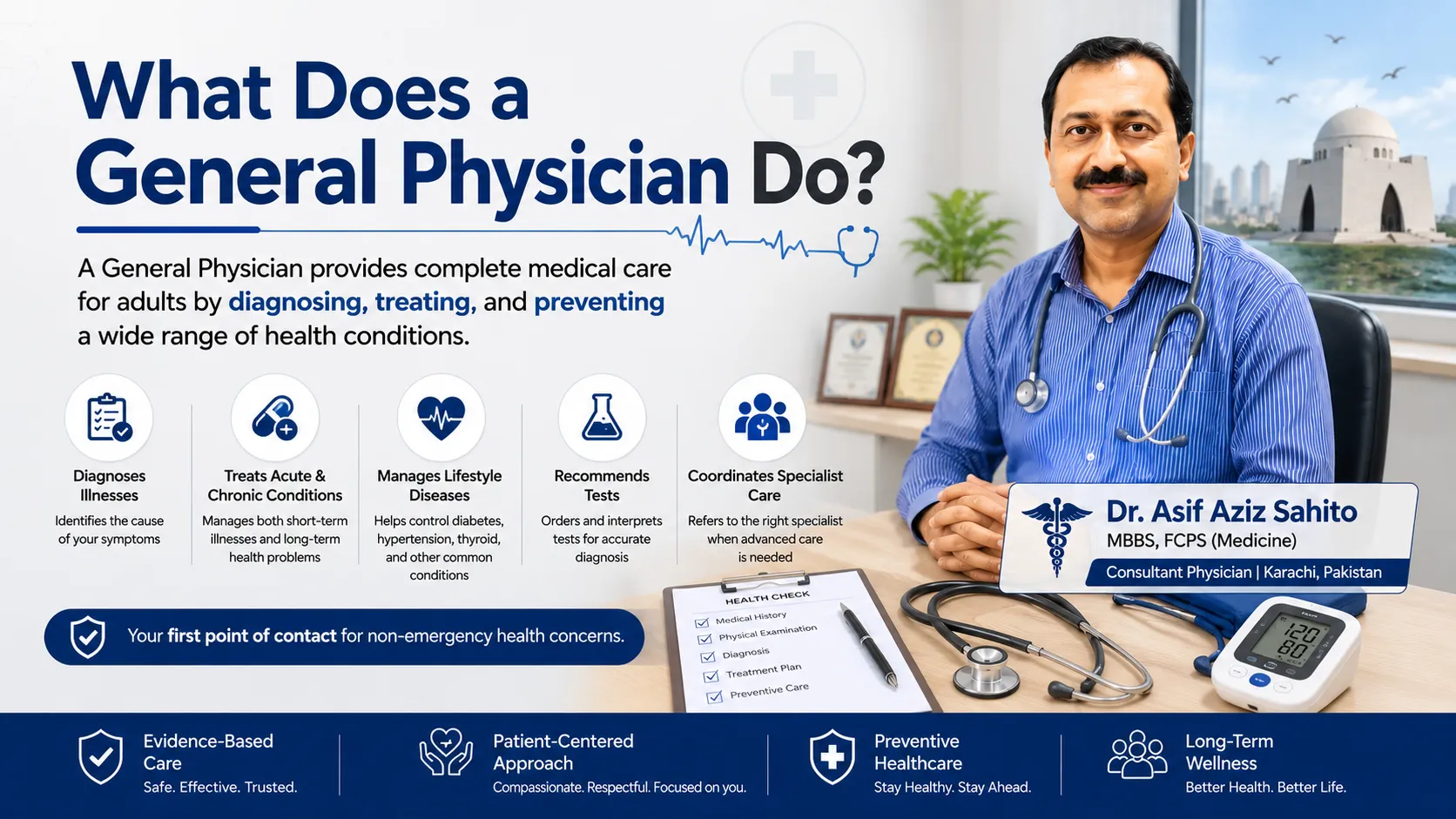
Many people believe that a physician only treats fever or common infections. In reality, modern physicians manage a much broader range of health conditions.
A General Physician evaluates your complete medical history, performs a detailed physical examination, recommends appropriate laboratory investigations, interprets diagnostic reports, prescribes treatment, and monitors recovery over time.
Rather than focusing on a single illness, physicians consider how different health conditions interact. For example, a patient with diabetes may also have high blood pressure, fatty liver disease, and thyroid dysfunction. Instead of treating each problem separately, a physician develops a comprehensive care plan that addresses the patient’s overall health.
This holistic approach improves treatment outcomes while reducing the risk of future complications.
Many patients search for the term General Physician Specialist, assuming it refers to a different type of doctor. In reality, the term usually refers to a physician with advanced training and extensive experience in Internal Medicine or General Medicine.
These specialists are qualified to diagnose and manage both acute and chronic illnesses, including:
Because they understand how different body systems work together, General Physicians often detect serious diseases at an early stage before complications develop.
Dr. Asif Aziz Sahito follows this comprehensive approach by combining accurate diagnosis, evidence-based treatment, preventive healthcare, and long-term disease management to help patients achieve better health outcomes.
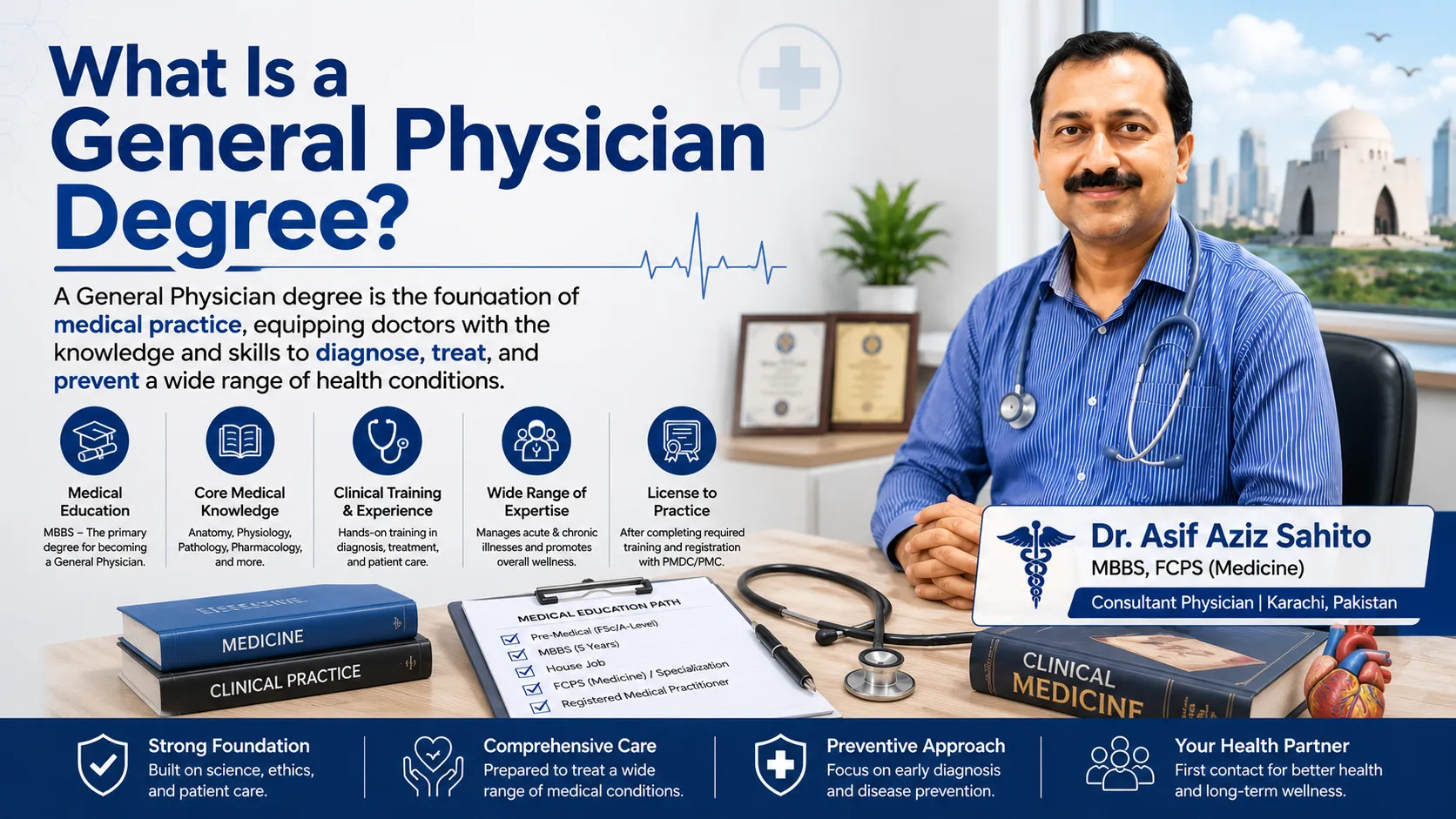
A physician undergoes years of medical education and clinical training before independently treating patients. In Pakistan, the educational journey typically begins with an MBBS (Bachelor of Medicine, Bachelor of Surgery) degree.
After graduation, doctors complete supervised clinical training, and many continue postgraduate education, such as FCPS (Fellowship of the College of Physicians and Surgeons Pakistan), to gain advanced expertise in medicine.
Additional qualifications or subspecialty training may further enhance a physician’s knowledge in areas such as diabetes, endocrinology, infectious diseases, or critical care.
Dr. Asif Aziz Sahito holds an MBBS, FCPS, and additional postgraduate qualifications in Endocrinology and Diabetes, supported by more than 17 years of clinical experience in managing complex medical conditions.
Many illnesses become easier to treat when diagnosed early. Unfortunately, patients often wait until symptoms become severe before seeking medical attention.
You should consider consulting a General Physician if you experience persistent symptoms that last several days, recurring health problems, or unexplained changes in your overall well-being.
A physician is also the right choice for routine health evaluations, preventive screenings, and the long-term management of chronic illnesses.
Early consultation is especially important if you have diabetes, hypertension, thyroid disease, liver disorders, a family history of heart disease, or multiple ongoing medical conditions that require regular monitoring.
In many cases, early diagnosis can prevent hospitalization and reduce the risk of serious complications later in life.

Modern medicine is no longer focused only on treating disease after it develops. Today, preventive healthcare plays an equally important role in helping people stay healthy.
Regular medical checkups allow physicians to identify hidden conditions such as high blood pressure, elevated blood sugar, abnormal cholesterol levels, liver disease, and thyroid disorders before noticeable symptoms appear.
This proactive approach allows patients to make lifestyle changes, begin treatment early, and avoid long-term complications.
Experienced physicians also educate patients about nutrition, physical activity, medication adherence, vaccination, stress management, and routine health screening, making preventive care one of the most valuable aspects of General Medicine.
Many people use the terms General Physician and General Practitioner (GP) interchangeably, but there are important differences in their training and the type of patients they usually treat.
A General Practitioner provides primary healthcare for people of all ages, including children, adults, and older adults. They diagnose common illnesses, offer preventive care, perform routine health checkups, administer vaccinations, and refer patients to specialists when advanced treatment is needed.
A General Physician, on the other hand, primarily treats adult patients and has advanced training in diagnosing and managing complex medical conditions.
Physicians often care for patients with chronic diseases such as diabetes, hypertension, thyroid disorders, kidney disease, liver disease, heart-related conditions, respiratory illnesses, and infections that require long-term monitoring.
While both doctors play an essential role in healthcare, a General Physician is often the preferred choice when an adult patient has multiple health concerns that require a comprehensive treatment plan.
Feature | General Physician | General Practitioner |
Primary Focus | Adult medical care | Patients of all age groups |
Common Conditions | Diabetes, hypertension, thyroid disorders, liver disease, infections, digestive disorders | Minor illnesses, preventive care, vaccinations, routine checkups |
Training | MBBS with postgraduate training such as FCPS/Internal Medicine | MBBS with primary care practice |
Disease Management | Acute and chronic illnesses | General health concerns and first-contact care |
Patient Care | Long-term management of complex conditions | Initial diagnosis, routine treatment, and referral when needed |
Another common question is whether General Physician and Internal Medicine are the same. The answer is almost yes, but with a slight distinction.
Internal Medicine is a medical specialty dedicated to preventing, diagnosing, and treating diseases in adults. Doctors trained in Internal Medicine are commonly referred to as General Physicians or Consultant Physicians in Pakistan.
Their expertise covers multiple body systems rather than focusing on just one organ. For example, a patient may have diabetes, fatty liver disease, high blood pressure, and thyroid dysfunction at the same time.
Instead of seeing four different doctors immediately, a General Physician can evaluate all these conditions together, prioritize treatment, and coordinate care with other specialists if necessary. This integrated approach reduces unnecessary investigations, improves treatment outcomes, and provides continuity of care.
One of the biggest advantages of consulting a General Physician is the wide range of illnesses they are qualified to diagnose and manage.
Patients often assume they need a specialist for every symptom, but many common and chronic conditions can be effectively treated by an experienced physician.
A General Physician commonly manages:
An experienced physician also recognizes when symptoms may indicate a more serious condition and arranges timely referrals to cardiologists, gastroenterologists, endocrinologists, neurologists, or other specialists when required.
Medical knowledge alone is not enough to provide excellent patient care. Experience allows physicians to recognize disease patterns, identify warning signs early, and make informed clinical decisions. An experienced physician can often diagnose conditions that may initially appear unrelated.
For example, a patient complaining of tiredness may actually have anemia, uncontrolled diabetes, thyroid disease, liver dysfunction, or chronic infection. Rather than treating fatigue as an isolated symptom, an experienced physician investigates the underlying cause and develops an appropriate treatment strategy.
This comprehensive approach helps patients receive accurate diagnoses while avoiding unnecessary medications and repeated consultations.
Many people searching online ask, “Who is the best General Physician in Karachi?” The answer depends on several factors, including a doctor’s qualifications, clinical experience, patient-centered approach, diagnostic accuracy, communication skills, and commitment to evidence-based medicine.
When choosing a physician, consider whether they:
In Karachi, Dr. Asif Aziz Sahito is recognized as an experienced Consultant Physician with more than 17 years of clinical practice. His expertise includes diabetes management, hypertension, thyroid disorders, liver diseases, digestive disorders, infectious diseases, preventive healthcare, and comprehensive adult medical care.
His patient-focused approach emphasizes accurate diagnosis, evidence-based treatment, and long-term health management, helping patients achieve better outcomes through continuous care rather than symptom-based treatment alone.
Patients sometimes specifically search for the Best Male General Physician in Karachi due to personal preference, cultural comfort, or continuity of care.
While gender may influence patient preference, the most important qualities remain medical expertise, communication, compassion, and clinical judgment.
A highly qualified male physician should be able to:
With his strong academic background, years of clinical experience, and patient-centered approach, Dr. Asif Aziz Sahito is regarded by many patients as a trusted choice for comprehensive adult healthcare in Karachi.
His practice focuses not only on treating illness but also on helping patients prevent future health complications through regular monitoring, lifestyle guidance, and evidence-based medical care.
One of the greatest benefits of seeing the same General Physician over time is continuity of care. When your doctor understands your medical history, previous test results, family history, allergies, medications, and lifestyle, they can make better-informed clinical decisions during every visit.
This ongoing relationship helps:
Instead of treating each appointment as a separate event, continuity of care creates a complete picture of your health, leading to more personalized and effective medical treatment.
Choosing the right General Physician is one of the most important decisions you can make for your long-term health. A trusted physician does more than diagnose illnesses, they become your partner in preventing disease, managing chronic conditions, and helping you maintain a healthier lifestyle.
When selecting a physician, look beyond popularity or convenience. Consider their qualifications, years of clinical experience, communication style, and commitment to evidence-based medicine.
A good physician listens carefully, explains diagnoses in simple language, answers questions patiently, and develops a treatment plan tailored to your individual health needs.
If you have ongoing conditions such as diabetes, hypertension, thyroid disorders, liver disease, or digestive problems, choosing a physician who provides long-term follow-up can significantly improve your quality of life and reduce the risk of future complications.
Finding a physician who combines medical expertise with compassionate care is essential. Patients often value doctors who take time to understand their concerns rather than simply treating symptoms.
With more than 17 years of clinical experience, Dr. Asif Aziz Sahito (MBBS, FCPS) provides comprehensive medical care for adults across a wide range of health conditions. His practice focuses on accurate diagnosis, evidence-based treatment, preventive healthcare, and personalized disease management.
His areas of expertise include:
Rather than offering temporary symptom relief, Dr. Asif Aziz Sahito emphasizes identifying the root cause of illness and creating individualized treatment plans that support long-term health. His patient-centered approach, combined with continuous follow-up and preventive guidance, has made him a trusted Consultant Physician for many individuals and families in Karachi.
Many serious health conditions develop gradually and may not cause noticeable symptoms during their early stages. Regular visits to a General Physician help detect these conditions before they progress.
Routine health assessments may include blood pressure monitoring, blood sugar evaluation, cholesterol testing, liver and kidney function tests, thyroid assessment, and other investigations based on your age, medical history, and risk factors.
Early detection often leads to simpler treatment, fewer complications, and better long-term outcomes. Preventive healthcare also provides an opportunity to discuss healthy eating, physical activity, weight management, stress reduction, vaccinations, and lifestyle habits that contribute to overall well-being.
A General Physician is a medical doctor who specializes in diagnosing, treating, and preventing diseases affecting adults. They manage both acute illnesses and long-term medical conditions while providing preventive healthcare and routine health assessments.
A General Practitioner provides primary healthcare for patients of all ages, whereas a General Physician primarily focuses on adult medicine and has advanced expertise in diagnosing and managing complex medical conditions.
In Pakistan, a General Physician typically holds an MBBS degree and may complete postgraduate qualifications such as FCPS in Internal Medicine or related medical specialties to gain advanced clinical expertise.
You should consult a General Physician if you experience persistent fever, uncontrolled blood pressure, diabetes symptoms, stomach problems, thyroid issues, unexplained fatigue, recurring infections, or any ongoing health concern that requires medical evaluation.
There is no single official ranking for the best physician, as the right choice depends on your medical needs and preferences. However, Dr. Asif Aziz Sahito is widely recognized for his extensive clinical experience, patient-focused care, and expertise in managing diabetes, hypertension, thyroid disorders, liver diseases, digestive conditions, and preventive healthcare in Karachi.
A General Physician plays a vital role in diagnosing, treating, and managing a wide range of adult health conditions while also focusing on disease prevention and long-term wellness.
If you’ve ever wondered what is a General Physician? the answer is simple: they are often the first doctor to consult for common illnesses, chronic diseases, routine health checkups, and ongoing medical care.
If you are looking for the Best General Physician in Karachi, choosing an experienced and qualified physician is essential. With over 17 years of clinical experience, Dr. Asif Aziz Sahito provides evidence-based, patient-centered care with a strong focus on accurate diagnosis, personalized treatment plans, and preventive healthcare.
Whether you need a routine checkup or long-term management of a medical condition, consulting an experienced General Physician is an important step toward better long-term health.