Subtotal $0.00


Medova is a convenience services to the adaptability, Spacious modern villa living room with centrally placed swimming pool blending indooroutdoor
Medova is a convenience services to the adaptability, Spacious modern villa living room with centrally placed swimming pool blending indooroutdoor
If you are searching for the best sugar doctor in Karachi, choose a physician with extensive experience in diagnosing and managing Type 1 diabetes, Type 2 diabetes, gestational diabetes, and diabetes-related complications.
A qualified Diabetes specialist in Karachi provides accurate diagnosis, personalized treatment plans, lifestyle guidance, regular monitoring, and long-term care to help patients maintain healthy blood sugar levels and reduce the risk of serious complications.
For many patients in Karachi, Dr. Asif Aziz Sahito, MBBS, FCPS (Consultant Physician), is recognized for providing evidence-based diabetes care with a patient-focused approach. His treatment plans combine medical expertise with lifestyle counseling to support better long-term health outcomes.

Diabetes is one of the fastest-growing chronic diseases in Pakistan. Thousands of people in Karachi are diagnosed every year, while many others remain unaware that they have the condition until complications develop.
Choosing the best sugar doctor in Karachi is not only about lowering blood sugar readings. Effective diabetes management involves protecting your heart, kidneys, eyes, nerves, and overall quality of life. Early diagnosis and consistent treatment significantly reduce the likelihood of severe complications.
An experienced Sugar specialist doctor in Karachi evaluates each patient individually because diabetes affects everyone differently. Factors such as age, weight, family history, diet, physical activity, blood pressure, cholesterol levels, and other medical conditions all influence treatment decisions.
Rather than offering a one-size-fits-all solution, a qualified diabetes physician develops a personalized care plan that evolves as your health changes over time.
A Sugar specialist doctor in Karachi focuses on preventing, diagnosing, treating, and monitoring diabetes and its related health conditions. Their role extends far beyond prescribing medication.
They assess your complete health profile to determine why blood sugar levels are elevated and how to manage them safely over the long term. A diabetes specialist commonly helps patients with:
The goal is to improve daily blood sugar control while preventing long-term damage to major organs.
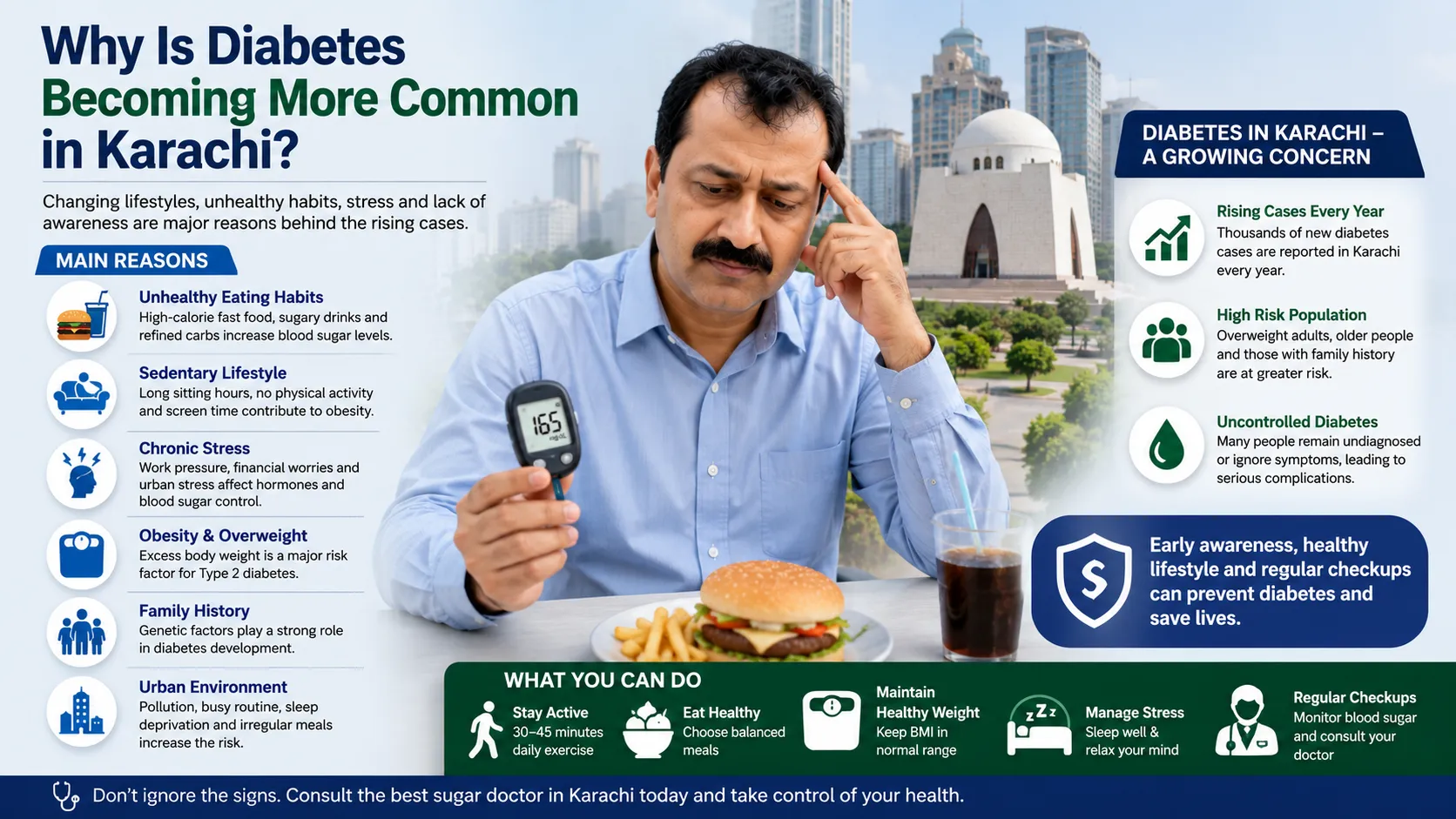
Diabetes cases have increased significantly across Karachi over the past decade. Several lifestyle and environmental factors contribute to this growing health concern.
Urban lifestyles often involve long working hours, limited physical activity, unhealthy eating habits, chronic stress, and insufficient sleep. These factors increase insulin resistance and raise the likelihood of developing Type 2 diabetes.
Other common contributors include obesity, family history, smoking, hypertension, and increasing rates of metabolic syndrome. Early screening is particularly important for adults over the age of 35, individuals who are overweight, and those with close relatives who have diabetes.
Many people assume they only need medical attention after receiving a diabetes diagnosis. In reality, early consultation can prevent the disease from progressing. You should consider visiting the Best diabetes doctor in Karachi if you experience persistent symptoms or have multiple risk factors. Common warning signs include:
These symptoms do not always confirm diabetes, but they should never be ignored.
Finding the Top Diabetes doctor in Karachi involves more than checking qualifications. High-quality diabetes care requires clinical expertise, effective communication, and long-term patient support. The most trusted diabetes physicians typically demonstrate several important qualities.
Feature | Experienced Diabetes Specialist | General Diabetes Care |
Diagnosis | Comprehensive evaluation | Basic assessment |
Treatment Plan | Personalized for each patient | Standard medication approach |
Monitoring | Regular follow-up and adjustments | Less structured follow-up |
Lifestyle Guidance | Nutrition, exercise, weight management | Limited counseling |
Complication Prevention | Active screening for kidney, eye, nerve, and heart disease | Often reactive rather than preventive |
Long-Term Care | Continuous management and education | Short-term symptom control |
Patients often achieve better long-term results when treatment includes education, preventive care, and regular monitoring instead of medication alone.
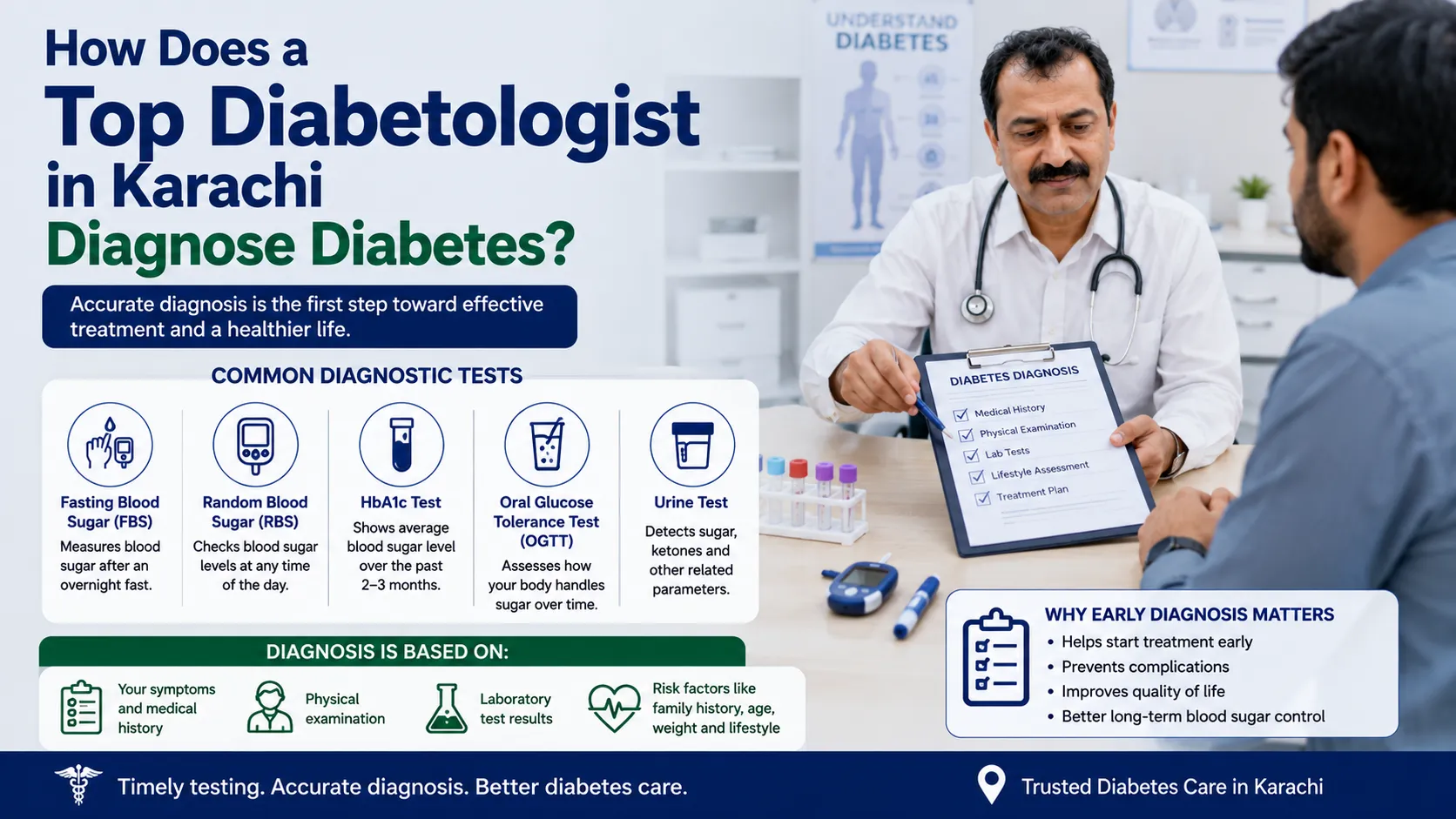
Accurate diagnosis is the foundation of successful diabetes management. A Top Diabetologist in Karachi does not rely on a single blood sugar reading. Instead, diagnosis combines medical history, physical examination, laboratory testing, and risk assessment.
The evaluation usually begins with a discussion about your symptoms, lifestyle, family history, medications, and previous health conditions. Your doctor may then recommend several laboratory investigations to confirm the diagnosis and determine the severity of the condition. Common diagnostic tests include:
These investigations help the physician understand not only your current blood sugar level but also your overall metabolic health.
Yes. While diabetes is generally considered a lifelong condition, it can often be managed effectively with early diagnosis, appropriate medication when needed, healthy eating habits, regular physical activity, weight management, and consistent medical follow-up.
Many patients maintain healthy blood sugar levels for years by following a personalized treatment plan and attending regular check-ups with their diabetes specialist. Successful diabetes management focuses on preventing complications rather than simply lowering glucose readings.
Every person responds differently to diabetes treatment. Factors such as age, occupation, daily routine, existing medical conditions, pregnancy, kidney function, and cardiovascular health all influence management decisions.
For this reason, experienced physicians such as Dr. Asif Aziz Sahito emphasize individualized care rather than relying on a standard treatment plan for every patient. Regular monitoring allows medications, nutrition advice, and lifestyle recommendations to be adjusted as health needs change over time.
Personalized care also improves patient confidence, encourages better treatment adherence, and helps reduce the risk of long-term complications.
A qualified Diabetes specialist in Karachi manages different forms of diabetes because each condition has unique causes, treatment goals, and long-term monitoring requirements. Identifying the correct type of diabetes is one of the first and most important steps in creating an effective treatment plan.
Type 1 diabetes develops when the body’s immune system mistakenly attacks the insulin-producing cells in the pancreas. As a result, the body produces little or no insulin.
This condition is commonly diagnosed during childhood or early adulthood, although it can occur at any age. People with Type 1 diabetes require lifelong insulin therapy, regular blood glucose monitoring, and continuous medical supervision.
With proper treatment, education, and regular follow-up, many individuals with Type 1 diabetes live healthy and active lives.
Type 2 diabetes is the most common form of diabetes in Karachi and throughout Pakistan. It develops when the body becomes resistant to insulin or does not produce enough insulin to maintain normal blood sugar levels. Several factors increase the risk of Type 2 diabetes, including:
Treatment may include lifestyle modification, oral medications, injectable medicines, insulin therapy when necessary, and regular monitoring. Early diagnosis often makes blood sugar control easier and helps reduce the risk of serious complications.
Gestational diabetes develops during pregnancy when hormonal changes affect the body’s ability to regulate blood sugar.
Although it usually improves after childbirth, women who experience gestational diabetes have a higher chance of developing Type 2 diabetes later in life. Proper medical supervision during pregnancy helps protect both the mother and the baby while reducing pregnancy-related complications.
Prediabetes means blood sugar levels are higher than normal but not yet high enough to meet the criteria for diabetes. Many people have prediabetes without realizing it because symptoms may not be noticeable.
The good news is that lifestyle improvements during this stage can significantly delay or even prevent the progression to Type 2 diabetes. Regular screening becomes especially important for individuals who have obesity, hypertension, or a strong family history of diabetes.
No two patients have identical healthcare needs. A skilled Best diabetes doctor in Karachi develops a personalized treatment strategy based on your medical history, laboratory results, lifestyle, and future health goals.
Treatment planning usually begins with a complete assessment rather than immediately prescribing medication. Your doctor may evaluate:
This comprehensive approach allows treatment to be adjusted according to each patient’s condition instead of following a standard protocol.
Modern diabetes care has advanced significantly over the past decade. Treatment now focuses on improving long-term health rather than simply reducing glucose readings. Depending on the patient’s condition, treatment may include one or more of the following approaches.
Lifestyle improvement remains one of the most effective ways to control diabetes. Small but consistent daily changes often produce meaningful improvements in blood sugar control. A physician may recommend:
These changes work alongside medication rather than replacing it.
Many people with Type 2 diabetes successfully manage their condition using oral medications. Different medicines work in different ways. Some improve insulin sensitivity, while others reduce glucose production or increase insulin release.
The choice of medication depends on the patient’s age, kidney function, cardiovascular health, blood sugar levels, and overall medical history. Regular follow-up appointments help ensure medications remain effective and appropriate over time.
Some patients require insulin therapy to achieve safe blood sugar control. Insulin may be recommended for:
Modern insulin delivery methods have become more convenient and easier to use than many people expect. A diabetes specialist also teaches patients how to inject insulin safely, monitor glucose, and recognize signs of low blood sugar.
Many patients now benefit from advanced glucose monitoring technologies. Instead of relying only on occasional finger-prick testing, continuous glucose monitoring devices provide detailed information about blood sugar patterns throughout the day.
This information allows physicians to make more accurate treatment adjustments and helps patients understand how food, exercise, medication, and stress affect glucose levels.
One of the biggest misconceptions about diabetes is that treatment ends after receiving medication. In reality, diabetes requires continuous monitoring because blood sugar levels change over time due to aging, illness, weight changes, medications, diet, and physical activity. Regular follow-up appointments allow the doctor to:
Patients who attend regular follow-up visits often experience better long-term health outcomes than those who delay routine care.
Uncontrolled diabetes affects multiple organs throughout the body. However, maintaining good blood sugar control significantly lowers the risk of many serious complications. These may include:
Body System | Possible Diabetes Complication | Benefit of Early Management |
Eyes | Diabetic retinopathy | Helps protect vision |
Kidneys | Chronic kidney disease | Reduces the risk of kidney failure |
Nerves | Diabetic neuropathy | Lowers the risk of numbness and pain |
Heart | Heart attack and stroke | Supports cardiovascular health |
Feet | Foot ulcers and infections | Reduces the risk of serious foot problems |
Blood Vessels | Poor circulation | Improves healing and mobility |
Preventing complications is one of the primary goals of long-term diabetes care.
Successful diabetes care goes beyond prescribing medicines. It requires listening to patients, identifying individual risk factors, educating families, and adjusting treatment as health needs change.
As a Consultant Physician, Dr. Asif Aziz Sahito (MBBS, FCPS) focuses on evidence-based diabetes management with an emphasis on early diagnosis, personalized treatment, and long-term follow-up. His approach includes careful assessment of blood sugar control, associated medical conditions such as hypertension and high cholesterol, and lifestyle factors that influence diabetes outcomes.
Patients are encouraged to understand their condition, participate actively in treatment decisions, and attend regular reviews to help maintain stable blood glucose levels while reducing the risk of future complications.
This comprehensive approach supports not only better diabetes control but also improved overall health and quality of life.
Although medication plays an important role, everyday habits have a major impact on diabetes management. Small, sustainable changes are often more effective than short-term efforts.
Healthy daily practices include eating balanced meals, staying physically active, maintaining a healthy weight, taking medicines exactly as prescribed, monitoring blood sugar when advised, staying hydrated, managing stress, and getting adequate sleep. Avoiding tobacco use and limiting sugary drinks can also contribute to better long-term control.
Building these habits gradually makes them easier to maintain and supports lasting improvements in overall health.
Finding the best sugar doctor in Karachi is about more than selecting the nearest clinic. Diabetes is a lifelong condition for many people, so choosing the right physician can have a significant impact on your health, quality of life, and future well-being.
A reliable diabetes specialist focuses on both treatment and prevention. They take time to understand your medical history, explain your condition clearly, monitor your progress, and adjust your treatment plan as your needs change. When comparing doctors, look for:
Choosing a doctor who encourages long-term partnership rather than one-time treatment can make diabetes management much easier and more effective.
Many people delay medical care because early diabetes symptoms can be mild or easy to ignore. Unfortunately, untreated diabetes may silently damage the eyes, kidneys, nerves, heart, and blood vessels before noticeable symptoms appear. You should consider booking an appointment if you:
Even if you feel well, regular diabetes screening is recommended for individuals with multiple risk factors.
The frequency of follow-up visits depends on your overall health and how well your blood sugar is controlled. Patients with newly diagnosed or uncontrolled diabetes may require more frequent appointments until their condition stabilizes.
Once blood sugar levels are consistently well managed, your doctor may recommend routine reviews every few months, along with periodic laboratory testing such as HbA1c. During follow-up visits, your physician may review:
These appointments allow problems to be identified early, often before complications develop.
In many cases, yes. Although diabetes cannot always be cured, its complications can often be delayed or prevented through consistent medical care and healthy lifestyle choices. Maintaining stable blood sugar levels helps protect important organs throughout the body.
Patients who actively participate in their treatment often experience better long-term outcomes because they understand how daily habits affect their health. Preventive care includes:
Preventing complications is generally easier and safer than treating advanced disease.
Many misconceptions about diabetes continue to circulate, making it difficult for patients to make informed decisions. Understanding the facts can help people manage the condition more confidently.
Diabetes develops due to a combination of genetics, insulin resistance, lifestyle, body weight, and other health factors. While excessive sugar intake may contribute to weight gain, it is not the only cause of diabetes.
Carbohydrates are part of a balanced diet. The key is choosing healthier sources, controlling portions, and balancing meals according to medical advice.
Improved blood sugar often reflects that treatment is working. Medications should only be adjusted or discontinued under medical supervision.
Insulin is simply another treatment option. Some patients need it temporarily, while others benefit from long-term insulin therapy.
Although risk increases with age, diabetes can occur in children, teenagers, young adults, and pregnant women.
Successful diabetes management depends on knowledge as much as medication. Patients who understand their condition are more likely to:
Education empowers patients to make informed decisions every day, not just during clinic visits.
The best sugar doctor is an experienced physician who provides evidence-based diagnosis, personalized treatment, regular follow-up, and comprehensive diabetes management. Qualifications, clinical experience, patient-centered care, and long-term monitoring are important factors to consider.
A diabetologist focuses specifically on diabetes diagnosis, treatment, and long-term management. A general physician treats a wide range of medical conditions and may also manage diabetes, especially when experienced in chronic disease care.
Many people with Type 2 diabetes successfully manage their condition through healthy lifestyle changes and oral medications. However, some patients may require insulin depending on blood sugar levels, disease progression, pregnancy, or other medical conditions.
Most diabetes patients benefit from periodic HbA1c testing as advised by their physician. The recommended frequency depends on individual treatment goals and blood sugar control.
Currently, there is no universal cure for diabetes. However, many patients achieve excellent blood sugar control through medical treatment, healthy eating, regular exercise, weight management, and ongoing follow-up care.
Early diagnosis allows treatment to begin before significant damage occurs to the eyes, kidneys, nerves, heart, and blood vessels. Timely intervention improves long-term health outcomes and reduces the risk of complications.
Choosing the best sugar doctor in Karachi is one of the most important decisions you can make for your long-term health. Diabetes is a lifelong condition that requires more than medication; it requires accurate diagnosis, individualized treatment, regular monitoring, and continuous education.
With the right medical support, most people can successfully manage their blood sugar, reduce the risk of complications, and maintain an active, healthy lifestyle. If you are looking for a trusted Sugar specialist doctor in Karachi, Dr. Asif Aziz Sahito (MBBS, FCPS – Consultant Physician) provides comprehensive diabetes care tailored to each patient’s needs.
His approach focuses on early detection, evidence-based treatment, lifestyle guidance, and ongoing follow-up to help patients achieve better blood sugar control while protecting their overall health.
Whether you have newly diagnosed diabetes, uncontrolled blood sugar, prediabetes, or diabetes-related complications, seeking timely medical advice can make a meaningful difference in your long-term well-being.