Subtotal $0.00


Medova is a convenience services to the adaptability, Spacious modern villa living room with centrally placed swimming pool blending indooroutdoor
Medova is a convenience services to the adaptability, Spacious modern villa living room with centrally placed swimming pool blending indooroutdoor

Asthma affects the airways that carry air in and out of the lungs. In asthma, these airways can become swollen and narrow. This can make it harder to breathe.
Common symptoms include wheezing, cough, shortness of breath, and chest tightness. The symptoms can change over time. Some people feel well for days or weeks and then have a flare-up.
Asthma is not diagnosed from one symptom alone. Wheezing or cough can also happen with other health problems. A doctor may need to review your history, examine you, and use breathing tests before confirming the cause.
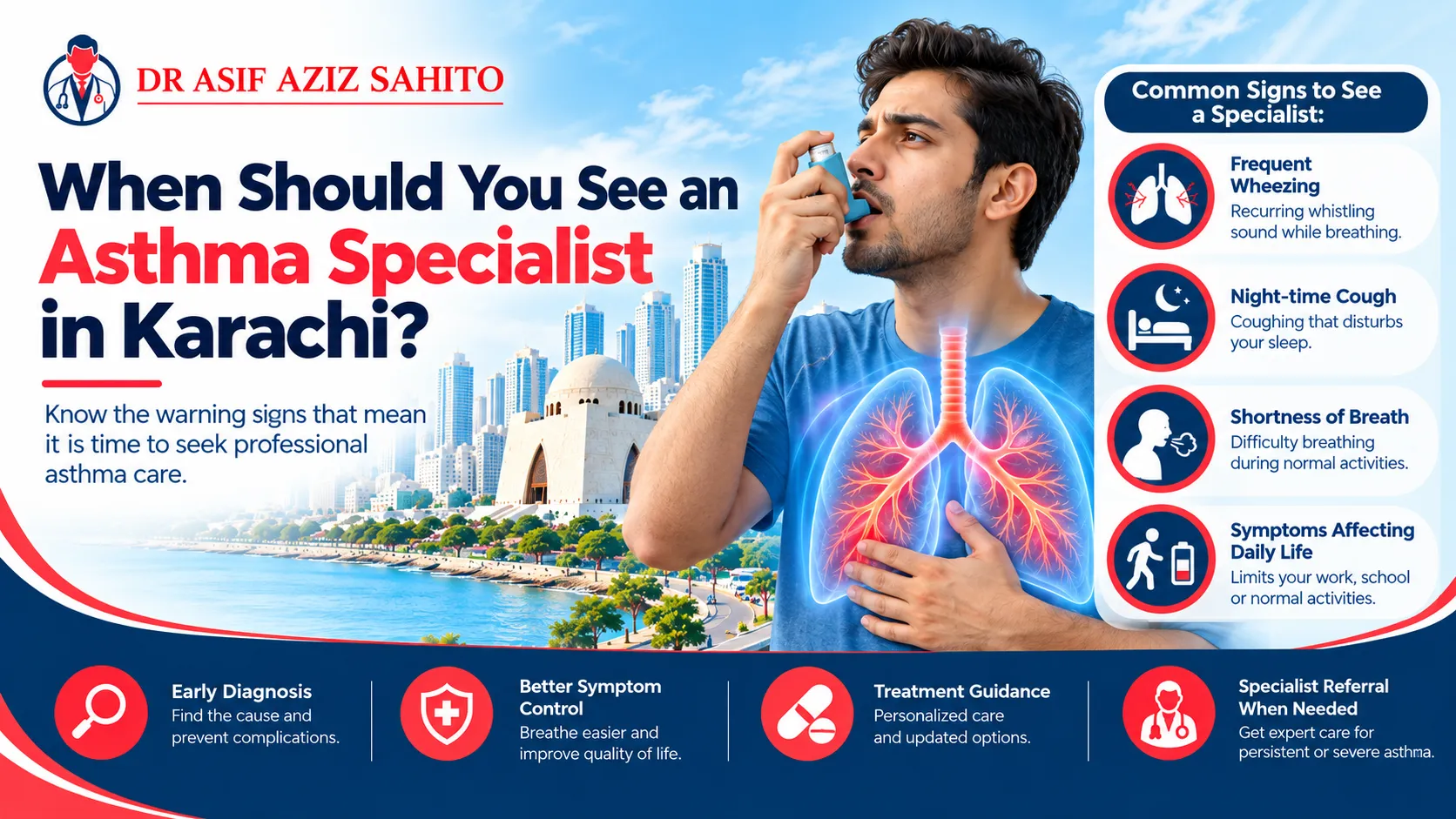
See a doctor if breathing symptoms keep coming back or start to affect daily life. Do not wait for symptoms to become severe before asking for help. You should arrange a medical review if:
A doctor can check whether asthma is the likely cause. They can also look for other problems that may cause similar symptoms.
These terms are often used in online searches, but they are not always the same. A Consultant Physician manages a wide range of adult medical problems. This can include common breathing problems such as asthma.
A chest specialist focuses more on chest and breathing conditions. A pulmonologist has specialist training in lung and respiratory disease.
The right doctor depends on your symptoms and medical history. Some people can start with a Consultant Physician. More complex or hard-to-control cases may need a pulmonologist in Karachi.
Type of Care | Main Role | When It May Help |
Consultant Physician | Reviews common medical and breathing problems | First assessment, follow-up, and general asthma care |
Chest Specialist | Focuses on chest and breathing symptoms | Ongoing chest symptoms or focused respiratory care |
Pulmonologist | Specializes in lung disease | Severe, complex, or unclear lung problems |
Emergency Care | Treats urgent breathing problems | Severe breathlessness or a serious asthma attack |
Asthma diagnosis usually starts with a clear history. Your doctor may ask when symptoms began, how often they happen, and what seems to trigger them.
The doctor may ask about allergies, smoking, second-hand smoke, chest infections, medicines, family history, and work exposure. They may also listen to your chest and check your breathing.
Current GINA guidance says an asthma diagnosis is based on typical symptoms and evidence that airflow changes over time. This is why breathing tests are useful when they are available.
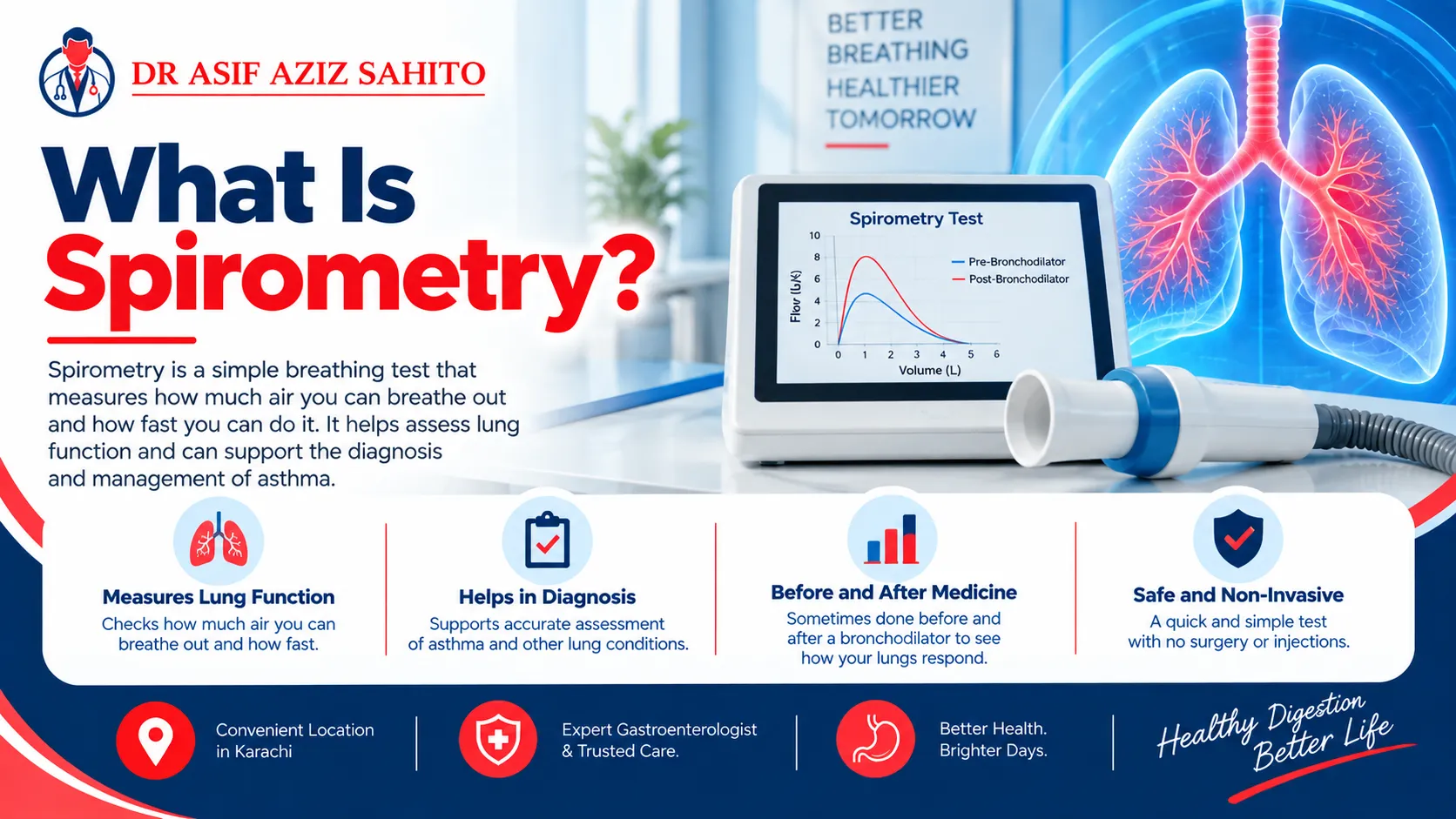
Spirometry is a common breathing test. It checks how much air you can blow out and how fast you can blow it out. In some cases, the test is done before and after a bronchodilator. This helps the doctor see whether airflow improves after the medicine.
If spirometry is not available, peak flow testing may be used in some cases. GINA advises using objective airflow testing when possible instead of relying only on symptoms.
A doctor may also order other tests when the diagnosis is not clear. A normal test does not always end the assessment. Asthma symptoms can vary. Your doctor may decide that repeat testing or another test is needed.
Triggers are not the same for everyone. One person may react to dust. Another may notice symptoms after exercise or during a viral infection.
Common triggers can include dust, indoor allergens, tobacco smoke, air pollution, strong fumes, exercise, cold air, weather changes, pollen, mould, and chest infections. Some work settings may also expose people to irritants.
People in Karachi may notice symptoms around road dust, smoke, or heavy traffic. Still, a trigger should not be guessed. A simple symptom diary can help you spot patterns. Write down when symptoms happen, what you were doing, and what you were exposed to. Share this record with your doctor.
Asthma treatment is based on your symptoms, risk of attacks, age, medical history, and response to past treatment. Care may include inhaled medicine, trigger control, inhaler training, and regular review. Some people also need care for allergies or other health problems that make breathing worse.
Current asthma guidance focuses on controlling symptoms and lowering the risk of future flare-ups. Treatment should be reviewed over time because asthma can change. Do not start, stop, or change asthma medicine on your own. Your doctor should guide any change in treatment.
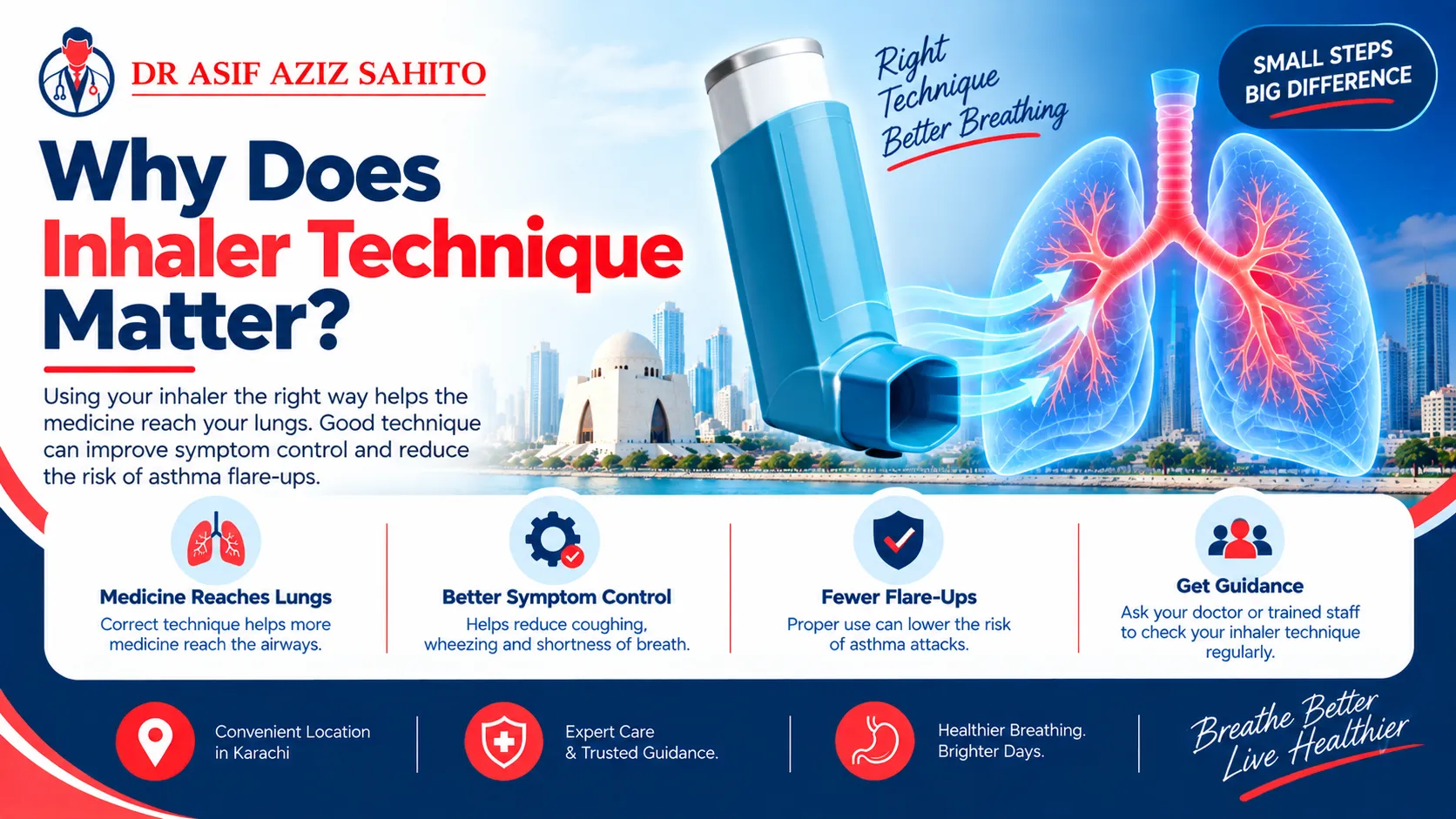
An inhaler may not work well if it is used the wrong way. Even small errors can reduce how much medicine reaches the lungs. During a visit, ask the doctor or trained staff to watch how you use your inhaler.
You should also know which inhaler is for regular control and which one is for quick relief, if both are part of your plan. Good technique is a simple part of asthma care, but it can make a real difference.
Asthma care is not only about stopping a cough or wheeze today. The wider goal is to reduce future attacks and help you live normally. A good care plan may help you sleep better, stay active, and avoid urgent visits. It should also be reviewed when symptoms change.
If asthma stays hard to control, the doctor may need to check the diagnosis again. They may also review inhaler use, triggers, other health problems, and whether a specialist referral is needed.
GINA also recommends a detailed review when asthma remains difficult to control. This can help find problems that may be affecting treatment.
A first visit usually begins with questions. The doctor may ask about your symptoms, past treatment, allergies, other illnesses, and any previous hospital visits.
Bring old reports, prescriptions, and inhalers if you have them. This can save time and give the doctor a clearer picture. It also helps to describe symptoms in detail.
Instead of saying, “I have breathing trouble,” explain when it happens. For example, say if you cough at night, wheeze after exercise, or feel worse around dust. This kind of detail can make the consultation more useful.
People often type phrases such as “asthma doctor near me” or “top chest specialist in Karachi” when they want local care. You may also see pages that use terms such as “best chest specialist in Karachi” or “best pulmonologist in Karachi.”
These labels can help you find options, but they do not prove who is best for every patient. Check the doctor’s qualifications and stated area of practice. Look for a clear approach to diagnosis, safe treatment, follow-up, and referral when needed.
The clinic should also be practical for repeat visits. Asthma is a long-term condition, so follow-up may be important. Good communication matters too. You should understand your diagnosis, medicines, inhaler use, and what to do if symptoms get worse.
Dr. Asif Aziz Sahito’s official website lists him as MBBS, FCPS, and a Consultant Physician in Karachi. The site also lists asthma and respiratory treatment among his medical services. It states that he has more than 17 years of clinical experience. This wording is important. Dr. Asif is presented on his website as a Consultant Physician, not as a pulmonologist.
A Consultant Physician may assess common asthma symptoms, review current treatment, check related health problems, and decide if more testing is needed. If the case is severe, complex, or unclear, referral to a pulmonologist may be appropriate.
His official website provides clinic and appointment information. Patients should confirm the latest location, availability, and timings with the clinic before visiting. This keeps the article accurate even if clinic schedules change.
Severe breathing trouble needs urgent care. Get emergency medical help if breathing becomes very hard, symptoms get worse quickly, or the person is not improving after using the treatment in their asthma action plan.
NHS guidance also advises urgent help when an asthma attack becomes worse or does not improve after the person’s advised reliever treatment.
Do not spend time searching online for a doctor during a severe attack. Urgent care comes first. People with asthma should also know their personal action plan. Ask your doctor what to do if symptoms suddenly become worse.
Asthma is usually a long-term condition. There is no simple permanent cure for most people. However, good care can control symptoms and lower the risk of attacks.
Many people with asthma can work, exercise, sleep well, and stay active when their condition is well managed. The goal is control. This means fewer symptoms, fewer flare-ups, and less impact on daily life.