Subtotal $0.00


Medova is a convenience services to the adaptability, Spacious modern villa living room with centrally placed swimming pool blending indooroutdoor
Medova is a convenience services to the adaptability, Spacious modern villa living room with centrally placed swimming pool blending indooroutdoor
Breathing problems such as a persistent cough, asthma, chest infections, or unexplained shortness of breath should never be ignored, as they may indicate an underlying lung condition. If you are looking for the best pulmonologist, choosing the right specialist can help you receive an accurate diagnosis and timely treatment for both common and complex respiratory diseases.
Patients searching for the best pulmonologist Karachi, Best Pulmonologist in Karachi, Top Pulmonologist in Karachi, or the Best Pulmonologist in Pakistan should choose a doctor who combines clinical experience with evidence-based care.
Dr. Asif Aziz Sahito, a Consultant Physician in Karachi with over 17 years of medical experience, provides comprehensive care for respiratory conditions, including asthma, tuberculosis (TB), chronic cough, and other breathing disorders through a patient-centered approach.
This guide explains what a pulmonologist does, when you should consult one, the conditions they treat, the diagnostic tests available, treatment options, and practical ways to maintain better lung health.
A pulmonologist is a physician who specializes in diagnosing, treating, and preventing diseases that affect the respiratory system. This includes the lungs, airways, trachea, bronchi, bronchioles, pleura, and the muscles involved in breathing.
Because the respiratory system works closely with the heart and immune system, pulmonologists often collaborate with other medical specialists to provide comprehensive care for patients with complex health conditions.
Many respiratory diseases develop gradually, and their early symptoms can easily be mistaken for allergies, seasonal flu, or the natural effects of aging. A pulmonologist has the specialized knowledge and diagnostic tools needed to identify the actual cause of breathing problems rather than simply treating the symptoms.
Modern pulmonology combines clinical examination with advanced imaging, pulmonary function testing, laboratory investigations, and minimally invasive procedures to develop an accurate diagnosis. This allows treatment plans to be tailored to each patient’s specific condition instead of relying on a one-size-fits-all approach.

Respiratory diseases can range from mild infections that resolve within a few weeks to chronic conditions requiring lifelong management. The quality of diagnosis often determines how successful treatment will be. A highly experienced pulmonologist understands subtle differences between various lung diseases and can identify conditions before they become severe.
For example, a persistent cough may be caused by asthma, gastroesophageal reflux disease (GERD), allergies, chronic bronchitis, tuberculosis, or even early lung cancer. Treating every patient with the same medication without identifying the underlying cause may delay proper treatment and increase the risk of complications.
Choosing an experienced lung specialist provides several important advantages. Patients are more likely to receive an accurate diagnosis, evidence-based treatment, appropriate follow-up care, and education about managing their condition at home. This comprehensive approach helps reduce emergency hospital visits and improves long-term quality of life.
In a busy city like Karachi, where air pollution, smoking, seasonal allergies, and respiratory infections remain common, access to experienced pulmonary care has become increasingly important.
Pulmonologists diagnose and treat a wide range of respiratory diseases affecting the lungs and airways. Some conditions develop suddenly due to infections, while others progress gradually and require long-term management. Early diagnosis by a pulmonologist can improve treatment outcomes and help prevent complications.
Common conditions include asthma, which causes airway inflammation and breathing difficulty, and Chronic Obstructive Pulmonary Disease (COPD), often linked to smoking or long-term exposure to air pollution.
Pulmonologists also treat pneumonia, tuberculosis (TB), bronchitis, bronchiectasis, pulmonary fibrosis, interstitial lung disease, sleep apnea, pleural effusion, pulmonary hypertension, occupational lung diseases, and recurrent lung infections.
Since many respiratory conditions share similar symptoms, consulting the best pulmonologist ensures an accurate diagnosis and a personalized treatment plan based on the underlying cause rather than symptoms alone.
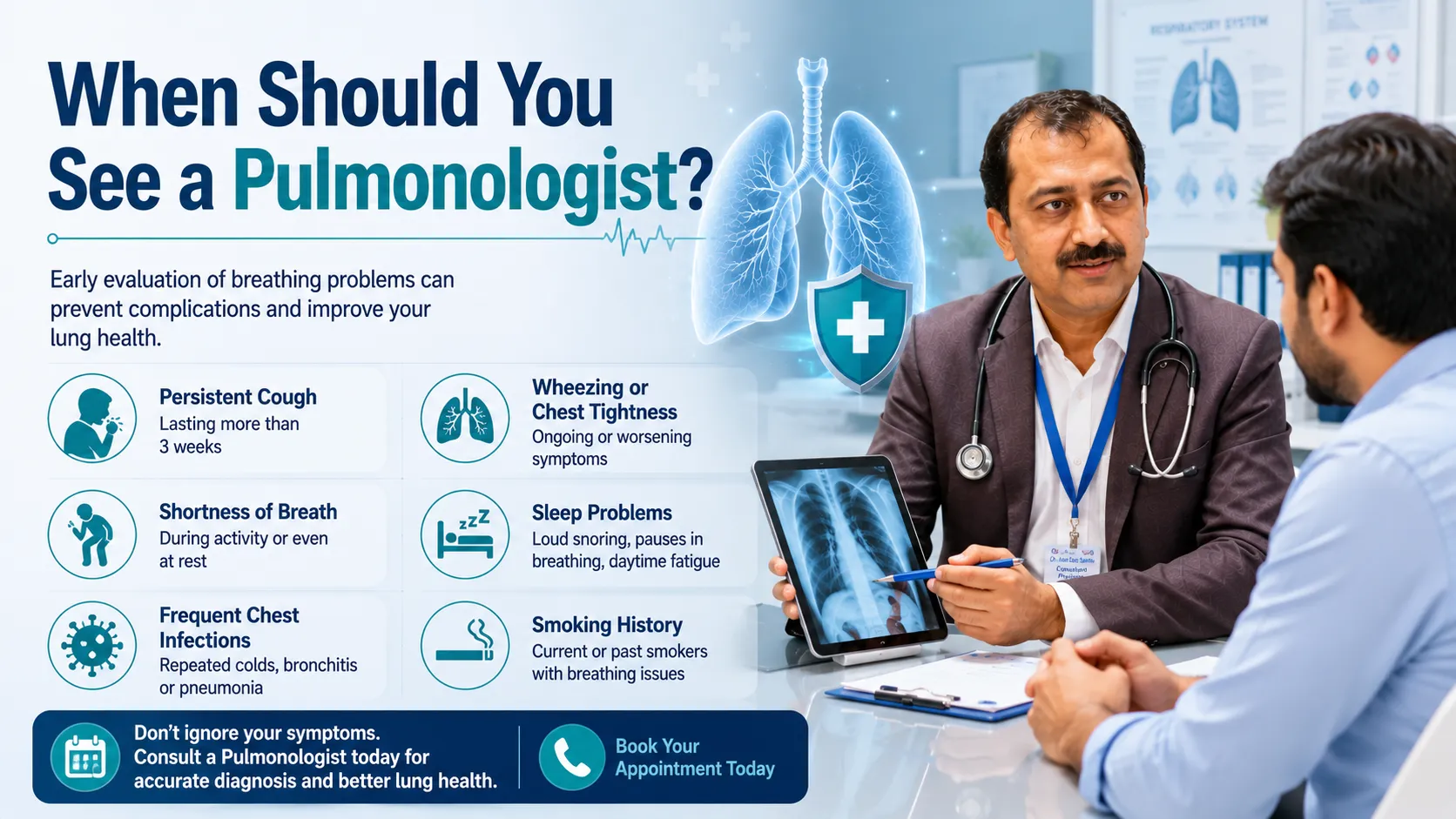
Many respiratory symptoms improve with basic treatment, but if they persist or keep returning, it is time to consult a pulmonologist. Early evaluation helps identify the underlying cause and prevents serious lung conditions from progressing.
You should see a pulmonologist if you have a persistent cough lasting more than three weeks, shortness of breath, recurrent chest infections, wheezing, chest tightness, or coughing up blood. People with a long smoking history, unexplained weight loss, or worsening breathing problems should also seek specialist care.
In addition, loud snoring, daytime fatigue, or pauses in breathing during sleep may indicate sleep apnea, which requires expert evaluation. Timely consultation with the best pulmonologist can lead to an accurate diagnosis, effective treatment, and better long-term lung health.
Respiratory symptoms sometimes develop gradually, making it easy to underestimate their seriousness. Certain warning signs, however, require immediate medical attention because they may indicate severe lung disease or a medical emergency.
Difficulty breathing that rapidly worsens should never be ignored. If breathing becomes labored while sitting quietly or speaking, urgent medical evaluation is necessary.
Chest pain accompanied by breathing difficulty can have multiple causes, including pneumonia, pulmonary embolism, pleurisy, or even heart disease. Because these conditions require different treatments, prompt diagnosis is extremely important.
Coughing up blood, even in small amounts, should always be investigated. While the cause may be relatively minor, it can also indicate tuberculosis, lung infections, bronchiectasis, or lung cancer.
High fever accompanied by severe cough, chest pain, or difficulty breathing may indicate serious pneumonia requiring immediate treatment.
Bluish lips, fingertips, confusion, or extreme fatigue may suggest dangerously low oxygen levels and should be treated as medical emergencies.
Recognizing these symptoms early can significantly improve treatment outcomes and reduce the risk of serious complications.
Accurate diagnosis is the foundation of effective respiratory care. Many lung diseases produce similar symptoms, making clinical evaluation alone insufficient in some cases. Pulmonologists therefore use a combination of medical history, physical examination, imaging studies, and specialized respiratory testing to identify the underlying cause.
During your consultation, the pulmonologist will ask detailed questions about your symptoms, including when they began, how they have changed over time, and whether they occur during exercise, at night, or after exposure to dust, smoke, or allergens.
Information about your smoking history, occupation, previous respiratory illnesses, medications, family history, and environmental exposures also provides valuable diagnostic clues.
The physical examination includes listening to your lungs with a stethoscope to detect wheezing, crackles, reduced airflow, or other abnormal breathing sounds. Oxygen saturation may also be measured with a pulse oximeter to assess how effectively your lungs deliver oxygen to the bloodstream.
Depending on your symptoms, additional investigations may be recommended to confirm the diagnosis and determine the severity of your condition. These tests help distinguish between infections, inflammatory diseases, chronic lung disorders, and more serious conditions requiring specialized treatment.
After evaluating your symptoms and medical history, a pulmonologist may recommend one or more diagnostic tests. The choice of investigation depends on your condition, age, risk factors, and clinical findings. These tests help confirm the diagnosis, assess disease severity, and guide the most appropriate treatment plan.
A chest X-ray is often the first imaging test used to evaluate the lungs. It can identify pneumonia, tuberculosis, fluid around the lungs, enlarged airways, or other structural abnormalities. Although it provides valuable information, additional imaging may sometimes be needed for a more detailed assessment.
A computed tomography (CT) scan produces highly detailed images of the lungs and surrounding structures. It helps detect small lung nodules, interstitial lung disease, pulmonary fibrosis, bronchiectasis, and other conditions that may not be clearly visible on a standard X-ray.
Pulmonary function tests, including spirometry, measure how well the lungs work. These tests evaluate the amount of air you can inhale and exhale, as well as how quickly air moves through the airways. They are commonly used to diagnose asthma, COPD, and other chronic respiratory disorders while also monitoring treatment progress over time.
Bronchoscopy is a minimally invasive procedure that allows the pulmonologist to examine the inside of the airways using a thin, flexible camera.
It may be recommended when investigating persistent infections, unexplained bleeding, airway obstruction, or abnormal findings on imaging studies. In some cases, tissue samples or mucus specimens can also be collected during the procedure.
Patients with loud snoring, interrupted sleep, excessive daytime sleepiness, or suspected obstructive sleep apnea may undergo a sleep study. This test monitors breathing patterns, oxygen levels, heart rate, and sleep stages throughout the night to determine whether breathing repeatedly stops during sleep.
Treatment depends on the type and severity of the lung condition. A pulmonologist focuses on treating the underlying disease, improving breathing, preventing complications, and enhancing overall quality of life.
Respiratory infections such as pneumonia and tuberculosis (TB) are treated with appropriate medications, while chronic conditions like asthma and COPD are commonly managed with inhalers, medication, and regular follow-up care.
Depending on the patient’s condition, treatment may also include pulmonary rehabilitation, oxygen therapy, and lifestyle changes such as quitting smoking, staying physically active, receiving recommended vaccinations, and reducing exposure to air pollution.
A personalized treatment plan helps patients manage symptoms effectively and maintain better long-term lung health.
Selecting the right specialist involves much more than choosing the first name that appears in an online search. A qualified pulmonologist should combine clinical expertise with modern diagnostic facilities, evidence-based treatment, and clear communication.
When evaluating a pulmonologist, consider factors such as professional qualifications, years of experience, hospital affiliations, availability of advanced diagnostic equipment, and the ability to explain medical conditions in a way that patients can easily understand.
Reading genuine patient reviews and seeking recommendations from trusted healthcare professionals can also provide useful insight.
The Top Pulmonologist in Karachi is not simply someone with an impressive title but a physician who listens carefully, performs thorough evaluations, recommends appropriate investigations, and develops individualized treatment plans based on the latest clinical guidelines.
Patients with chronic respiratory diseases often require regular follow-up visits. Choosing a pulmonologist who emphasizes long-term disease management and patient education can significantly improve treatment outcomes over time.
Feature | General Physician | Pulmonologist |
Primary Focus | General medical conditions | Diseases of the lungs and respiratory system |
Common Cases | Fever, infections, hypertension, diabetes | Asthma, COPD, TB, pneumonia, sleep apnea, lung fibrosis |
Diagnostic Expertise | Basic investigations | Advanced pulmonary testing and respiratory procedures |
Specialized Procedures | Usually not performed | Bronchoscopy, pulmonary function testing, sleep evaluation |
Best Time to Visit | Initial medical assessment | Persistent or complex breathing problems |
Although not every lung disease can be prevented, many respiratory conditions become less likely when healthy lifestyle habits are adopted consistently. Prevention is especially important for individuals with a family history of lung disease, smokers, older adults, and people who are frequently exposed to pollution or occupational dust.
Protecting your lungs begins with reducing exposure to avoidable risk factors and seeking medical attention before symptoms become severe. Small daily habits often have a significant impact on long-term respiratory health.
Many respiratory diseases progress gradually, with symptoms becoming more noticeable only after significant damage has already occurred. Conditions such as COPD, pulmonary fibrosis, and certain forms of lung cancer may remain silent during their early stages, making routine medical evaluation particularly valuable for high-risk individuals.
Early diagnosis allows treatment to begin before complications develop. It can slow disease progression, preserve lung function, reduce hospital admissions, improve symptom control, and help patients continue their normal daily activities with fewer limitations. For diseases like tuberculosis, early diagnosis also plays an important role in preventing transmission to others.
Karachi is one of the largest and busiest cities in Pakistan, where increasing urbanization has contributed to higher levels of environmental pollution. Vehicle emissions, industrial smoke, construction dust, and seasonal allergens can all irritate the respiratory system and worsen existing lung diseases.
People living with asthma or COPD often notice that their symptoms become more severe during periods of poor air quality. Even healthy individuals may experience coughing, throat irritation, or breathing discomfort after prolonged exposure to polluted environments.
Reducing outdoor exposure during periods of heavy pollution, improving indoor ventilation, wearing appropriate protective masks in dusty environments, and avoiding smoking can help lower the overall burden on the lungs.
The best pulmonologist is a qualified respiratory specialist with extensive clinical experience, strong diagnostic skills, modern treatment approaches, and a patient-centered approach to care. The right choice depends on your medical condition, treatment needs, and access to specialized healthcare facilities.
These terms are generally used interchangeably. Both refer to physicians who specialize in diagnosing and treating diseases affecting the lungs and respiratory system.
Yes. Pulmonologists routinely diagnose, treat, and monitor asthma using medications, pulmonary function testing, trigger management, and long-term follow-up care.
Many hospitals and private clinics allow patients to book appointments directly. However, some health insurance providers may require a referral from a general physician before specialist consultation.
Bringing previous medical records, chest X-rays, CT scans, laboratory reports, a list of current medications, and details of your symptoms can help the pulmonologist perform a more complete evaluation and avoid repeating unnecessary investigations.
Finding the best pulmonologist can make a significant difference in diagnosing and treating respiratory diseases. Whether you have asthma, COPD, TB, a persistent cough, or breathing difficulties, early consultation helps prevent complications.
Dr. Asif Aziz Sahito, a Consultant Physician with over 17 years of experience, provides expert, evidence-based care for a wide range of respiratory conditions.
If you are looking for the best pulmonologist Karachi, Best Pulmonologist in Karachi, or the Top Pulmonologist in Karachi, book your appointment with Dr. Asif Aziz Sahito for timely evaluation and personalized treatment. For appointments or more information, contact the clinic through the available phone number or online booking service.