Subtotal $0.00


Medova is a convenience services to the adaptability, Spacious modern villa living room with centrally placed swimming pool blending indooroutdoor
Medova is a convenience services to the adaptability, Spacious modern villa living room with centrally placed swimming pool blending indooroutdoor
Diabetes is one of the most common chronic diseases worldwide, and Pakistan has a high number of people living with this condition. Many individuals do not realize they have diabetes until it begins affecting their overall health.
Early diagnosis and proper medical care are essential to help prevent complications involving the heart, kidneys, eyes, nerves, and blood vessels.
If you are looking for a diabetes specialist Karachi, choosing an experienced physician can help you achieve better blood sugar control and long-term health. In Karachi, Dr. Asif Aziz Sahito provides comprehensive diabetes care through accurate diagnosis, personalized treatment plans, lifestyle guidance, and regular follow-up.
A diabetes specialist diagnoses, treats, and manages diabetes and its complications. If you have uncontrolled blood sugar, a new diabetes diagnosis, or diabetes-related health concerns, consulting a Diabetes specialist in Karachi can help you receive personalized treatment and ongoing care for better long-term health.

A diabetes specialist is a physician with advanced knowledge and experience in diagnosing, treating, and monitoring diabetes mellitus. While many patients initially receive care from a general physician, those with difficult-to-control blood sugar levels, diabetes-related complications, or complex medical conditions often benefit from specialist care.
A diabetes specialist focuses on much more than prescribing medication. Their role includes understanding how diabetes affects different organs, identifying complications early, recommending lifestyle changes, interpreting laboratory results, and creating personalized treatment plans based on each patient’s health needs.
The ultimate goal is not simply lowering blood sugar but helping patients maintain a healthier, more active life while reducing the risk of long-term complications.
A diabetes specialist manages diabetes through continuous evaluation, education, and individualized care. Every patient has different health goals, medical history, and risk factors, so treatment plans are tailored accordingly.
A specialist may help patients by:
Effective diabetes management combines medical treatment with healthy lifestyle choices, regular follow-up visits, and patient education.
Understanding the different forms of diabetes helps patients recognize why treatment approaches may vary. Although all types involve problems with blood sugar regulation, their causes and management differ.
Type of Diabetes | Main Cause | Common Treatment | Long-Term Management |
Type 1 Diabetes | The immune system attacks insulin-producing cells. | Insulin therapy | Lifelong insulin and regular monitoring |
Type 2 Diabetes | The body becomes resistant to insulin or does not produce enough. | Lifestyle changes, oral medicines, insulin if required | Ongoing monitoring and risk reduction |
Gestational Diabetes | High blood sugar develops during pregnancy. | Diet, exercise, medication when necessary | Monitoring during pregnancy and after delivery |
Early diagnosis allows treatment to begin before serious complications develop.
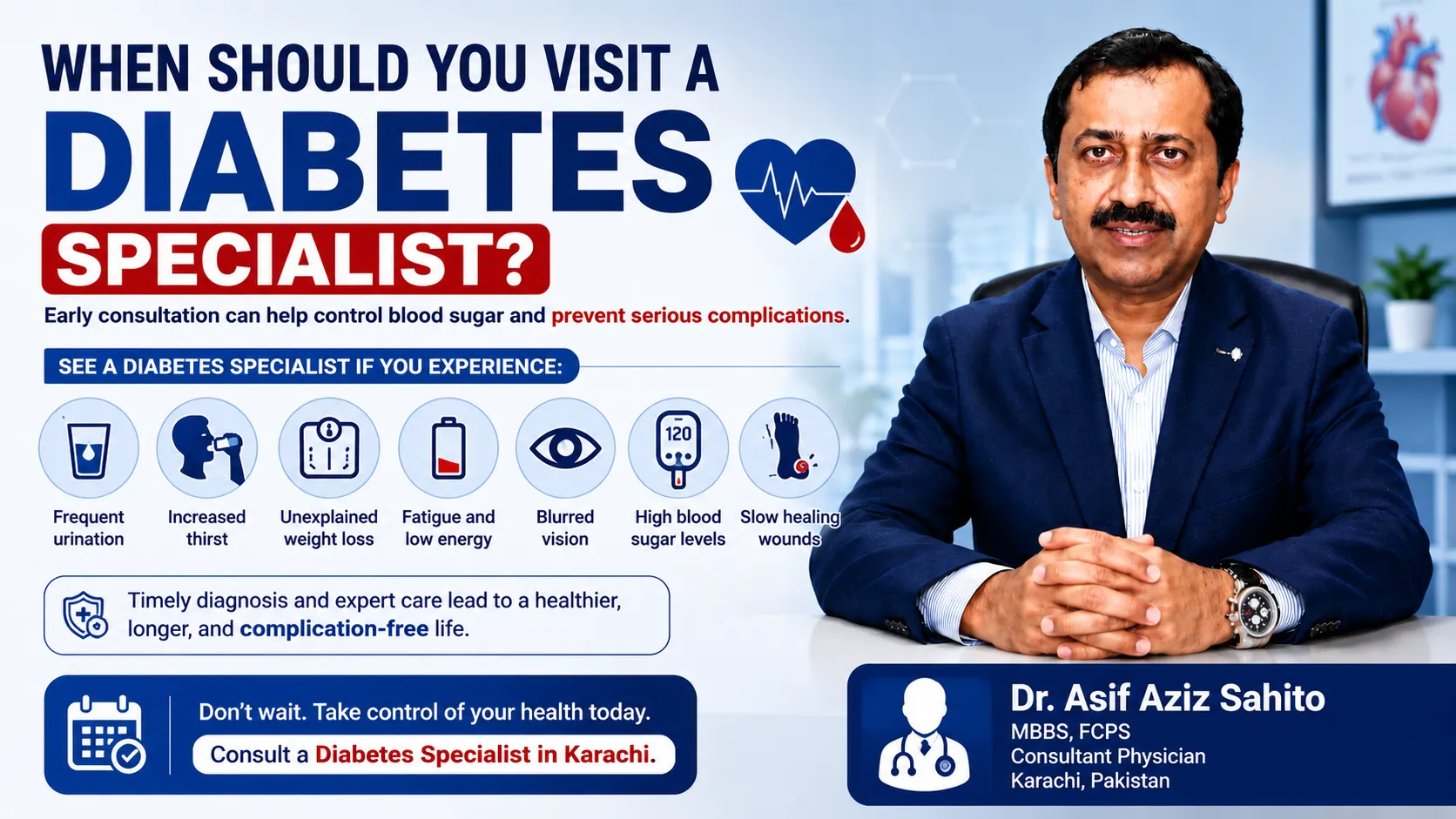
Many people ignore early symptoms because they develop gradually. Unfortunately, diabetes may already be affecting important organs before obvious warning signs appear.
Consulting a Diabetes doctor in Karachi is recommended if you experience persistent symptoms or have risk factors that increase your likelihood of developing diabetes. Common situations that require medical evaluation include:
Seeking medical advice early often leads to better blood sugar control and significantly lowers the risk of long-term complications.
Diagnosing diabetes involves more than checking a single blood sugar reading. A diabetes specialist evaluates symptoms, medical history, family history, physical examination findings, and laboratory investigations before confirming the diagnosis.
Several tests help determine whether blood sugar levels fall within a healthy range and whether diabetes or prediabetes is present.
This test measures blood glucose after fasting for at least eight hours. It is commonly used for routine diabetes screening and diagnosis.
The HbA1c test reflects the average blood sugar level over the previous two to three months. It provides a broader picture of long-term glucose control and is one of the most valuable tools for monitoring treatment effectiveness.
Random blood sugar testing may be performed when a person has symptoms suggestive of diabetes. While useful in many situations, additional testing is often needed to confirm the diagnosis.
This test measures how the body processes sugar over time. It is particularly useful in diagnosing gestational diabetes and evaluating certain patients whose routine blood tests are inconclusive.
Rather than relying on one result alone, a specialist interprets these tests together with clinical findings to develop the most appropriate treatment plan.
Diabetes affects the entire body, not just blood sugar levels. Without proper management, prolonged high glucose levels can damage blood vessels and nerves throughout the body.
Early treatment helps reduce the likelihood of complications affecting the kidneys, eyes, heart, brain, feet, and nervous system. It also improves quality of life by reducing symptoms, maintaining energy levels, and supporting long-term health.
Patients who receive regular medical care, monitor their blood sugar consistently, follow dietary recommendations, remain physically active, and attend scheduled follow-up visits generally achieve better outcomes than those who delay treatment.
There is no single treatment plan that works for every patient. Diabetes management depends on several factors, including the type of diabetes, blood sugar levels, age, lifestyle, existing medical conditions, and the presence of complications. A specialist develops an individualized treatment plan that can change over time as a patient’s health needs evolve.
The primary goals of treatment are to maintain healthy blood glucose levels, reduce the risk of complications, improve overall well-being, and help patients live an active and productive life.
Medication alone cannot effectively manage diabetes without healthy lifestyle habits. Even small improvements in daily routines can have a significant impact on blood sugar control and overall health.
A diabetes treatment plan usually includes balanced nutrition, regular physical activity, maintaining a healthy body weight, adequate sleep, stress management, and avoiding tobacco products. These lifestyle changes not only improve diabetes control but also reduce the risk of heart disease, stroke, and other chronic conditions commonly associated with diabetes.
Many patients notice improvements in their blood sugar levels after consistently following healthier habits, although ongoing medical supervision remains essential.
When lifestyle changes are not enough, medications may be recommended to help regulate blood glucose levels. The choice of medication depends on the individual’s condition and overall health profile.
Some people benefit from oral medicines that improve insulin sensitivity or help the body regulate glucose more effectively. Others may require injectable medications or insulin therapy, particularly when blood sugar levels remain uncontrolled or when insulin production is insufficient.
Treatment should never be adjusted without professional medical advice, as inappropriate medication changes can increase the risk of dangerously high or low blood sugar levels.
Insulin is essential for people with Type 1 diabetes and may also become necessary for some individuals with Type 2 diabetes when other treatments no longer provide adequate control.
Modern insulin therapy is carefully individualized. The dosage, timing, and type of insulin are selected according to blood glucose patterns, lifestyle, meal schedules, and other medical conditions. Regular follow-up helps ensure that insulin therapy remains safe and effective.
Managing diabetes is an ongoing process rather than a one-time treatment. Regular monitoring allows healthcare providers to evaluate how well the treatment plan is working and whether adjustments are needed.
Follow-up visits typically include reviewing blood sugar records, discussing symptoms, assessing medication effectiveness, evaluating lifestyle habits, and checking for early signs of complications.
Periodic laboratory investigations such as HbA1c, kidney function tests, cholesterol levels, and urine analysis provide valuable information about long-term diabetes control. Continuous monitoring helps identify problems before they become serious, allowing treatment to be modified promptly.
Poorly controlled diabetes can affect almost every major organ system. High blood sugar gradually damages blood vessels and nerves, increasing the likelihood of serious health problems over time.
The risk of complications increases when diabetes remains untreated or poorly managed for many years. However, maintaining good blood sugar control can significantly reduce these risks.
Body System | Possible Diabetes Complications | Why Regular Monitoring Matters |
Eyes | Diabetic retinopathy, vision loss | Early detection helps protect eyesight. |
Kidneys | Chronic kidney disease | Routine testing can identify damage before symptoms appear. |
Heart and Blood Vessels | Heart attack, stroke, high blood pressure | Managing diabetes lowers cardiovascular risk. |
Nervous System | Nerve damage, numbness, burning sensations | Early treatment reduces progression. |
Feet | Poor wound healing, ulcers, infections | Regular foot examinations help prevent severe complications. |
Understanding these potential complications emphasizes why long-term medical care is just as important as the initial diagnosis.
Although Type 1 diabetes cannot currently be prevented, many cases of Type 2 diabetes can be delayed or prevented by adopting healthier lifestyle habits.
People who have a family history of diabetes, excess body weight, high blood pressure, or prediabetes should pay particular attention to preventive measures. Regular health checkups can identify early changes in blood sugar before diabetes fully develops.
Healthy eating patterns, maintaining an appropriate body weight, engaging in regular physical activity, limiting sugary beverages, and avoiding smoking all contribute to lowering the risk of developing Type 2 diabetes.
Even individuals who already have prediabetes may reduce their chances of progressing to diabetes through consistent lifestyle improvements and medical guidance.
Selecting the right healthcare provider is an important part of successful diabetes management. Effective treatment involves more than prescribing medication; it also requires ongoing communication, patient education, careful monitoring, and individualized care.
When choosing a Top Diabetes doctor in Karachi, patients should consider the physician’s experience in managing diabetes, approach to long-term care, availability for follow-up, and ability to provide comprehensive treatment tailored to each patient’s medical needs.
A good specialist explains medical conditions in understandable language, encourages patient involvement in treatment decisions, and develops realistic management plans that fit the patient’s lifestyle.
Preparing questions before your consultation helps you better understand your condition and participate actively in your treatment plan.
Patients commonly ask about the cause of their diabetes, target blood sugar levels, medication schedules, dietary recommendations, exercise plans, possible medication side effects, home glucose monitoring, warning signs of complications, and the recommended frequency of follow-up visits.
Open communication between the patient and healthcare provider supports better long-term diabetes management and improves treatment adherence.
Diabetes is a lifelong condition that changes over time. Factors such as age, weight, physical activity, diet, stress, illness, and other medical conditions can all influence blood sugar control.
Regular follow-up appointments allow treatment plans to be updated according to changing health needs. They also provide opportunities to detect complications early, review laboratory results, reinforce healthy lifestyle habits, and answer patient concerns before they become significant problems.
Rather than waiting for symptoms to worsen, scheduled medical reviews help maintain stable blood sugar levels and support better overall health.
Diabetes requires continuous management because blood sugar levels can change over time due to age, lifestyle, stress, illness, and other health conditions. Regular follow-up appointments allow treatment plans to be adjusted according to your current health needs.
Ongoing care also helps detect complications at an early stage. Routine monitoring of blood sugar, kidney function, eye health, blood pressure, and cholesterol supports better long-term outcomes and helps reduce the risk of serious health problems.
Patients who stay consistent with medical care, follow healthy lifestyle recommendations, and attend scheduled checkups are more likely to maintain stable blood sugar levels and enjoy a better quality of life.
No. Diabetes cannot currently be cured, but it can be effectively managed with medication, healthy lifestyle changes, and regular medical care.
You should consult a diabetes specialist if you have high blood sugar, symptoms of diabetes, uncontrolled diabetes, or diabetes-related complications.
Common tests include fasting blood sugar, HbA1c, random blood sugar, and the oral glucose tolerance test.
Many cases can be delayed or prevented through healthy eating, regular exercise, weight management, and routine health checkups.
The frequency depends on your condition, but regular follow-up visits help monitor blood sugar and reduce the risk of complications.
Choosing the right diabetes specialist is an important step toward maintaining healthy blood sugar levels and preventing long-term complications. Early diagnosis, personalized treatment, healthy lifestyle habits, and regular follow-up all contribute to better diabetes management and improved overall health.
Whether you have recently been diagnosed or have been living with diabetes for years, timely medical care can help you manage your condition with confidence. A comprehensive treatment plan, combined with patient education and ongoing monitoring, provides the best opportunity for long-term success.
If you are looking for a trusted Diabetes specialist in Karachi, Dr. Asif Aziz Sahito offers comprehensive diabetes evaluation, personalized treatment plans, and long-term diabetes management tailored to each patient’s individual healthcare needs. Seeking professional care early can help you protect your health and maintain a more active, healthier future.