Subtotal $0.00


Medova is a convenience services to the adaptability, Spacious modern villa living room with centrally placed swimming pool blending indooroutdoor
Medova is a convenience services to the adaptability, Spacious modern villa living room with centrally placed swimming pool blending indooroutdoor
A pulmonologist is a medical specialist who diagnoses and treats diseases affecting the lungs, airways, pleura, and other parts of the respiratory system.
Pulmonology is sometimes called pulmonary medicine, respiratory medicine, or chest medicine. Therefore, when patients search for a pulmonologist specialist in Karachi, chest specialist, respiratory physician, or lung specialist, they are often looking for the same or a closely related type of medical expertise.
Pulmonologists commonly manage both short-term and chronic respiratory problems. These can range from asthma and pneumonia to chronic obstructive pulmonary disease (COPD), tuberculosis, bronchiectasis, interstitial lung disease, pleural disease, and respiratory failure.
Major pulmonology departments in Karachi describe care for conditions including asthma, COPD, tuberculosis, pulmonary infections, pleural disease, interstitial lung disease, pulmonary vascular disorders, sleep-related breathing problems, and respiratory failure.
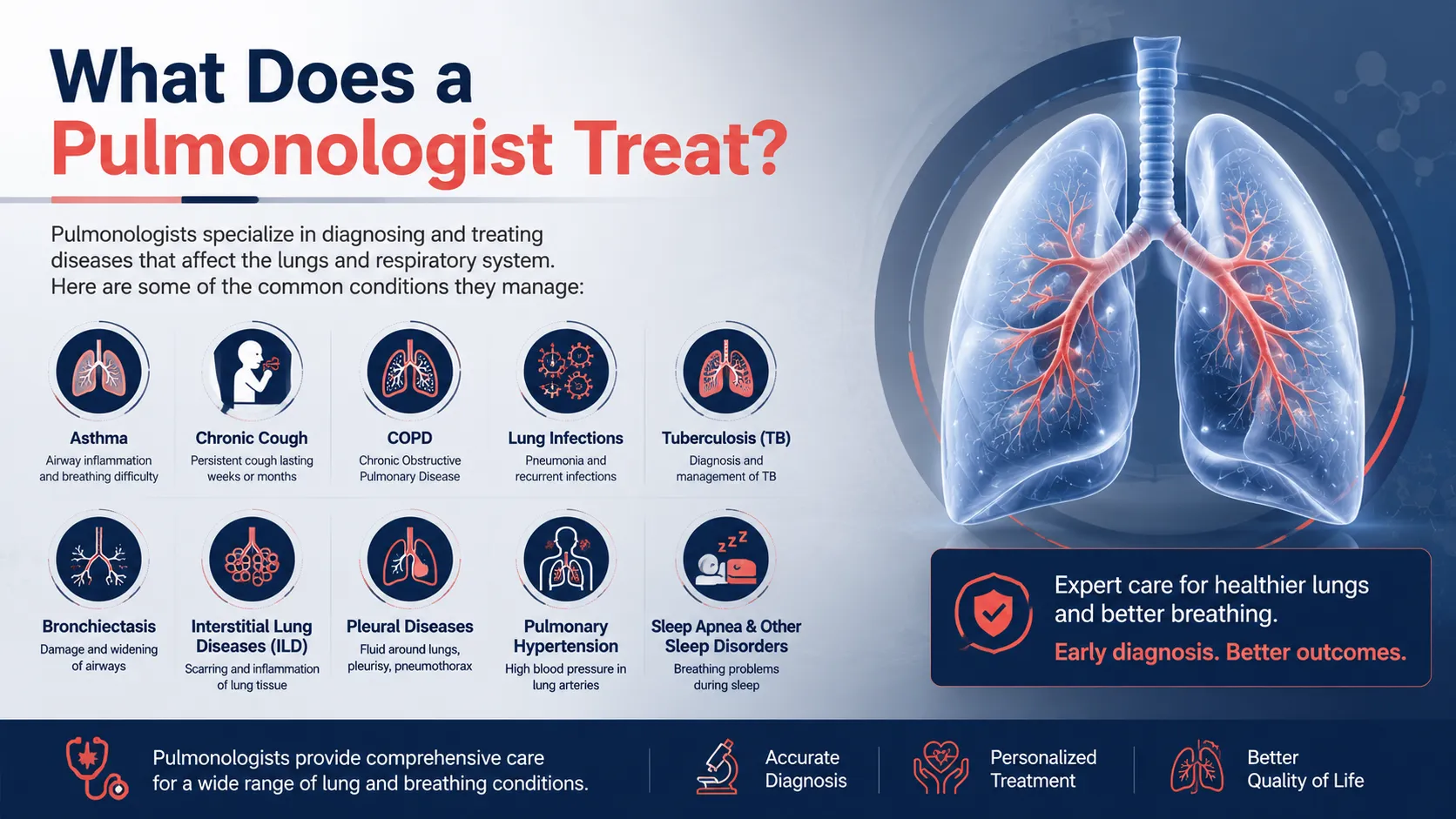
Pulmonologists treat conditions that affect breathing, lung function, the airways, lung tissue, and the structures surrounding the lungs.
The exact range of conditions depends on the doctor’s training and subspecialty interests. Common problems treated by pulmonologists include:
For example, pulmonology services at the Aga Khan University Hospital include care for respiratory conditions ranging from asthma, bronchitis, and tuberculosis to more complex pulmonary diseases requiring critical-care support.
A pulmonologist may also work closely with cardiologists, infectious-disease specialists, oncologists, thoracic surgeons, physiotherapists, radiologists, allergists, sleep specialists, and critical-care physicians when a patient’s condition requires multidisciplinary treatment.
You should consider seeing a pulmonologist when respiratory symptoms are persistent, recurrent, unexplained, worsening, or not improving adequately with initial treatment.
A short-lived cough associated with an uncomplicated viral infection may not require specialist treatment. However, symptoms lasting longer than expected deserve closer attention. Consider seeking medical evaluation for symptoms such as:
The Aga Khan University Hospital similarly advises seeking medical attention for persistent coughing, wheezing, shortness of breath, or chest tightness because these symptoms can be associated with respiratory problems.
The important point is not to diagnose yourself from symptoms alone. Asthma, infections, heart conditions, anemia, anxiety, lung disease, and several other problems can sometimes cause overlapping symptoms.
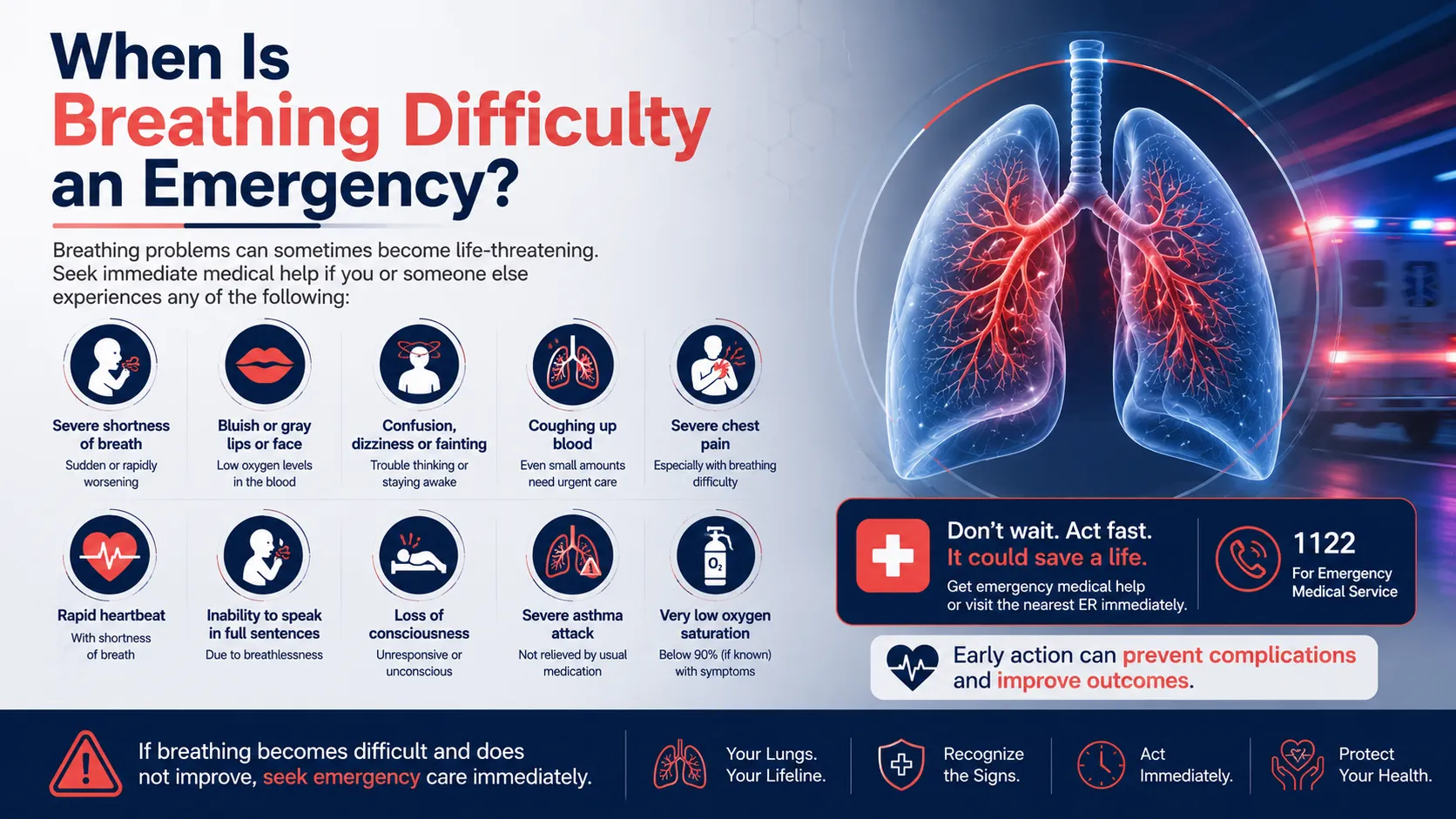
Some respiratory symptoms require urgent or emergency medical attention rather than waiting for a routine pulmonology appointment.
Seek urgent medical care if someone develops severe difficulty breathing, rapidly worsening breathlessness, bluish or grey discoloration around the lips, confusion, loss of consciousness, significant coughing of blood, or severe chest pain associated with breathing difficulty.
A sudden inability to breathe normally should never be managed simply by searching online for the best pulmonologist in Karachi and waiting for an outpatient appointment. Emergency assessment may be necessary first. Once the patient is stable, a pulmonologist can become involved if specialist respiratory evaluation is required.
A general physician can assess and treat many common respiratory illnesses. A pulmonologist becomes particularly useful when symptoms are complex, persistent, recurrent, severe, or require specialized testing.
Situation | General Physician | Pulmonologist |
Mild short-term cough or cold | Often appropriate first contact | Usually not necessary initially |
Uncomplicated respiratory infection | Can evaluate and treat | May be needed if recurrent or complicated |
Suspected asthma | Can perform initial assessment | Useful for confirmation or difficult cases |
Poorly controlled asthma | May provide initial management | Specialist evaluation often valuable |
Chronic cough | Initial assessment possible | Useful when cough remains unexplained |
COPD | Initial diagnosis may occur | Long-term specialist management may be needed |
Abnormal chest imaging | Can arrange initial investigation | Useful for detailed respiratory evaluation |
Interstitial lung disease | Referral usually appropriate | Specialist management required |
Bronchoscopy required | Not normally performed | Pulmonologist/interventional specialist |
Severe respiratory failure | Emergency/critical care | Pulmonary and critical-care expertise may be required |
The right starting point depends on the severity and complexity of the problem. Specialist care does not replace primary medical care; the two often work together.
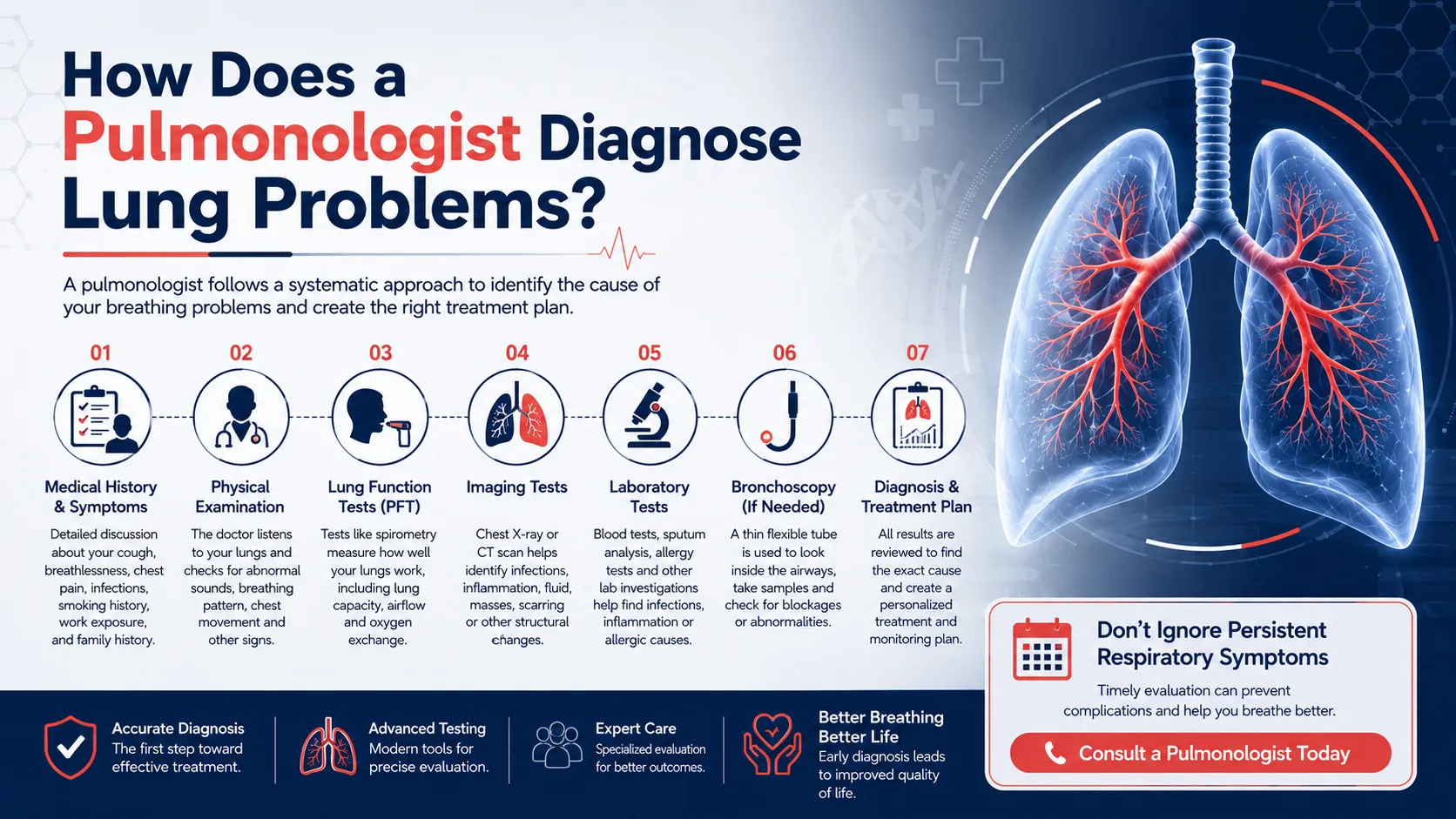
A pulmonologist diagnoses respiratory disease by combining your medical history, symptoms, physical examination, previous records, imaging, and appropriate respiratory tests. The first consultation usually begins with questions.
The doctor may ask when symptoms started, whether they are getting worse, whether coughing produces mucus, whether symptoms occur during exercise or sleep, and whether there is a history of smoking, allergies, tuberculosis exposure, occupational dust, chemical exposure, or previous respiratory illness.
The pulmonologist will usually listen to the lungs and may check breathing rate and oxygen saturation. Previous chest X-rays, CT scans, laboratory reports, hospital records, and medication prescriptions can also provide valuable information.
Further tests are selected according to the suspected condition rather than ordered automatically for every patient.
Spirometry measures how much air a person can breathe in and out and how effectively air moves through the lungs. It is commonly used when evaluating conditions such as asthma and COPD.
Pulmonary function facilities in Karachi may provide spirometry together with other specialized lung-function measurements.
Pulmonary function testing, commonly abbreviated as PFT, provides more detailed information about how the lungs are working. Depending on the clinical question, testing may evaluate airflow, lung volumes, gas transfer, respiratory muscle strength, or response to bronchodilator medication.
For example, AKUH describes tests including spirometry, lung volumes, diffusion capacity, bronchodilator reversibility, respiratory muscle pressure measurements, and exercise-related assessment.
A chest X-ray can provide useful information about the lungs and surrounding structures. It may be requested for symptoms such as prolonged cough, suspected pneumonia, certain TB evaluations, or other respiratory concerns. An X-ray does not diagnose every lung condition, however.
A CT scan provides more detailed images than a standard chest X-ray. Pulmonologists may use chest CT findings when investigating lung nodules, bronchiectasis, interstitial lung disease, unexplained abnormalities, complicated infections, or suspected tumors. Whether a CT scan is appropriate depends on the patient’s symptoms and clinical findings.
Pulse oximetry is a quick, non-invasive way of estimating oxygen saturation in the blood. It can be useful during assessment of respiratory illness, although oxygen saturation should always be interpreted in the context of the patient’s overall condition.
Bronchoscopy allows a specialist to examine the airways using a thin flexible instrument. Depending on the situation, it can help investigate abnormal imaging, bleeding, infection, airway obstruction, or suspected malignancy and may allow samples or biopsies to be obtained.
Bronchoscopy and related pulmonary procedures are available through established pulmonology departments in Karachi.
Asthma and COPD can both cause coughing, wheezing, and shortness of breath, but they are not the same condition.
Asthma involves variable airway inflammation and narrowing that often changes over time and may be triggered by allergens, exercise, infections, smoke, or other irritants. COPD is a chronic condition characterized by persistent airflow limitation and is strongly associated with tobacco exposure, although other environmental and occupational exposures can contribute.
Because their symptoms can overlap, diagnosis should not be based on symptoms alone. Spirometry and bronchodilator testing may help doctors distinguish between different patterns of airflow limitation. Correct diagnosis matters because treatment plans, long-term monitoring, inhaler selection, risk-factor management, and prognosis can differ.
Yes. Pulmonologists commonly evaluate and manage pulmonary tuberculosis, particularly when respiratory symptoms, abnormal imaging, diagnostic uncertainty, complications, or underlying lung disease are involved.
Tuberculosis remains an important respiratory condition in Pakistan, so prolonged cough, fever, night sweats, unexplained weight loss, or coughing up blood should receive appropriate medical evaluation.
These symptoms do not automatically mean someone has TB. Other diseases can cause similar problems, which is why testing and professional diagnosis are important. Major pulmonary departments in Karachi specifically include tuberculosis among the respiratory conditions they manage.
A chronic or persistent cough has many possible causes.
Respiratory causes may include asthma, airway irritation, chronic bronchitis, bronchiectasis, respiratory infections, tuberculosis, or other lung disorders. However, cough can also be associated with conditions outside the lungs, including upper-airway problems or gastroesophageal reflux.
This is why repeatedly taking cough syrups without understanding the cause may not solve the problem. A pulmonologist can evaluate the pattern of the cough and decide whether investigations such as chest imaging or lung-function testing are necessary.
Air pollution and exposure to airborne irritants can contribute to respiratory symptoms, particularly in people who already have asthma or another chronic lung condition.
People living or working around heavy traffic, construction dust, industrial emissions, tobacco smoke, or occupational particles may experience greater respiratory irritation depending on the type, concentration, and duration of exposure.
Practical exposure reduction can include avoiding smoking, limiting second-hand smoke exposure, following workplace respiratory-safety requirements, improving indoor ventilation where appropriate, and following medical advice for existing respiratory disease.
AKUH’s lung-health guidance also recommends avoiding smoking and minimizing exposure to second-hand smoke and air pollution.
The phrase best pulmonologist in Karachi is subjective. There is no single lung doctor who is automatically best for every patient. A better approach is to find a pulmonologist whose qualifications, experience, clinical interests, location, hospital access, and diagnostic resources match your particular problem.
Look for recognized postgraduate training in pulmonology, pulmonary medicine, chest medicine, or an appropriate related specialty. Credentials should ideally be verifiable through the doctor’s hospital, clinic, professional profile, or relevant medical registration system.
Pulmonology contains several areas of expertise. One specialist may have particular experience with asthma and COPD, while another may focus on interstitial lung disease, sleep disorders, critical care, lung cancer diagnosis, pleural disease, or interventional pulmonology.
For example, current Karachi pulmonology profiles show clinical interests ranging from asthma and COPD to bronchoscopy, pleural procedures, interstitial lung disease, pulmonary infections, and respiratory failure.
For straightforward respiratory problems, a standard outpatient clinic may be sufficient. More complicated conditions can benefit from access to:
Both Aga Khan University Hospital and Liaquat National Hospital describe specialized pulmonary diagnostic and treatment facilities in Karachi.
When searching for a pulmonologist near me in Karachi, convenience matters more than it might initially appear.
Chronic respiratory diseases often require follow-up visits rather than a single consultation. Choosing a clinic that is reasonably accessible from your home or workplace can make regular appointments and testing easier. However, expertise should usually take priority over distance when the condition is complex.
Arriving prepared can make the consultation more productive. Bring relevant medical information such as:
Do not stop prescribed respiratory medicines simply because you have an upcoming appointment unless your healthcare professional specifically instructs you to do so.
Certain lung-function tests may require temporary adjustments to medications. Follow the testing center’s instructions. For example, AKUH advises patients undergoing PFTs to confirm with their doctor whether a prescribed bronchodilator should be withheld before testing.
Good respiratory care involves understanding your condition rather than simply receiving a prescription. Useful questions include:
If you do not understand the diagnosis or treatment plan, ask for a simpler explanation.
A first consultation usually includes a detailed history followed by a physical examination. The doctor may discuss your cough, sputum, breathing pattern, exercise tolerance, chest discomfort, fever, sleep symptoms, allergies, infections, smoking history, and environmental or occupational exposures.
Oxygen saturation may be measured, and the lungs are generally examined with a stethoscope. The pulmonologist will then decide whether further testing is required.
Some patients need only clinical assessment and treatment. Others may require spirometry, blood tests, chest imaging, sputum testing, sleep assessment, or specialized procedures. Testing should be guided by clinical need rather than performed routinely without a clear reason.
Many respiratory conditions can be effectively managed, although treatment and expected outcomes depend on the diagnosis and severity.
Asthma, for example, often requires ongoing trigger management, appropriate inhaler therapy and monitoring. COPD management may involve smoking cessation, inhaled medication, vaccinations where appropriate, rehabilitation and monitoring. Other diseases may require highly specialized treatment.
Pulmonary rehabilitation can also form part of management for selected chronic respiratory conditions. Such programs may combine supervised exercise, education and lifestyle guidance to improve functional ability and symptom management. AKUH lists pulmonary rehabilitation among its respiratory services for people with COPD.
The goal is not simply to suppress symptoms temporarily but to identify the underlying condition and create an appropriate management plan.
Even the right medication may work poorly if an inhaler is being used incorrectly. Different inhalers require different techniques. Timing, inhalation speed, breath holding, device preparation, and cleaning can all affect medication delivery.
If you use an inhaler, consider taking it with you to your appointment and demonstrating how you use it. A doctor, nurse, pharmacist, or respiratory professional can identify technique problems and explain the correct method for your particular device.
Do not increase inhaler doses or frequently use rescue medication without discussing worsening symptoms with a healthcare professional.
Stopping smoking is one of the most important steps a smoker can take to protect respiratory and overall health. Smoking is strongly associated with COPD, lung cancer, and numerous other health problems. It can also worsen respiratory symptoms and complicate existing lung disease.
Pulmonologists may discuss smoking cessation as part of respiratory treatment. Pulmonary specialists at AKUH, for example, list smoking cessation among their clinical areas of interest and care. Stopping can be difficult, and some people benefit from structured behavioral support and appropriate medical treatment.
When choosing a pulmonologist in Karachi, focus on qualifications, relevant experience, diagnostic facilities, accessibility, and quality of patient care. Dr. Asif Aziz Sahito can be considered for consultation when seeking medical evaluation for respiratory symptoms and related health concerns.
Prioritize:
You can learn more about Dr. Asif Aziz Sahito before arranging a consultation.