Subtotal $0.00


Medova is a convenience services to the adaptability, Spacious modern villa living room with centrally placed swimming pool blending indooroutdoor
Medova is a convenience services to the adaptability, Spacious modern villa living room with centrally placed swimming pool blending indooroutdoor
When people feel unwell, they often feel confused about where to go first. Some symptoms are simple, but others may signal something serious.
This uncertainty creates stress, delays treatment, and sometimes worsens health conditions.
Many patients ask themselves whether they need a specialist or a general medicine doctor for their problem.
The reality is that most health concerns should start with a general medicine doctor.
These doctors act as the first point of contact for diagnosis, treatment, and guidance.
They help patients understand their condition clearly and guide them toward the right care path.
In this article, we will explain everything about the role of a general medicine doctor, why they are important, and how they can help you manage your health effectively.
The information is simple, clear, and designed to help you make better health decisions.
A general medicine doctor is a medical professional who specializes in diagnosing and treating a wide range of diseases.
They do not focus on one specific organ or condition. Instead, they handle overall adult health care.
These doctors are important because they can identify problems early.
They also guide patients to the right specialist when needed. This helps prevent delays in treatment and reduces health risks.
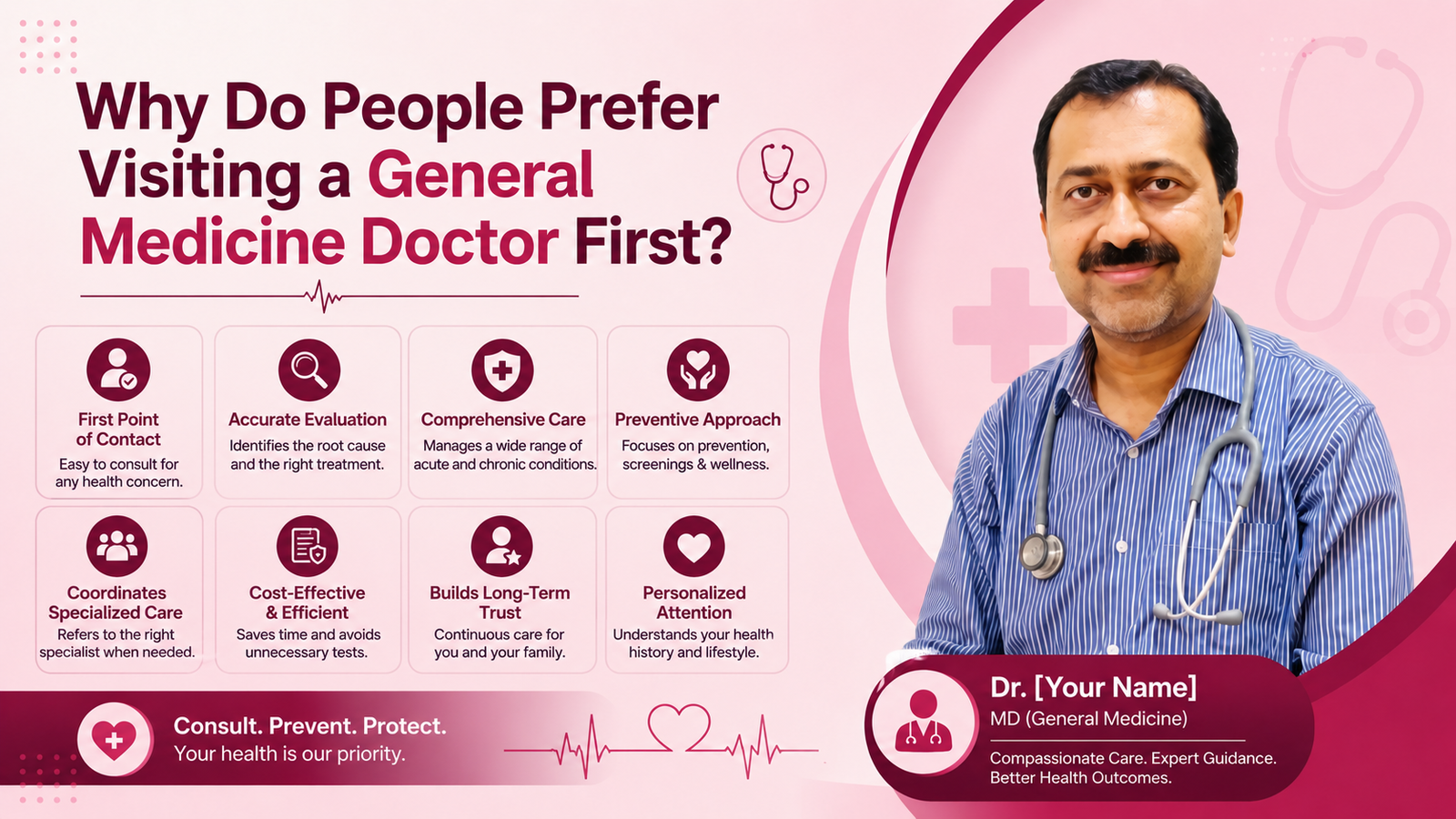
Many people prefer starting with a general medicine doctor because they provide a complete evaluation.
Instead of guessing the problem, they carefully study symptoms and medical history.
This approach helps avoid unnecessary tests and incorrect treatments.
Patients also feel more comfortable because they receive clear guidance in simple language.
A general medicine doctor treats many common and complex conditions. These include fever, infections, diabetes, high blood pressure, respiratory problems, and digestive issues.
They also manage long-term diseases and help patients maintain stable health through regular checkups and preventive care.
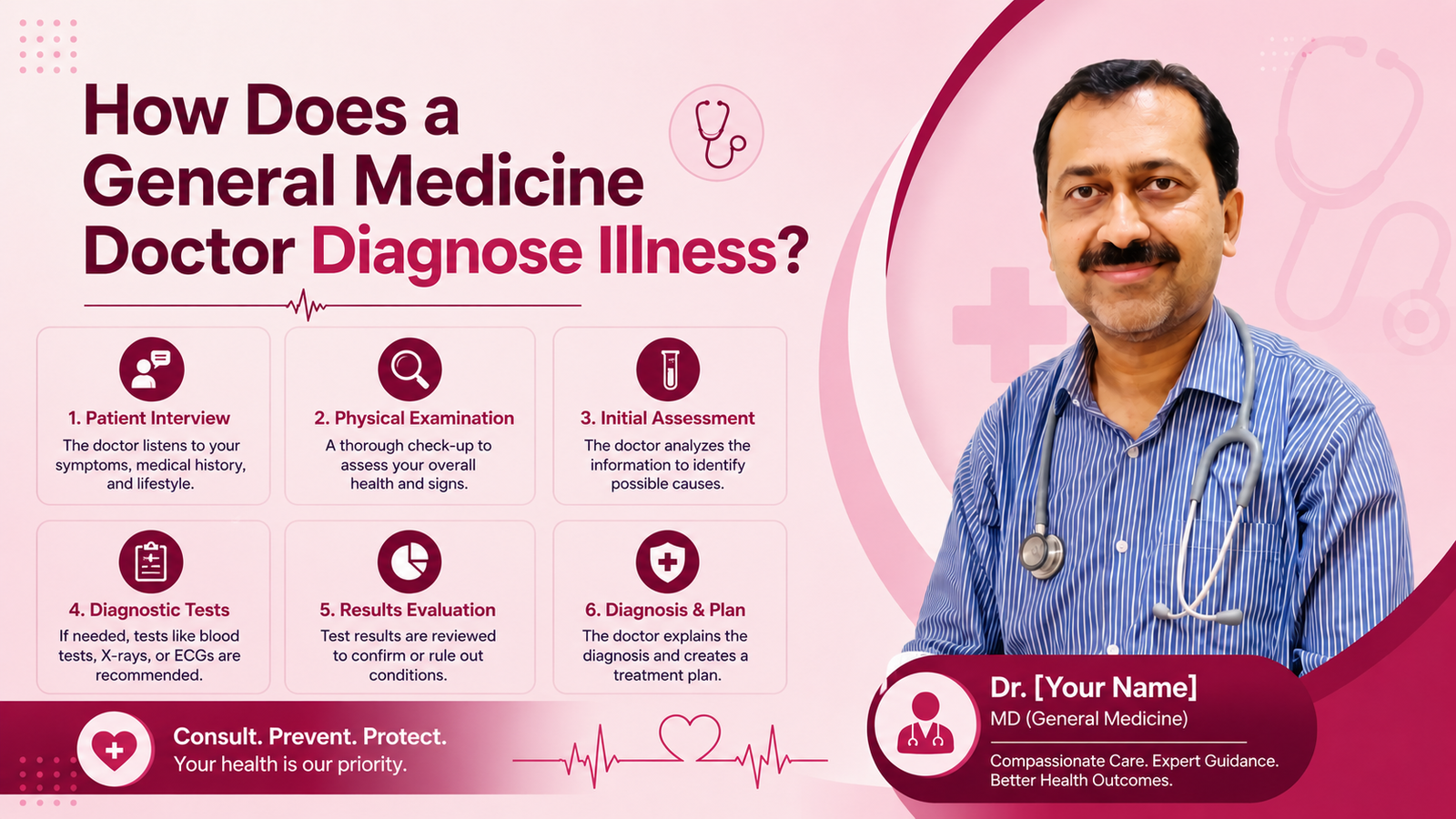
Diagnosis starts with a detailed conversation about symptoms and medical history. The doctor may then perform a physical examination.
If needed, they recommend laboratory tests or imaging. This step-by-step process helps identify the exact cause of the problem and ensures accurate treatment.
Preventive care is one of the most important roles of a general medicine doctor. They help patients avoid diseases before they become serious.
This includes health screenings, lifestyle advice, and vaccination guidance. Preventive care reduces the risk of chronic illnesses and improves overall well being.
Chronic diseases like diabetes and high blood pressure require long-term management. A general medicine doctor monitors these conditions regularly.
They adjust medications, track progress, and provide lifestyle recommendations. This continuous care helps patients maintain stable health.
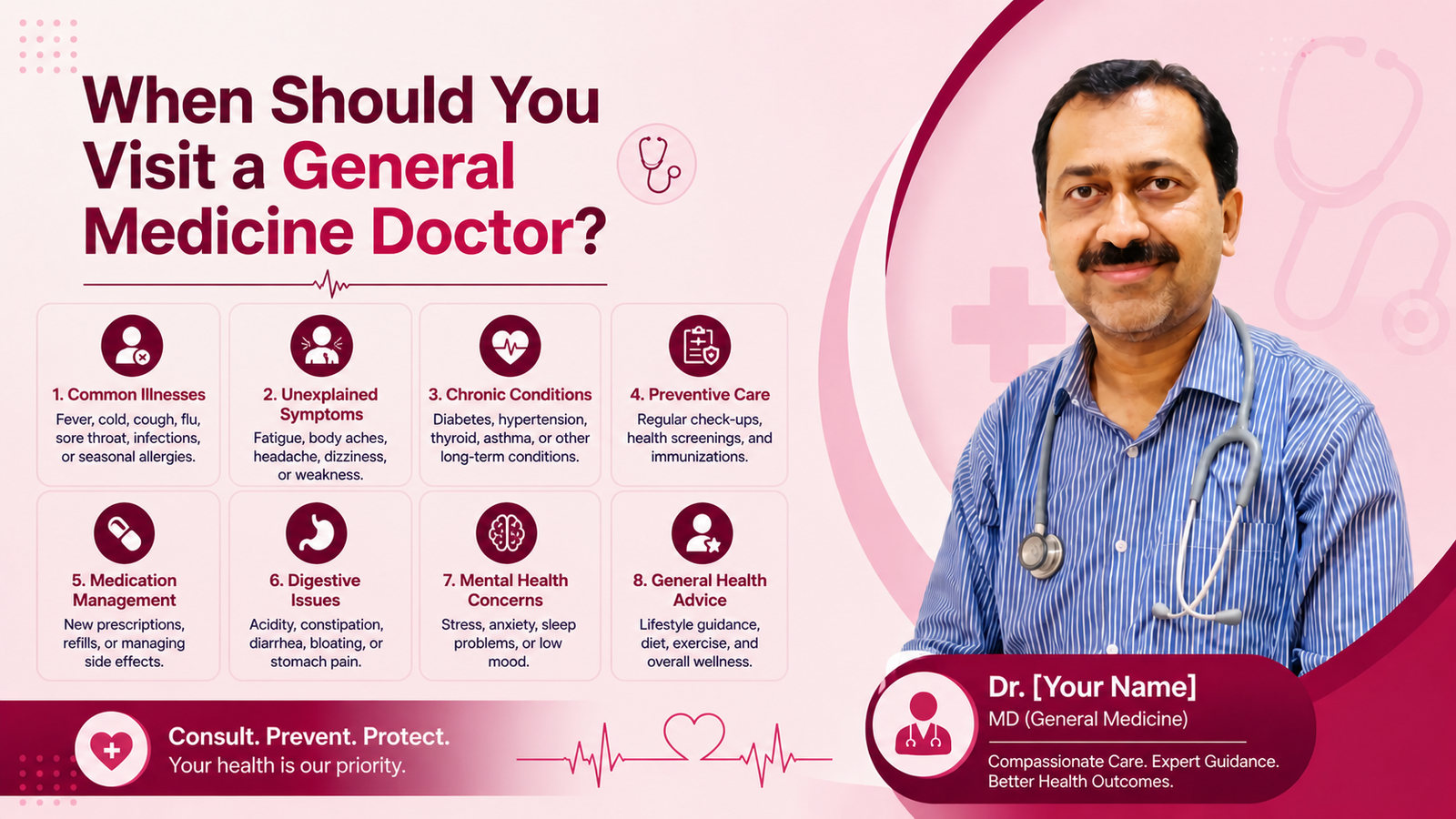
You should visit a general medicine doctor when you experience symptoms like persistent fever, fatigue, pain, or unexplained health changes.
Even minor symptoms should not be ignored. Early consultation can prevent complications and ensure timely treatment.
A general medicine doctor may recommend blood tests, urine tests, X-rays, or other diagnostic procedures depending on symptoms.
These tests help in understanding the internal condition of the body and support accurate diagnosis.
Clear communication is essential in medical care. A good general medicine doctor listens carefully and explains everything in simple terms.
This helps patients understand their condition and follow treatment properly without confusion.
A general medicine doctor cannot replace all specialists, but they play a key role in initial diagnosis. They decide when a specialist is needed.
This ensures patients receive the right care at the right time without unnecessary delays.
Lifestyle advice is a major part of treatment. Doctors recommend healthy eating, regular exercise, proper sleep, and stress management.
These changes support medical treatment and improve long-term health outcomes.
General health is closely linked to mental well-being. A general medicine doctor often identifies signs of stress, anxiety, or depression.
They may provide initial support or refer patients to mental health professionals for further care.
Regular checkups help detect diseases early. Many serious conditions develop silently without symptoms.
Routine visits allow doctors to monitor health changes and take preventive action when needed.
These doctors often treat patients for many years. This helps them understand the patient’s history in detail.
A strong doctor-patient relationship improves trust and leads to better treatment results.
A general medicine doctor diagnoses and treats a wide range of health conditions and provides overall medical care for adults.
You should visit when you have symptoms like fever, pain, fatigue, or any unexplained health issue.
They can manage many conditions and refer patients to specialists when advanced care is needed.
Yes, they offer preventive care through checkups, screenings, and lifestyle advice.
They are important because they provide first level diagnosis and guide patients toward proper treatment and specialists if required.
A general medicine doctor plays a vital role in maintaining overall health.
They are the first point of contact for most medical concerns and provide complete guidance for diagnosis, treatment, and prevention.
By visiting a general medicine doctor early, you can avoid complications, receive accurate treatment, and maintain better long-term health.
Their role is not only to treat illness but also to help you live a healthier and more balanced life.