Subtotal $0.00


Medova is a convenience services to the adaptability, Spacious modern villa living room with centrally placed swimming pool blending indooroutdoor
Medova is a convenience services to the adaptability, Spacious modern villa living room with centrally placed swimming pool blending indooroutdoor

Gastroenterology deals with the digestive system. This system includes:
A digestive health doctor may assess problems such as acid reflux, gastritis, ulcers, bowel changes, and liver disease. Some people need care for a short-term problem. Others have a long-term condition that needs follow-up. The right type of doctor depends on the problem.
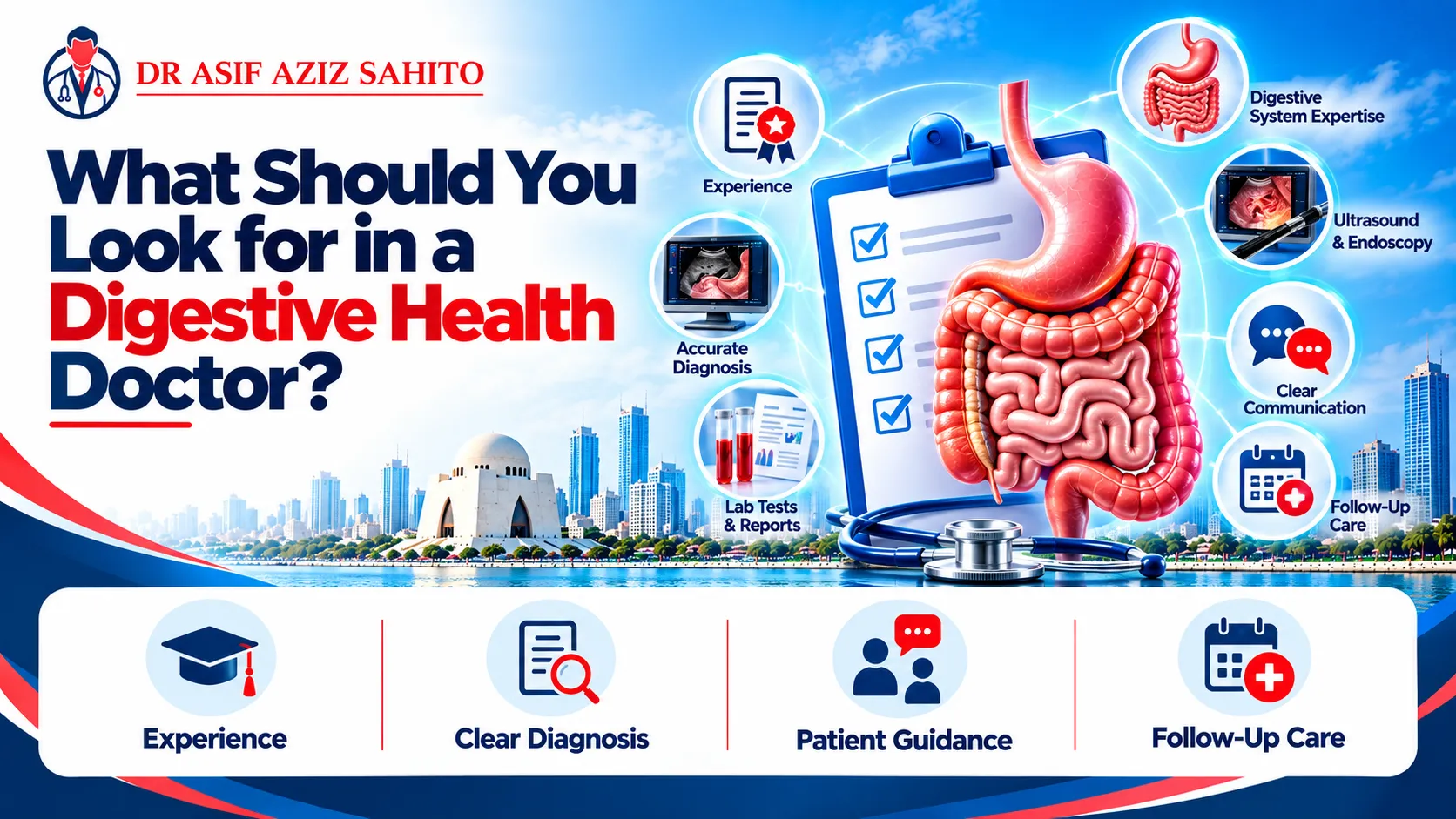
There is no single best gastroenterologist in Karachi for every patient. A doctor who is right for one person may not be right for another. Your choice should depend on:
This is a better way to choose a doctor than relying only on an online rating or an ad. If you need a procedure such as an endoscopy, you may need a gastroenterology specialist who performs that procedure.
If your problem is being managed as part of a wider medical condition, a Consultant Physician may also be involved.
Finding the best doctor for gastroenterology starts with a few basic checks.
Look for a doctor who has experience with your type of problem. For example, a patient with repeated heartburn may need help with reflux. A patient with hepatitis may need care that also considers liver health.
Experience helps the doctor decide which questions to ask and which tests may be useful. Dr. Asif Aziz Sahito’s website states that he has more than 17 years of medical experience. It also lists liver and stomach disorders among his clinical services.
A doctor should explain your problem in a way you can understand. You should know: What may be causing your symptoms. Whether tests are needed. Why a medicine is being used. What changes you can make at home. When you should return. Which symptoms need urgent care. A good consultation should leave you informed, not confused.
Digestive symptoms can look similar. Stomach burning may come from reflux, gastritis, an ulcer, or another cause. Bloating can also have many causes. This is why treatment should not be based on symptoms alone.
For gastritis, doctors may use the patient’s history, a physical exam, and selected tests. These may include an upper GI endoscopy, blood tests, stool tests, or a breath test. Not every patient needs all of these tests.
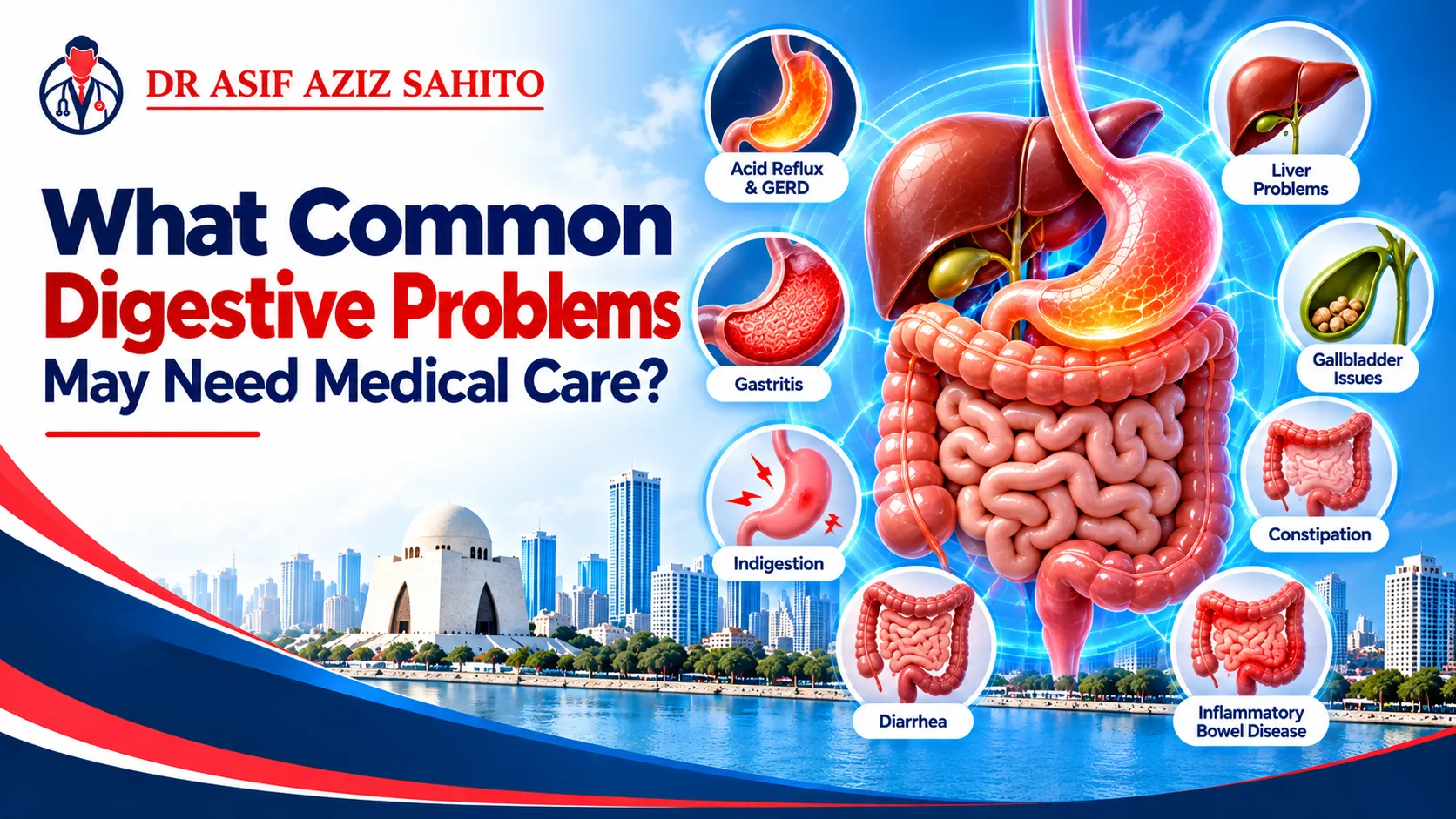
Many stomach and bowel symptoms are mild. But repeated symptoms should not be ignored.
Acid reflux happens when stomach contents move back into the esophagus. Common symptoms include heartburn and regurgitation. Some people may also have nausea, chest discomfort, trouble swallowing, cough, or hoarseness. GERD is a more lasting form of reflux. If reflux keeps coming back or does not improve, speak with a doctor.
Gastritis is inflammation of the stomach lining. Some people have no symptoms. Others may have:
NIDDK notes that gastritis can also cause bleeding in some cases. The treatment depends on the cause.
Indigestion is also called dyspepsia. It is not one disease. It is a group of symptoms. These may include upper stomach pain, burning, bloating, nausea, belching, or feeling full too soon.
Indigestion may happen now and then. It can also become a long-term problem. If it keeps coming back, a medical review can help find the cause.
Diarrhea is often short-term. It may happen due to infection, food, medicine, or other causes. It can become more serious when it causes dehydration.
Adults should seek medical advice sooner if diarrhea comes with severe pain, frequent vomiting, blood in the stool, black stool, or signs of dehydration.
Constipation is also common. Diet, water intake, medicines, activity level, and health conditions can all play a role. A new or lasting change in bowel habits should be discussed with a doctor, especially if it occurs with weight loss, pain, or bleeding.
You should consider a medical visit when symptoms are severe, keep returning, or affect daily life.
Symptom | Why a Medical Review May Help |
Frequent heartburn | It may be linked with reflux or GERD |
Ongoing stomach pain | Many conditions can cause it |
Repeated bloating | Diet or digestive problems may be involved |
Long-term constipation | Diet, medicine, or bowel health may need review |
Persistent diarrhea | It may lead to dehydration |
Repeated nausea or vomiting | The cause may need investigation |
New bowel changes | New changes should be checked |
Unexplained weight loss | Further assessment may be needed |
Trouble swallowing | It needs medical review |
Liver-related symptoms | Blood tests or other checks may be needed |
This table is a guide only. It cannot diagnose a condition.
Some symptoms should not wait for a routine visit. Seek prompt medical care if you have:
NIDDK lists several of these signs as reasons to seek medical care quickly. Chest pain also needs care. Do not assume chest pain is only acidity. It can have other causes.
Many digestive problems share the same symptoms. For example, upper stomach pain may occur with indigestion, gastritis, ulcers, reflux, or another condition. The same is true for nausea and bloating.
This makes self-diagnosis difficult. A doctor can review the full picture. That includes your symptoms, medicines, past health issues, and test results. This can reduce the risk of treating the wrong problem.
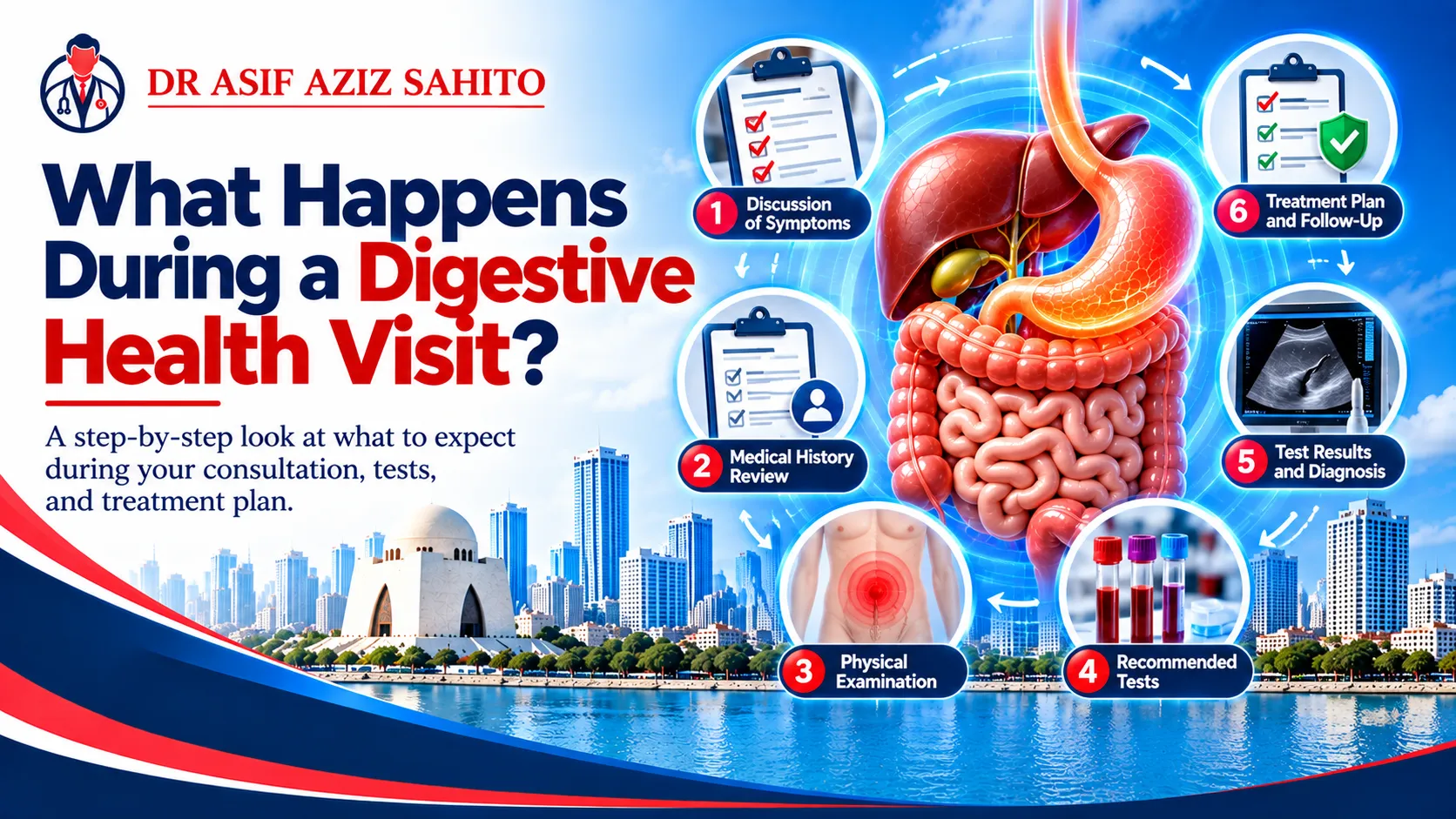
Your first visit usually starts with questions.
The doctor may ask: When did the symptoms start? How often do they happen? Do meals make them better or worse? Have your bowel habits changed? Are you taking any medicines? Have you lost weight? Do you have a history of stomach or liver disease?
The doctor may also perform a physical exam. After this, tests may be suggested if needed.
There is no single test for all digestive problems. Tests depend on your symptoms and the doctor’s findings. They may include:
For suspected gastritis, NIDDK notes that doctors may use an upper GI endoscopy with biopsies. Blood, stool, and breath tests may also be used in some cases. The purpose of testing is to answer a clear medical question. More tests do not always mean better care.
Yes, in some cases. A Consultant Physician can assess and manage many medical problems within their scope of practice. This may include some stomach and liver conditions.
A patient may also need referral to a gastroenterologist if a specialist procedure or advanced digestive care is required. Dr. Asif Aziz Sahito is listed on his official website as a Consultant Physician. His listed services include care for:
The website does not describe him as a gastroenterologist. This distinction is important when choosing care.
Stomach symptoms do not always happen on their own. Other health issues can affect digestion. For example, some medicines may upset the stomach. Diabetes may affect digestion in some patients.
Liver disease may also cause symptoms outside the stomach. This is why your doctor needs to know about your full medical history. The aim is to treat the person, not only one symptom.
A little planning can make your visit more useful. Before you go:
Do not stop a prescribed medicine unless your doctor tells you to do so.
Useful questions include: What could be causing my symptoms? Do I need tests? What is this medicine for? Are there foods I should avoid? How long should I follow this treatment? When should I come back? Which symptoms need urgent care? These questions help you understand the plan. They also make follow-up easier.
Yes. Some digestive problems need more than one visit. You may need to review a test result or see if treatment is working. A clinic that is easy to reach can make follow-up simpler. Dr. Asif Aziz Sahito’s official website lists his clinic at NCCI/NMI Hospital in Saddar, Karachi.
The About page lists Monday to Saturday availability, while the website homepage currently says Monday to Friday. Because those pages do not fully match, it is best to confirm the current schedule before visiting.
Dr. Asif Aziz Sahito is a Consultant Physician based in Karachi. His official website states that he has more than 17 years of clinical experience.
His listed areas of care include liver and stomach disorders such as hepatitis, gastritis, GERD, and ulcers. The website also lists diabetes, blood pressure care, thyroid problems, asthma, TB, and general medical care.
His clinic is listed at:
Room #7, Ground Floor, NCCI/NMI, Depot Lines, Mansfield Street, Muhammad Ali Jinnah Road, Saddar, Karachi 74400.
Patients should confirm the latest clinic time before their visit.