Subtotal $0.00


Medova is a convenience services to the adaptability, Spacious modern villa living room with centrally placed swimming pool blending indooroutdoor
Medova is a convenience services to the adaptability, Spacious modern villa living room with centrally placed swimming pool blending indooroutdoor
A pulmonologist treats health problems that affect the lungs and breathing. These may include asthma, COPD, long-term cough, lung infections, and other airway problems. Breathing symptoms can have more than one cause. For example, shortness of breath may come from the lungs, heart, blood, or another health problem.
That is why a doctor first looks at the full picture. The visit may include questions about your cough, fever, smoking, allergies, work, medicines, and past illness. The doctor may also listen to your chest and check your oxygen level.
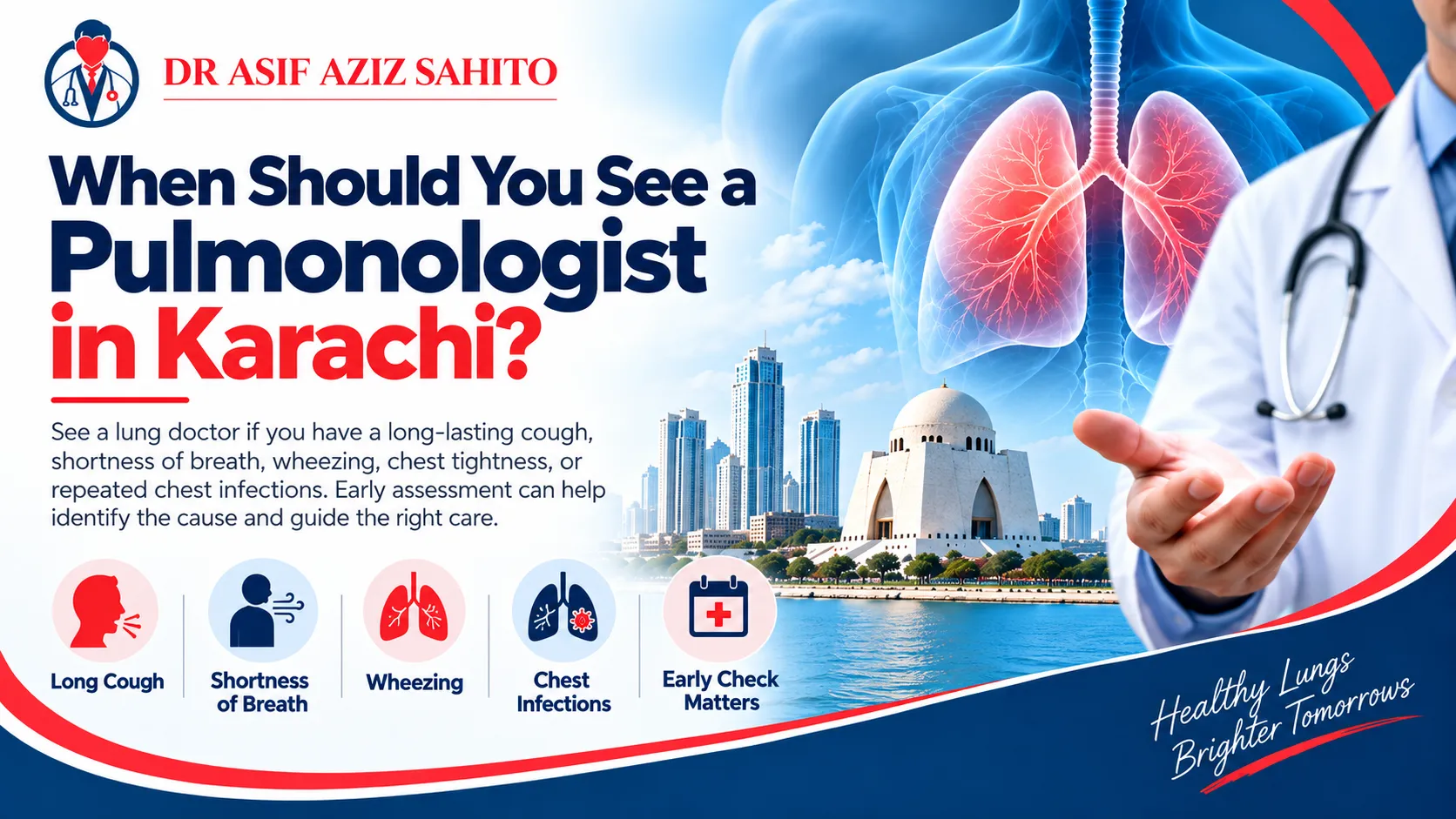
You should seek medical advice when a breathing problem lasts, keeps coming back, or affects daily life. Do not wait for symptoms to become severe. You may need a medical check if you have:
These signs do not always mean you have a serious lung disease. They do mean that a proper check may be useful.
Several conditions can affect breathing. Some are short-term. Others need long-term care.
Asthma is a long-term lung disease. It causes swelling and tightening in the airways. This can make it hard to breathe. Common symptoms include cough, wheezing, shortness of breath, and chest tightness.
Symptoms may come and go. Dust, smoke, fumes, weather changes, exercise, and infections may trigger them. WHO also lists cough, wheeze, breathlessness, and chest tightness as common asthma symptoms. A doctor may use your symptoms and lung tests to assess asthma. Treatment depends on the pattern and severity of the disease.
COPD is a long-term lung disease that limits airflow. It often gets worse over time. Common signs include shortness of breath, cough, mucus, wheezing, and repeated chest infections.
Smoking is a major cause. Long exposure to dust or fumes may also raise the risk. Spirometry is the main lung function test used to diagnose COPD. It measures how much air you can blow out and how fast you can do it.
Tuberculosis, or TB, is an infection caused by bacteria. It most often affects the lungs. Common symptoms include a long cough, chest pain, weakness, tiredness, weight loss, fever, and night sweats.
Some people may also cough up blood. Active lung TB can spread through the air. Timely testing and treatment are important. WHO recommends rapid tests as the first tests for people who have signs or symptoms of TB.
Pneumonia is an infection of the lungs. It may cause cough, fever, chest pain, tiredness, and shortness of breath. Some chest infections are mild. Others need quick care.
Older adults and people with long-term health problems may have a higher risk of serious illness. A doctor may examine your chest and decide if you need a chest X-ray, blood tests, or other tests.
A cough can last for many reasons. It may be linked with asthma, allergies, acid reflux, smoking, infection, or some medicines. This is why repeated cough syrup is not always the answer. The main goal is to find the cause.
The right test depends on your symptoms and medical history. You may not need every test.
Test | What It May Help Check |
Physical exam | Breathing, chest sounds, and general health |
Oxygen saturation | The share of haemoglobin carrying oxygen |
Spirometry | Airflow and lung function |
Chest X-ray | Infection or some changes in the lungs |
CT scan | More detailed images when needed |
Sputum test | Infection or possible lung TB |
Blood tests | Infection, anaemia, or other causes |
Peak flow | Changes in airflow, often in asthma care |
Tests should have a clear reason. More tests do not always mean better care.
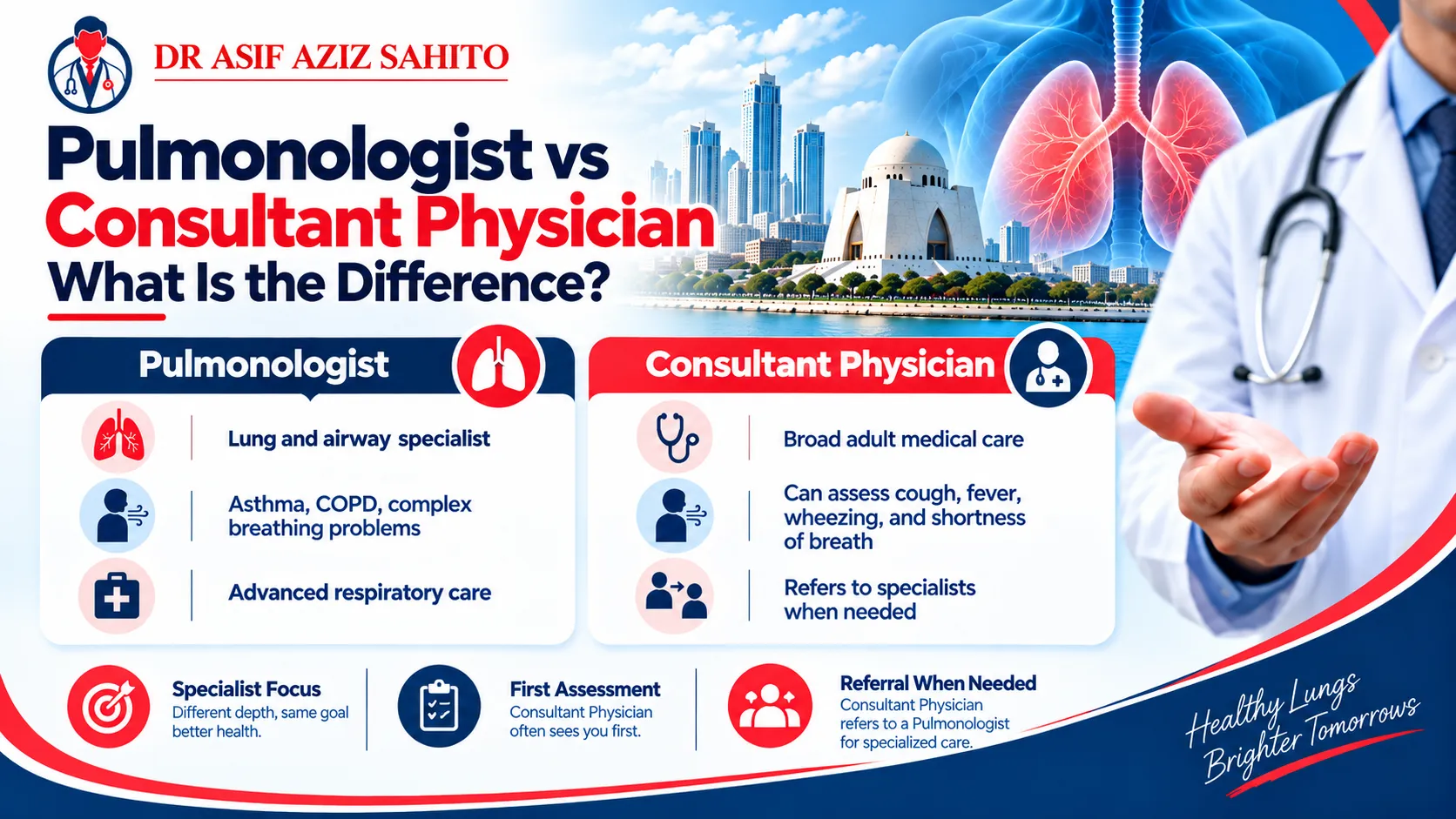
A pulmonologist focuses on diseases of the lungs and airways. This is a specialist field. A Consultant Physician treats a wider range of adult health problems. These may include diabetes, blood pressure, infections, stomach issues, thyroid problems, and breathing symptoms.
A Consultant Physician can often assess a new cough, fever, wheezing, or shortness of breath. The doctor may order tests and start treatment when needed.
If the problem needs advanced lung care, the patient may be sent to a pulmonologist. This may be needed for complex lung disease, special lung tests, or procedures such as bronchoscopy. This step-by-step approach can help when the cause of the symptoms is not yet clear.
There is no single doctor who is right for every patient. The best choice depends on your health problem and the care you need. If you search for a Top Pulmonologist in Karachi or the Best Pulmonologist in Karachi, look beyond the label.
Check the doctor’s training, medical field, hospital affiliation, and experience with your condition. Also check if the clinic is easy to reach. Follow-up may be needed for asthma, COPD, TB, or other long-term problems. A good visit should feel clear.
The doctor should ask about your symptoms. They should explain the possible causes and tell you why a test is needed. You should also know what the next step will be. Avoid claims that promise a cure for every lung problem. Care depends on the cause, severity, age, and other health issues.
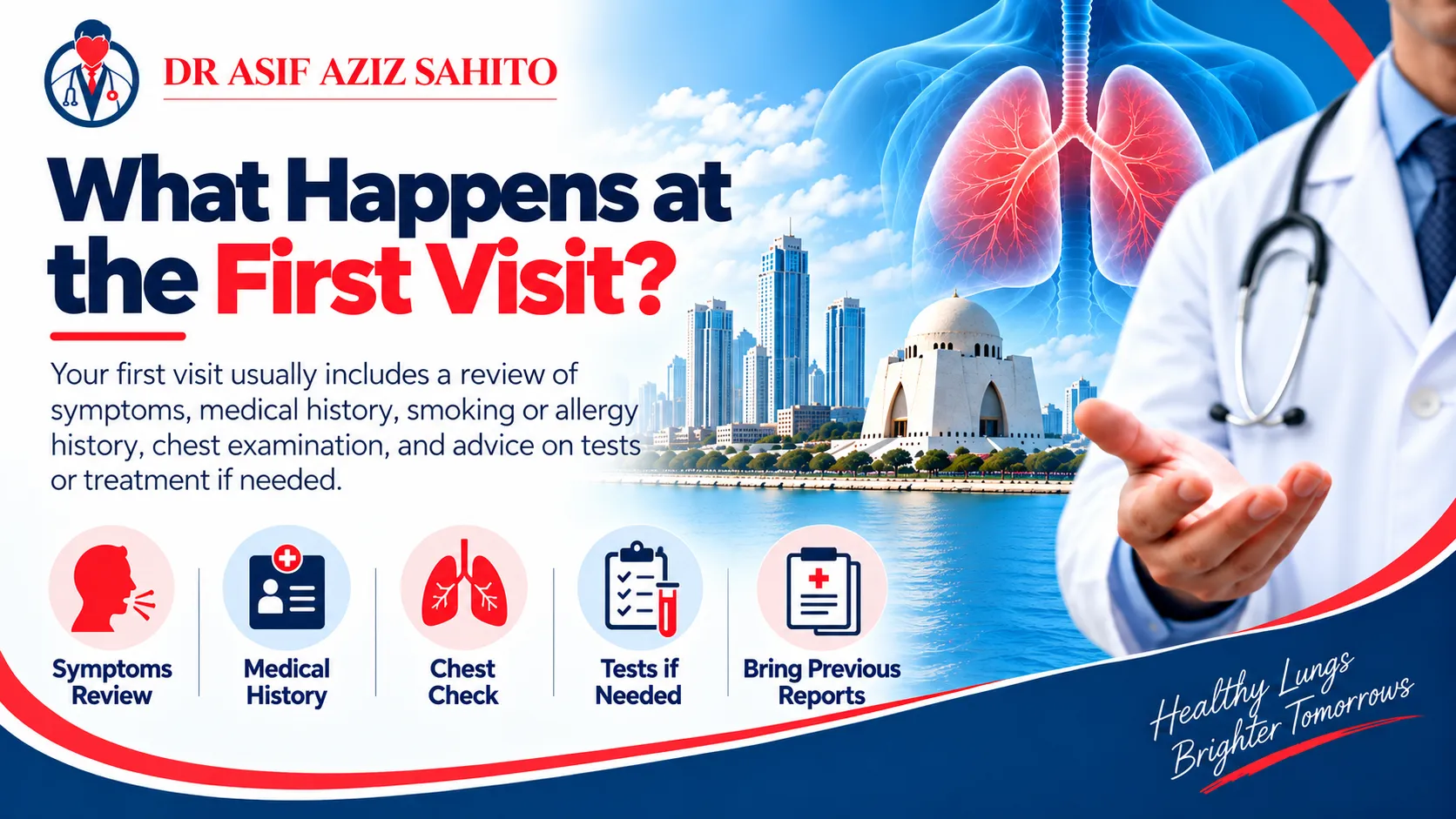
The first visit often starts with your medical history. The doctor may ask when your symptoms began and what makes them better or worse. You may be asked about smoking, allergies, fever, TB exposure, work dust, fumes, past lung disease, and current medicines.
The doctor may listen to your chest and check your breathing. Tests may be advised if needed. Bring old reports, X-rays, scans, and a list of medicines. These can save time and help the doctor understand your case.
Location can matter when you need repeat visits. A nearby clinic may make follow-up easier. Still, distance should not be the only factor.
The doctor’s training and field should match your problem. Access to tests and hospital care may also matter. For people in central Karachi, Saddar may be easy to reach from many areas. Always confirm the clinic location before you travel.
Dr. Asif Aziz Sahito practices in Karachi as a Consultant Physician. His official website states that he has more than 17 years of clinical experience. It also lists Tuberculosis Diagnosis and Treatment and Asthma and Respiratory Treatments among his areas of care.
It is important to use the correct medical title. His official profile does not list him as a pulmonologist. It identifies him as a Consultant Physician. A Consultant Physician can still assess many common breathing symptoms.
This may include cough, fever, asthma symptoms, possible TB, and shortness of breath. If a patient needs advanced lung care, a referral to a pulmonologist may be the next step. His official website lists his practice at NCCI/NMI Hospital in Saddar, Karachi. Patients should confirm current clinic details before visiting.
Breathing problems do not always start in the lungs. Heart problems, anaemia, infection, obesity, and other health issues may also cause shortness of breath.
A wider medical review can help find these causes. It can also help when a patient has more than one health problem. This is one reason a Consultant Physician may be a useful first point of care.
Some symptoms need urgent medical care. Seek emergency help if you have severe trouble breathing or cannot speak because of breathlessness. Severe chest pain, sudden confusion, or blue or grey lips can also be warning signs.
Coughing up more than a few spots or streaks of blood can also be serious. The risk is higher if it comes with chest pain or trouble breathing. Do not wait for a normal clinic visit if symptoms are severe.
Yes. These irritants can make symptoms worse in some people. Asthma symptoms may be triggered by dust, smoke, fumes, pollen, weather changes, and strong scents. WHO lists several of these as common asthma triggers.
Work exposure can also matter. Tell your doctor if symptoms get worse at work, in traffic, during cleaning, or in dusty places. The pattern may help show what is causing the problem. Reducing known triggers can help, but it does not replace medical care.
Not every lung problem can be prevented. Still, a few steps can lower some risks and support your lungs.
These steps do not replace treatment. They support a wider care plan.