Subtotal $0.00


Medova is a convenience services to the adaptability, Spacious modern villa living room with centrally placed swimming pool blending indooroutdoor
Medova is a convenience services to the adaptability, Spacious modern villa living room with centrally placed swimming pool blending indooroutdoor
Do you often feel weak, tired, feverish, or worried about symptoms that keep returning?
Many people ignore early health problems and delay medical care until the condition becomes serious.
Some patients become confused about which doctor they should visit for common illnesses, infections, diabetes, blood pressure, or daily health concerns.
Poor health can affect work, sleep, energy, family life, and emotional wellbeing.
Problems such as fever, cough, body pain, stomach discomfort, weakness, and breathing issues may look simple in the beginning, but they can become more serious if ignored for too long.
Choosing a General Medicine Doctor in Karachi can help you receive the right diagnosis, proper treatment, and complete medical guidance.
A qualified doctor can manage common illnesses and also identify hidden health issues before they become dangerous.
In this complete guide, you will learn what general medicine doctors treat, common symptoms, treatment methods, prevention tips, and when to seek medical attention.
A General Medicine Doctor in Karachi treats a wide range of adult health problems.
This includes fever, infections, diabetes, blood pressure, weakness, allergies, cough, flu, body pain, stomach issues, and breathing problems.
Doctors also manage long-term medical conditions. Their goal is to improve overall health and wellbeing.
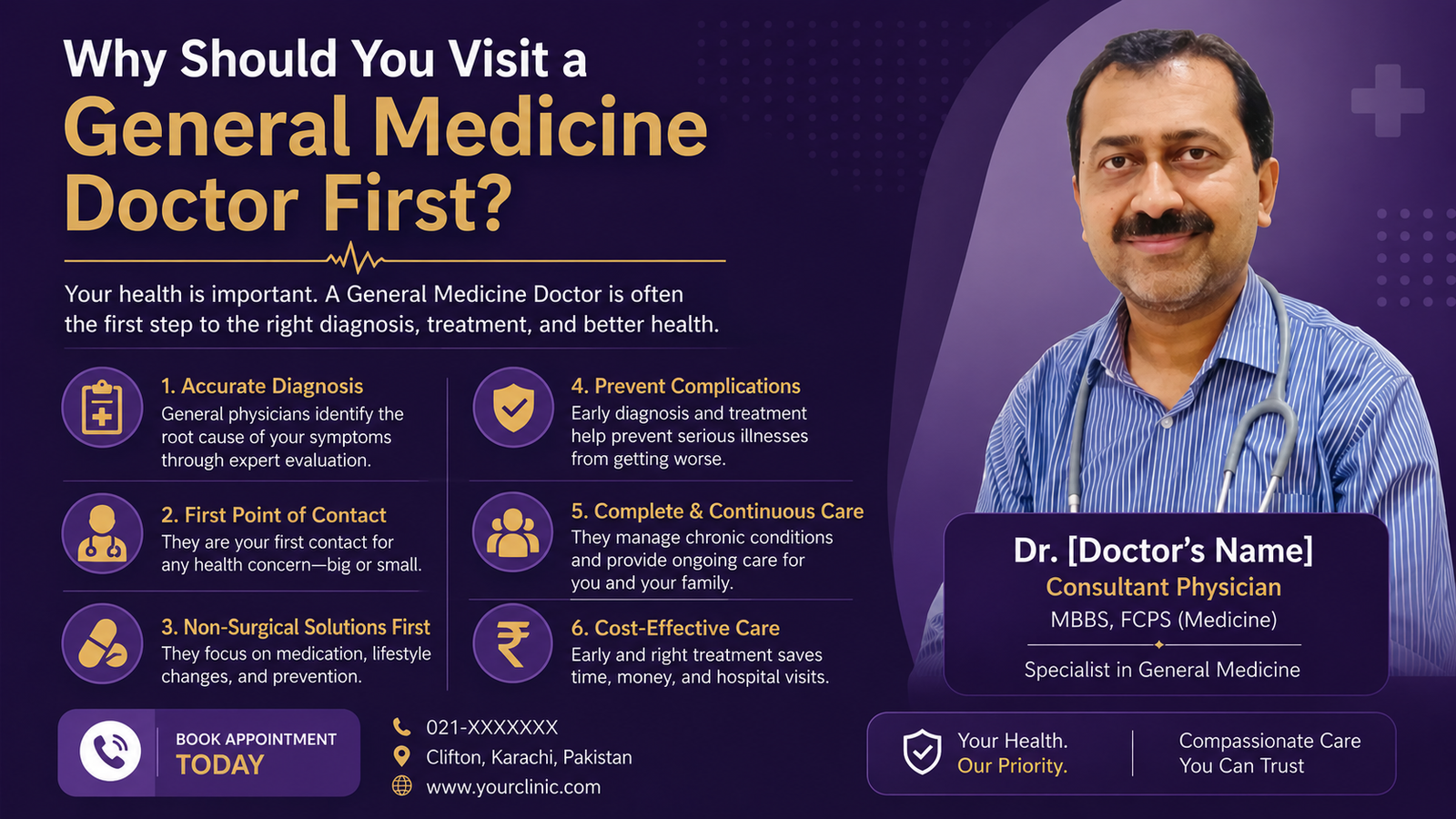
General medicine doctors are often the first point of care for patients.
They evaluate symptoms carefully and identify possible causes. If needed, they refer patients to specialists.
This saves time and helps patients receive the right treatment quickly. They also manage multiple health conditions together.
Many common health problems are treated every day. Fever and viral infections are very common. Cold, cough, sore throat, and flu often require medical care.
Body pain and weakness may also need evaluation. Digestive problems and allergies are frequently treated as well.
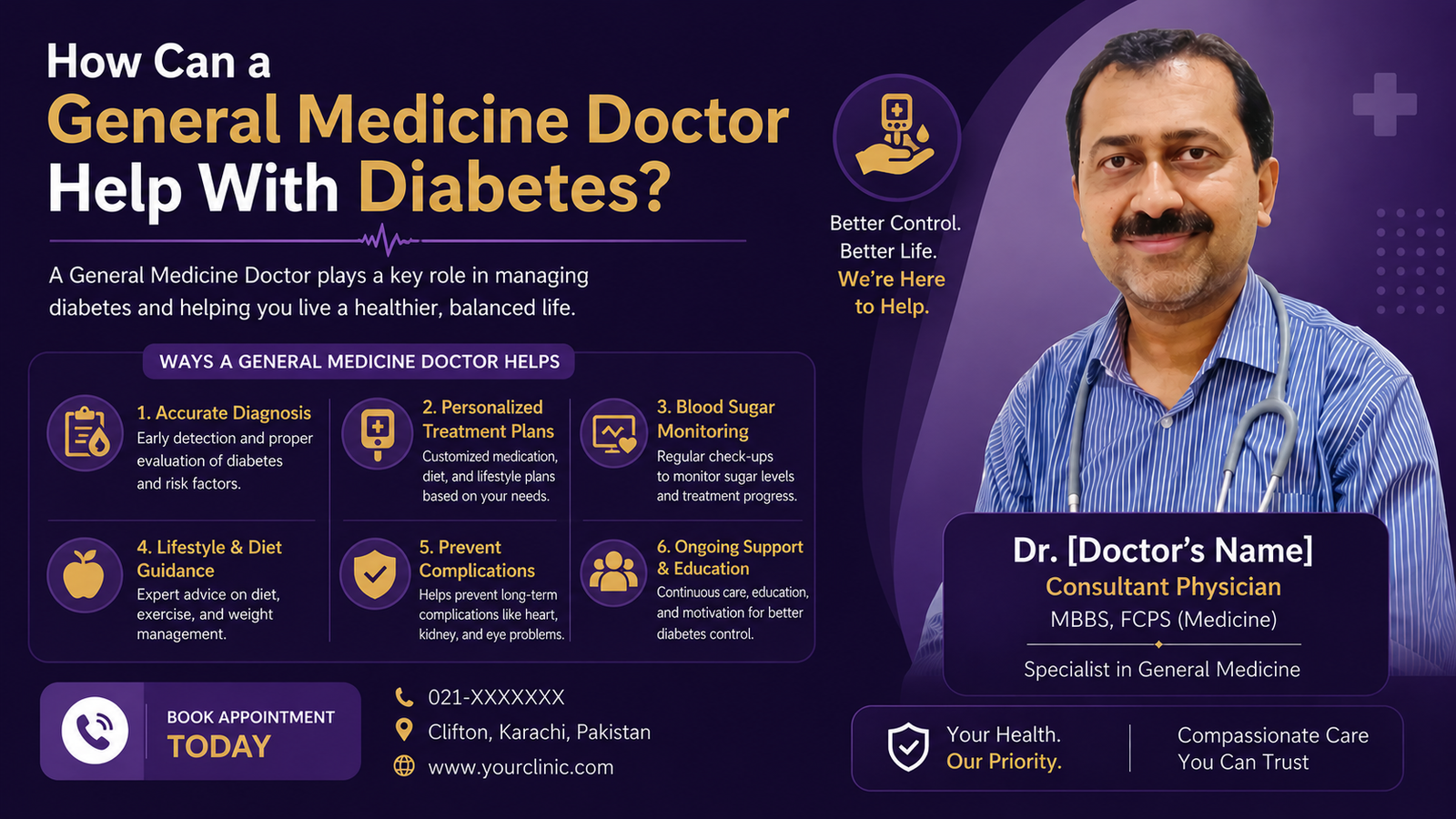
Diabetes needs regular monitoring and proper management. Doctors check blood sugar levels and symptoms.
They prescribe medicines and advise healthy food choices. Routine follow-up helps prevent complications. The General Medicine Doctor in Karachi also guides patients about lifestyle improvement.
High blood pressure may develop silently. Doctors monitor blood pressure readings regularly.
Medicines may be prescribed if needed. Lifestyle changes such as exercise and healthy eating are also important. Early treatment helps reduce health risks.
Some symptoms require immediate medical attention. Persistent fever, chest pain, breathing difficulty, dizziness, severe weakness, and sudden weight loss should not be ignored.
Repeated infections may also signal hidden health issues. The General Medicine Doctor in Karachi can assess these warning signs properly.
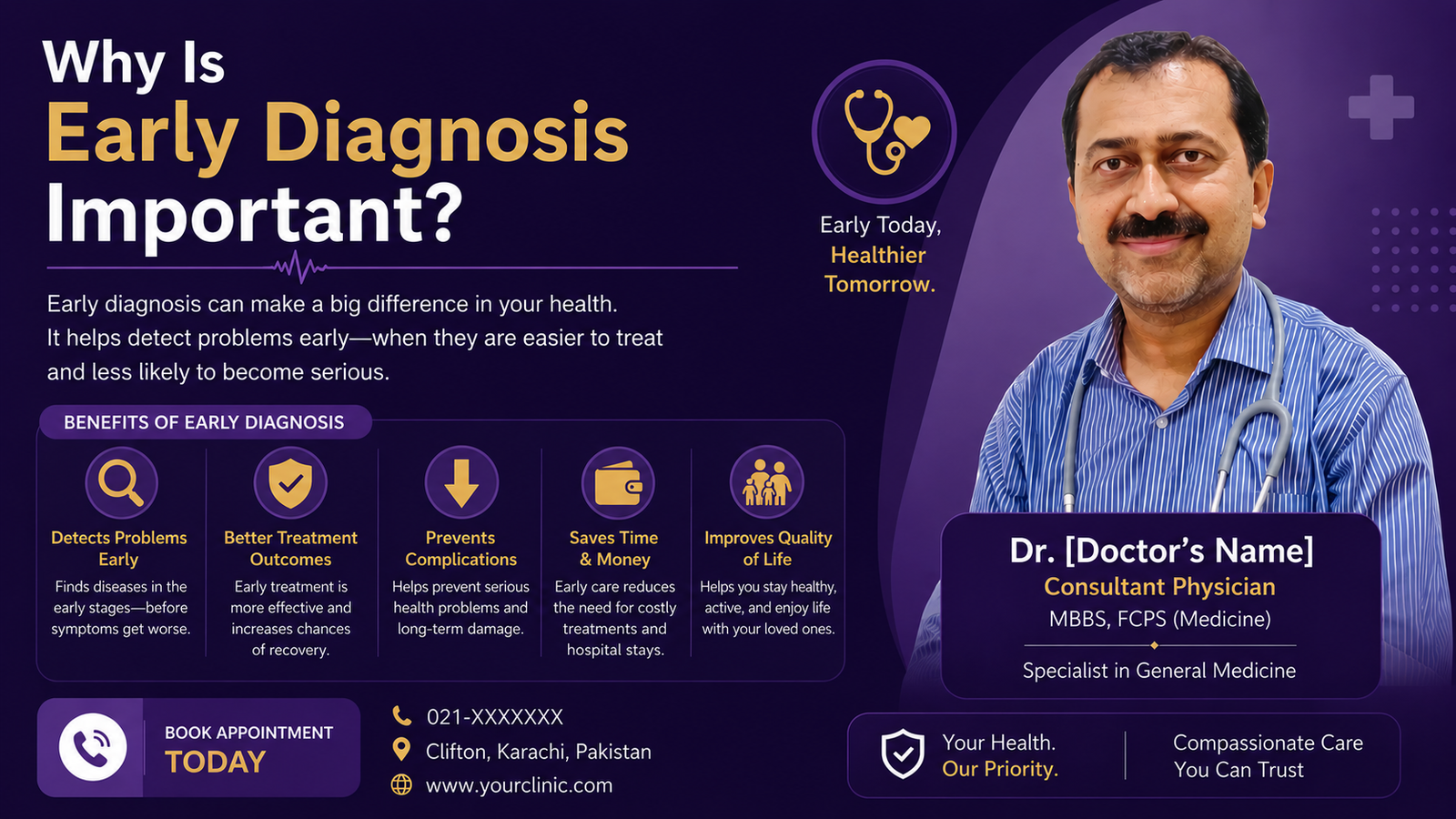
Early diagnosis prevents complications. Many diseases become more serious when treatment is delayed.
Regular medical evaluation helps identify hidden problems early. Quick treatment often improves recovery and long-term health.
Doctors begin with medical history and physical examination. They ask about symptoms, lifestyle, and family history.
Blood tests, urine tests, scans, or an ECG may be advised. Correct diagnosis supports effective treatment.
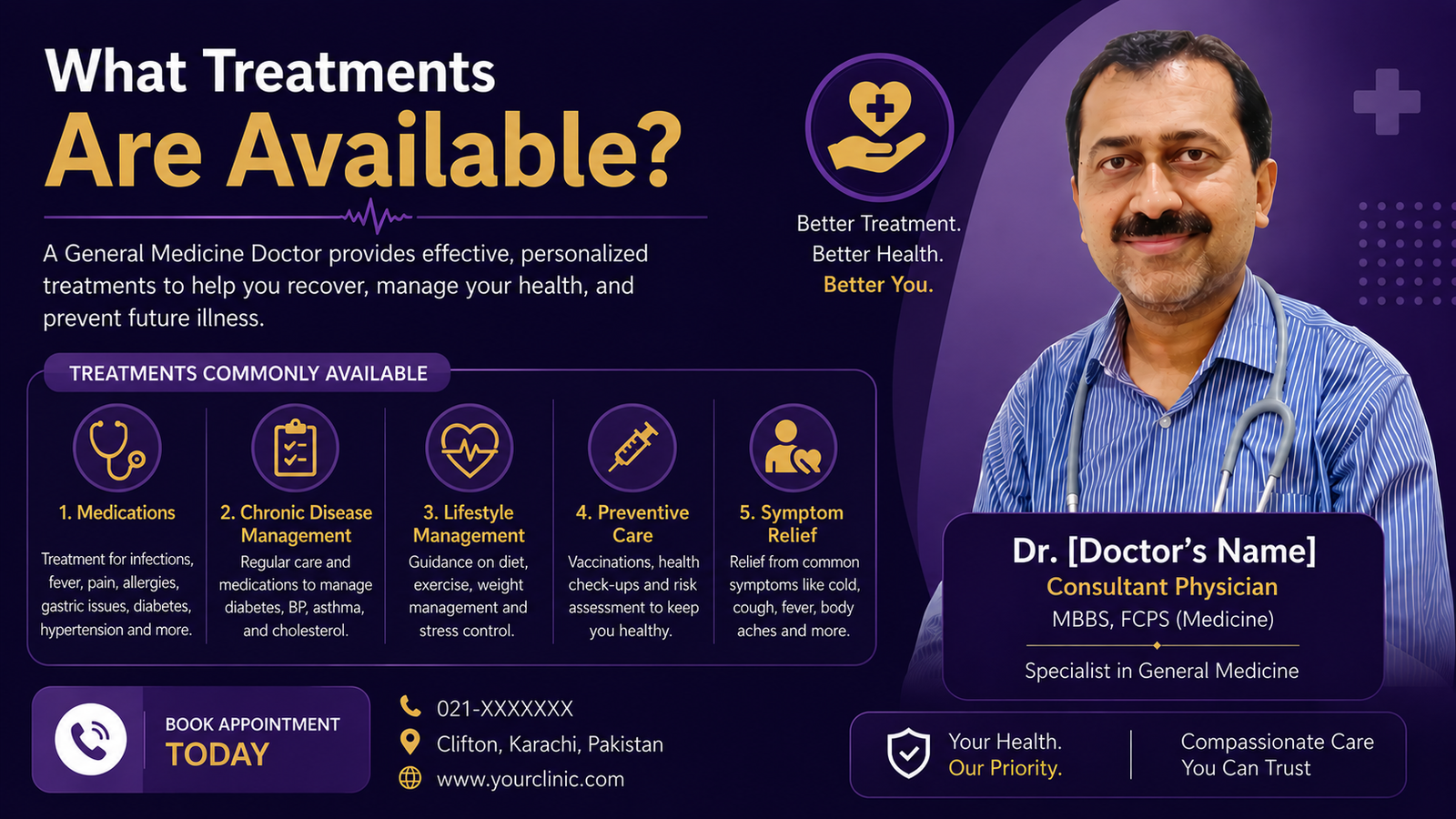
Treatment depends on the illness and severity. Some patients only need short-term medicines. Others require long-term care for chronic conditions.
Doctors may also recommend lifestyle and dietary changes.
Healthy habits reduce the risk of many diseases. Eat balanced meals every day. Exercise regularly to maintain energy and fitness.
Drink enough water and sleep properly. Avoid smoking and unhealthy habits. Simple changes can improve overall wellness.
Visit a doctor if symptoms continue for several days. If the fever keeps returning or the weakness increases, seek medical care.
People with diabetes or blood pressure problems should also attend regular checkups. Do not ignore repeated symptoms.
Yes, prevention is a major part of their role. Doctors guide patients about vaccination, screening tests, healthy weight, and disease prevention.
Regular monitoring helps identify risk factors early. Preventive care improves long-term health.
Routine checkups help monitor overall health. Blood pressure, sugar levels, and cholesterol may need regular review.
Doctors can adjust treatment and detect complications early. Consistent care improves long-term results.
Stress can affect both body and mind. It may increase blood pressure and disturb sleep.
Some people experience headaches, weakness, or digestive problems due to stress. Stress management supports better overall health.
Ignoring symptoms may lead to serious complications. Untreated infections can worsen. High blood pressure may affect the heart and kidneys.
Diabetes complications may develop slowly. Early treatment reduces future health risks.
Support from family members improves recovery. Healthy meals and emotional support help patients follow treatment plans.
Family encouragement often improves confidence and motivation. Strong support systems improve overall wellbeing.
They treat fever, infections, diabetes, blood pressure, and common illnesses.
When symptoms continue, or you need routine medical care.
Yes, they manage diabetes and monitor blood sugar levels.
Yes, they help detect diseases early and improve health.
Yes, stress may affect sleep, blood pressure, and digestion.
General health problems should never be ignored. Early diagnosis, proper treatment, and regular medical care are essential for a healthy life.
By choosing a General Medicine Doctor in Karachi, you can receive trusted healthcare, accurate diagnosis, and complete support for common and long-term medical conditions.
With expert care and healthy habits, better health and improved quality of life are possible.