Subtotal $0.00


Medova is a convenience services to the adaptability, Spacious modern villa living room with centrally placed swimming pool blending indooroutdoor
Medova is a convenience services to the adaptability, Spacious modern villa living room with centrally placed swimming pool blending indooroutdoor
Low blood pressure, medically known as hypotension, occurs when blood pressure is lower than expected. A reading below 90/60 mm Hg is commonly considered low, although what is normal or concerning can vary from person to person.
Common low blood pressure symptoms include dizziness, lightheadedness, weakness, blurred vision, nausea, and fainting. Some people naturally have lower readings without symptoms, while others may feel unwell when their blood pressure suddenly drops.
The severity depends not only on the reading but also on the symptoms, how quickly the pressure falls, and its underlying cause. Fainting, confusion, chest pain, breathing difficulty, or signs of shock require urgent medical attention.
For patients experiencing recurring blood pressure problems, Dr. Asif Aziz Sahito, Consultant Physician in Karachi, provides medical evaluation and guidance to identify possible causes and determine appropriate management.
This guide covers low blood pressure symptoms, possible causes, dangerously low blood pressure in men and women, hypotension during pregnancy, treatment options, and what to do when blood pressure becomes too low.
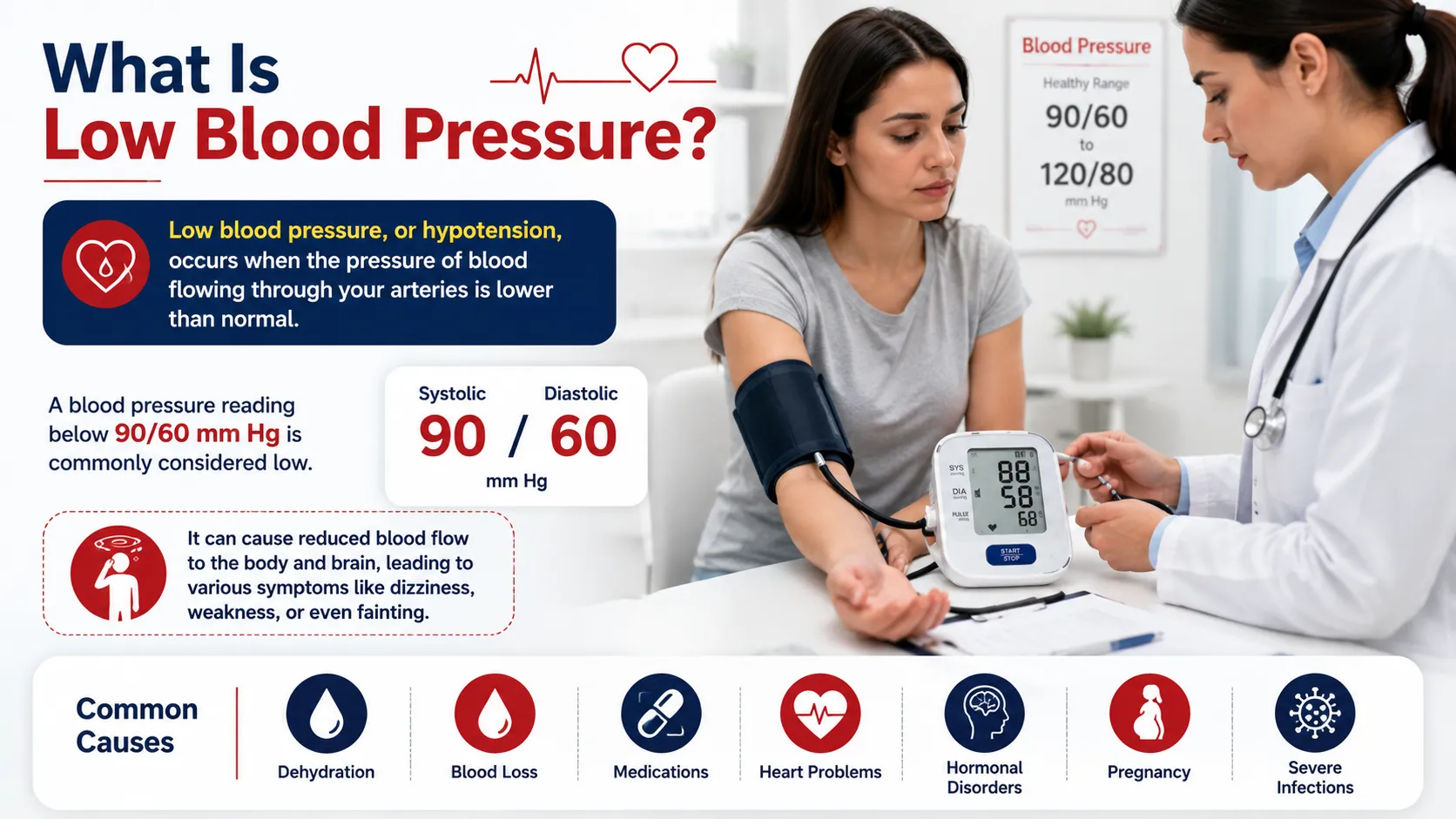
Low blood pressure, or hypotension, generally refers to blood pressure below 90/60 mm Hg. However, healthcare professionals consider symptoms and the person’s usual blood pressure as well as the reading itself. Blood pressure is recorded using two numbers:
For example, a reading of 88/58 mm Hg is below the commonly used 90/60 threshold. A person who regularly has a blood pressure of 90/60 and feels completely well may not require treatment.
On the other hand, someone whose pressure suddenly falls from their normal level may experience significant symptoms even if the final reading does not appear extremely low. This is why healthcare professionals treat the patient and the underlying cause rather than relying on one number alone.
The most recognizable low blood pressure symptoms are dizziness and lightheadedness, particularly when standing up. Symptoms develop when blood pressure becomes low enough to reduce adequate blood flow to the brain or other organs. Common symptoms include:
More concerning symptoms can include rapid, shallow breathing, cold or clammy skin, a weak, rapid pulse, and significant confusion. These may indicate severely reduced circulation and require urgent medical assessment. Symptoms should be taken particularly seriously when they develop suddenly rather than gradually.
Low blood pressure can feel different from person to person. A typical episode may begin with a lightheaded or “floating” sensation, especially after standing. Vision may briefly become blurred or dark. Some people feel weak, nauseated, unsteady, or unusually tired. In a more significant episode, the person may faint.
These symptoms may improve after sitting or lying down because this makes it easier for blood to reach the brain. Repeated episodes should not simply be dismissed as tiredness. They may be related to dehydration, medication, anemia, heart problems, hormonal conditions, or another underlying issue.
There is no single blood pressure number that is automatically dangerous for every person. Blood pressure below 90/60 mm Hg is generally classified as low, but some healthy adults naturally have readings near this level without symptoms. A low reading becomes more concerning when:
Even a sudden reduction of around 20 mm Hg in systolic pressure can produce dizziness or fainting in some people. Therefore, dangerously low blood pressure is better judged by symptoms, the size and speed of the drop, and the underlying cause rather than by a universal numerical cutoff.
Blood Pressure Situation | General Interpretation | What to Consider |
Around 120/80 mm Hg | Typical healthy adult range | Individual targets can vary |
Below 90/60 mm Hg | Common definition of hypotension | Consider symptoms and usual BP |
Around or below 90/60 without symptoms | May be normal for some people | Discuss persistent readings during routine care |
Sudden significant BP decrease | Can cause dizziness or fainting | Identify the reason for the drop |
Low BP with fainting, confusion, chest pain, or shock symptoms | Potentially serious | Seek urgent medical care |
The table is a general guide rather than a diagnostic tool. Your usual blood pressure, age, medications, pregnancy status, and health conditions all influence how a particular reading should be interpreted.
For women, blood pressure below 90/60 mm Hg is generally considered low, but there is no separate universal dangerous threshold based solely on sex.
A woman with a reading around 90/60 who feels normal may simply have naturally lower blood pressure. The same reading becomes more concerning if it represents a major change from her normal level or occurs with significant symptoms.
Medical assessment becomes particularly important when low blood pressure accompanies fainting, persistent dizziness, unusual weakness, chest pain, breathing problems, severe bleeding, dehydration, or confusion.
Pregnancy also changes how low blood pressure is evaluated because blood pressure commonly falls during the earlier stages of pregnancy.
The general definition is the same for men: a reading below 90/60 mm Hg is considered hypotension, but the seriousness depends on symptoms and circumstances. There is no universal blood pressure value that suddenly becomes dangerous for every man.
For example, an active, healthy man who regularly measures near 90/60 and has no symptoms may not have a medical problem. A man whose blood pressure suddenly drops and who develops dizziness, fainting, chest discomfort, or confusion needs much more urgent evaluation. The person’s normal baseline and the cause of the change are therefore essential.
Low blood pressure has many possible causes, ranging from temporary dehydration to serious medical conditions.
Vomiting, diarrhea, fever, excessive sweating, strenuous exercise, or simply not drinking enough fluid can reduce blood volume. When circulating blood volume falls, blood pressure can fall with it.
Significant internal or external bleeding reduces the amount of circulating blood. Severe blood loss can cause a dangerous fall in blood pressure and potentially lead to shock.
Several medications can lower blood pressure. These include some medicines used for hypertension, heart disease, neurological conditions, and depression.
If symptoms began after starting or changing medication, speak with the prescribing healthcare professional. Do not stop prescribed medication on your own because your blood pressure appears low.
A very slow or abnormal heartbeat, heart attack, heart failure, and heart valve disorders can interfere with the heart’s ability to maintain adequate circulation.
Certain endocrine disorders can affect blood pressure regulation. Diabetes, low blood sugar, thyroid disorders, and adrenal gland conditions may sometimes contribute to hypotension.
A severe infection can lead to sepsis and dangerously low blood pressure. A severe allergic reaction, or anaphylaxis, can also cause a rapid drop. Both situations are medical emergencies.
Blood vessels expand during pregnancy, which can cause blood pressure to decrease, particularly during the first half of pregnancy.
Orthostatic hypotension is a significant drop in blood pressure after moving from lying or sitting to standing. It is commonly defined as a decrease of at least 20 mm Hg in systolic pressure or 10 mm Hg in diastolic pressure after standing. A person may notice:
Dehydration, certain medications, prolonged bed rest, neurological disorders, and cardiovascular conditions can contribute. If dizziness begins after standing, sitting, or lying down, it can promptly reduce the risk of falling.
Low blood pressure symptoms in men are generally the same as those experienced by women. They can include dizziness, weakness, fatigue, nausea, blurred vision, poor concentration, and fainting.
Symptoms should not automatically be attributed to stress, lack of sleep, or physical exertion. Recurrent episodes may indicate dehydration, medication effects, anemia, cardiovascular problems, endocrine conditions, or other causes.
Men experiencing repeated fainting, dizziness during physical activity, chest pain, or shortness of breath should seek medical evaluation rather than attempting to manage the problem only with home remedies.
Low blood pressure during pregnancy may cause dizziness, lightheadedness, weakness, nausea, fatigue, and occasionally fainting.
Blood pressure commonly decreases during the first part of pregnancy because hormonal and circulatory changes cause blood vessels to expand. In many cases, this is temporary, and blood pressure later moves closer to its pre-pregnancy level.
Pregnant women can reduce mild dizziness by changing positions slowly, staying adequately hydrated, and avoiding prolonged standing when possible. However, significant symptoms should not automatically be assumed to be a normal part of pregnancy.
Seek medical advice for persistent or severe dizziness, repeated fainting, bleeding, significant abdominal pain, breathing difficulty, chest pain, or other concerning symptoms. Pregnancy-related low blood pressure should be assessed in the context of both maternal health and the pregnancy itself.
If you have a low reading but feel completely normal, one isolated measurement may not require emergency treatment. Recheck it correctly and consider discussing consistently low readings with a healthcare professional. If dizziness or lightheadedness develops:
Do not attempt to rapidly increase blood pressure with excessive salt, caffeine, supplements, or medication without medical guidance.
Low blood pressure becomes an emergency when it suggests the brain, heart, or other vital organs are not receiving adequate circulation. Seek emergency medical care for low blood pressure accompanied by:
Shock can develop when blood pressure becomes too low to maintain sufficient blood and oxygen delivery to vital organs. This is why symptoms can sometimes be more important than the number displayed on the blood pressure monitor.
Diagnosis begins with an accurate blood pressure measurement and medical history. A healthcare professional may ask:
Blood pressure may be checked while lying down and again after standing if orthostatic hypotension is suspected. Depending on the situation, further investigation may include blood tests, an electrocardiogram (ECG), heart imaging, or a tilt-table test. Testing is aimed not simply at confirming low blood pressure but at finding why it is happening.
Treatment for low blood pressure depends primarily on its cause. People who have naturally low blood pressure without symptoms often need no treatment.
When symptoms are present, treatment may involve correcting dehydration, treating an underlying disease, or reviewing medicines that contribute to hypotension.
Increasing fluid intake may help when dehydration or reduced blood volume is responsible. Severe dehydration may require intravenous fluids in a medical setting.
If a prescribed medicine is contributing to hypotension, a healthcare professional may adjust its dose or consider an alternative. Never change a prescription solely on the basis of a home blood pressure measurement without discussing it with the prescribing clinician.
Compression stockings or other compression garments may help some people with orthostatic hypotension by reducing blood pooling in the legs.
Some people with chronic hypotension may be advised to adjust their salt or fluid intake. This should be individualized. Increasing sodium is not appropriate for everyone, particularly people with certain heart, kidney, or blood pressure conditions. Smaller meals may also help people whose blood pressure falls after eating.
When persistent symptomatic hypotension does not improve adequately with lifestyle measures or treatment of the underlying cause, prescription medicines may sometimes be considered.
For example, healthcare professionals may use medicines such as midodrine or fludrocortisone in selected patients with orthostatic hypotension. These medications require professional supervision because raising blood pressure excessively can create additional health risks.
Mild or chronic hypotension can sometimes be managed with lifestyle measures after the underlying cause has been evaluated. Helpful measures may include drinking adequate fluids, changing position slowly, avoiding prolonged standing when it triggers symptoms, and following individualized dietary advice.
People prone to postural hypotension should also be cautious when getting out of bed. Sitting on the edge of the bed briefly before standing can help the cardiovascular system adjust. Regular symptoms still deserve medical attention. Home management should complement diagnosis rather than replace it.
Water can be particularly helpful when low blood pressure is related to dehydration. When your body loses too much fluid, circulating blood volume decreases. Replacing fluid helps restore volume and may improve blood pressure.
However, water will not correct every cause of hypotension. It cannot treat significant internal bleeding, severe infection, heart disease, or serious medication reactions. People who have been instructed to restrict fluids because of heart, kidney, or other medical conditions should follow their clinician’s advice.
Increasing sodium can raise blood pressure in some people, but extra salt is not a universal treatment for hypotension. A healthcare professional may recommend additional sodium for selected patients with chronic symptomatic hypotension. However, excessive sodium can be harmful to people with certain cardiovascular or kidney conditions.
Therefore, regularly experiencing low blood pressure is a reason to identify the cause rather than automatically adding large amounts of salt to meals.
Once serious causes have been excluded, several everyday habits may help reduce recurring symptoms:
A blood pressure diary can be especially useful. Recording readings at similar times each day and noting whether you were sitting, standing, exercising, or experiencing symptoms gives your healthcare professional more useful information than an isolated measurement.
Not every form of hypotension can be prevented because prevention depends on the underlying cause. When dehydration is responsible, adequate fluid intake may help. People with orthostatic hypotension can often reduce episodes by changing positions gradually and recognizing their early warning symptoms.
Medication-related hypotension may improve after a healthcare professional adjusts treatment. Preventing falls is particularly important for people who frequently become dizzy. Sit down as soon as symptoms appear instead of trying to walk through the episode.
Arrange a medical evaluation if you repeatedly experience dizziness, lightheadedness, fainting, unexplained weakness, or consistently low readings accompanied by symptoms. You should also speak with a healthcare professional if symptoms began after a new medication or dose change.
A clinician can determine whether the reading is normal for you or whether it points to dehydration, anemia, medication effects, heart disease, endocrine problems, or another condition requiring treatment.
Urgent evaluation is appropriate when symptoms are sudden or severe, especially when accompanied by fainting, chest pain, breathing problems, bleeding, confusion, or signs of shock.
Not necessarily. 90/60 mm Hg is around the commonly used threshold for low blood pressure, but some healthy people naturally have readings near this level without symptoms. Symptoms and changes from your normal blood pressure matter.
There is no universal dangerously low number for everyone. A sudden significant decrease in blood pressure or low blood pressure accompanied by fainting, confusion, chest pain, breathing difficulty, or signs of shock can be dangerous regardless of the exact reading.
Below 90/60 mm Hg is generally considered low, but there is no female-specific universal emergency threshold. Symptoms, pregnancy, bleeding, medications, and the person’s normal blood pressure must be considered.
The general low-blood-pressure threshold is also below 90/60 mm Hg for men. A sudden drop with severe dizziness, fainting, chest pain, confusion, or breathing difficulty needs prompt medical attention.
Dizziness, lightheadedness, weakness, blurred vision, nausea, and fatigue are common early symptoms. Some people first notice symptoms when they stand up quickly.
If you feel dizzy, sit or lie down to prevent a fall. Drink water if dehydration may be contributing, and you do not have a fluid restriction. Seek medical care if symptoms are severe, persistent, or recurrent.
Yes. When blood pressure becomes too low to maintain adequate blood flow to the brain, a person may faint or temporarily lose consciousness.
Blood pressure often falls during the first half of pregnancy because of normal circulatory changes. Persistent, severe, or symptomatic hypotension should still be discussed with a pregnancy care professional.
Yes. Dehydration reduces the amount of circulating fluid in the body and can lower blood pressure. Vomiting, diarrhea, fever, heavy sweating, and inadequate fluid intake can all contribute.
No. People with naturally low blood pressure and no symptoms may need no treatment. Symptomatic hypotension should be evaluated so its cause can be identified and treated appropriately.
Low blood pressure symptoms commonly include dizziness, lightheadedness, weakness, fatigue, blurred vision, nausea, and fainting. Although blood pressure below 90/60 mm Hg is generally considered hypotension, a low reading is not automatically dangerous. What matters most is your symptoms, how suddenly your blood pressure falls, and the underlying cause.
Treatment may involve improving hydration, adjusting daily habits, or addressing an underlying medical condition. Persistent low blood pressure can sometimes be associated with medications, dehydration, blood loss, heart problems, endocrine disorders, or pregnancy, so recurring symptoms should be properly evaluated.
If you frequently experience dizziness, weakness, fainting, or unusually low blood pressure readings, Dr. Asif Aziz Sahito, Consultant Physician in Karachi, can assess your symptoms, identify possible causes, and recommend an appropriate management plan.
Don’t ignore recurring low blood pressure symptoms. Book an appointment with Dr. Asif Aziz Sahito for professional medical evaluation and personalized guidance.