Subtotal $0.00


Medova is a convenience services to the adaptability, Spacious modern villa living room with centrally placed swimming pool blending indooroutdoor
Medova is a convenience services to the adaptability, Spacious modern villa living room with centrally placed swimming pool blending indooroutdoor
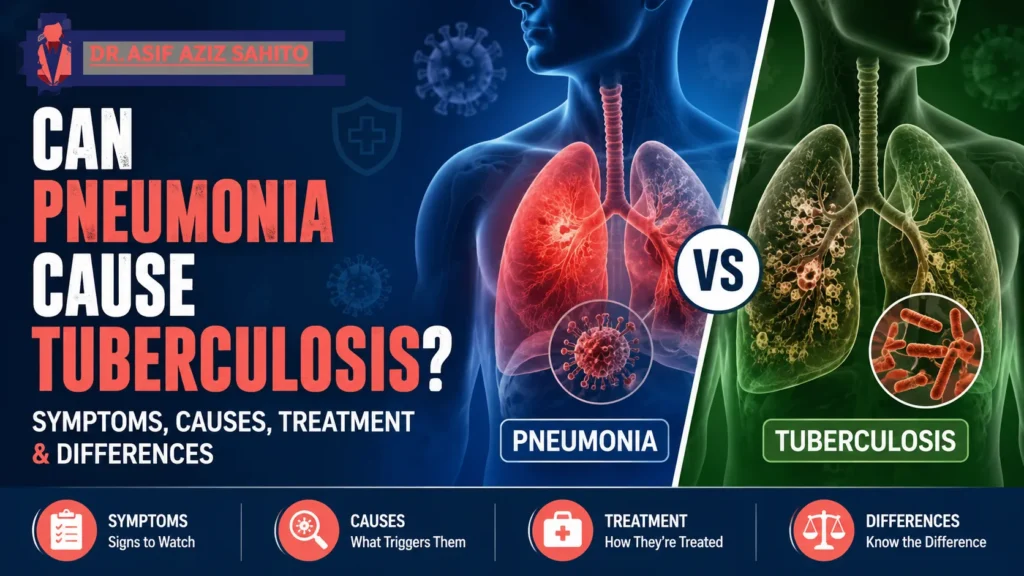
No, pneumonia cannot cause tuberculosis. Pneumonia is a general term for an infection or inflammation of the lungs. Many different germs can cause it.
Tuberculosis has one main cause: Mycobacterium tuberculosis. The bacteria can enter the body when a person breathes in air containing TB germs from someone with infectious TB of the lungs or throat.
So, pneumonia does not change into TB. However, a person may have both conditions. Someone may also have TB that was not diagnosed at first and develop symptoms that look like pneumonia.
Both diseases can affect the lungs. They can also cause some of the same symptoms, such as:
TB often develops more slowly. Its symptoms may stay mild for months. Pneumonia can have a faster onset, but this depends on its cause and the person’s health. This overlap means symptoms alone cannot always tell you whether you have pneumonia, TB, or another lung problem.
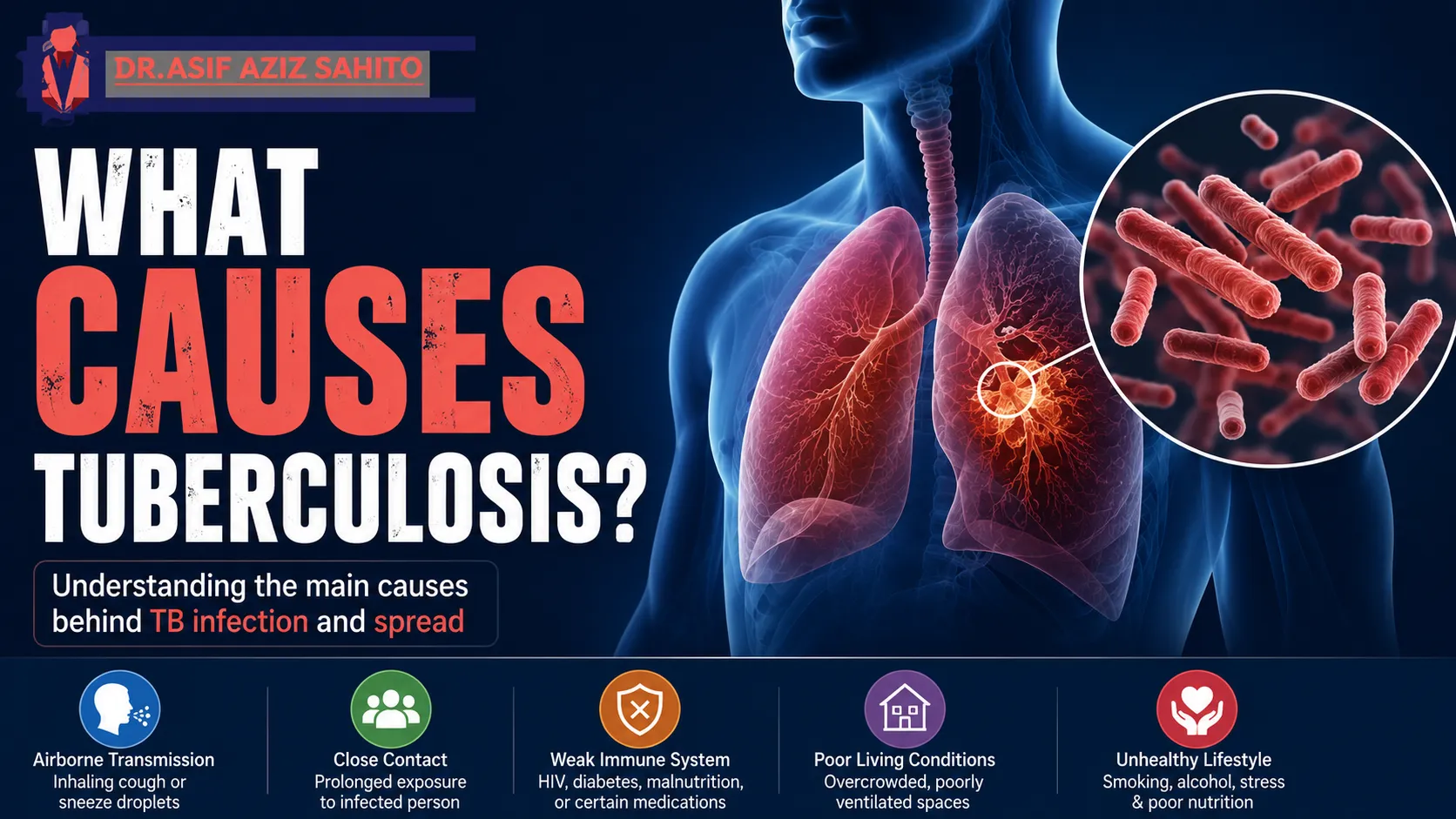
Tuberculosis is caused by Mycobacterium tuberculosis. TB usually spreads through the air. A person with active TB of the lungs or throat can release TB germs when they cough, speak, or sing. People nearby may breathe in the germs and become infected.
After infection, the bacteria may stay inactive in the body. This is called inactive TB or latent TB infection. Inactive TB does not cause the symptoms of active TB. It also does not spread to other people.
In some people, the bacteria later become active. This leads to active TB disease. Without treatment, active TB can become serious and may spread to other parts of the body.
Not everyone who gets TB bacteria develops active disease. Some conditions can increase the risk. These include:
WHO also lists some other conditions and exposures that can increase the risk of TB disease.
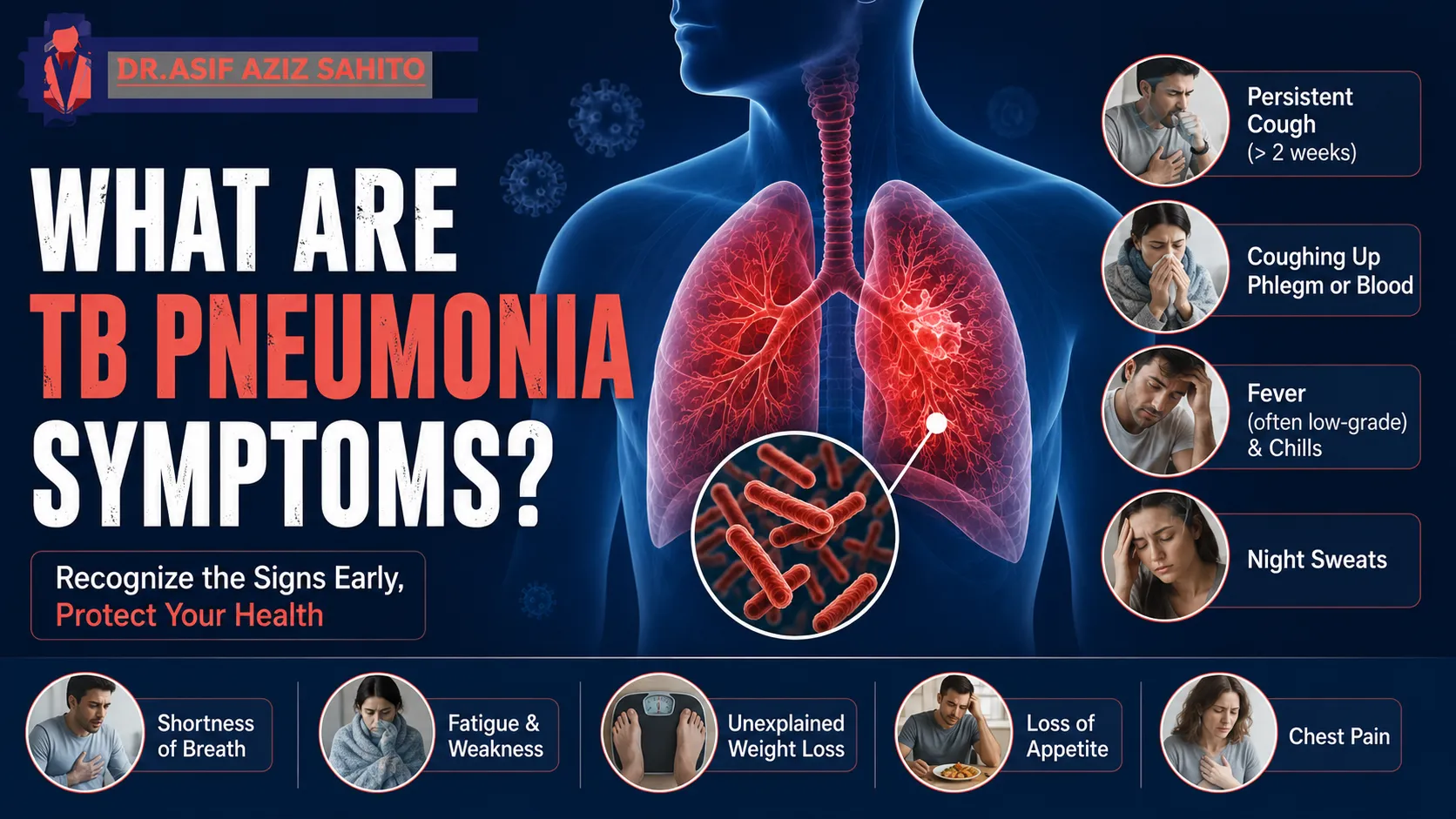
The term “TB pneumonia” is often used in searches to describe TB affecting the lungs with pneumonia-like changes. The more precise medical term is pulmonary tuberculosis or pulmonary TB. Common pulmonary TB symptoms include:
A cough lasting three weeks or longer is a common warning sign listed by the CDC. However, you do not need to wait three weeks before seeking medical advice if your symptoms are severe or you have TB risk factors.
Yes. TB symptoms can start slowly. Some people may feel tired or have a mild cough for a long time before they realize something is wrong.
WHO notes that TB symptoms may stay mild for many months. This can make early detection harder. A long lasting cough should not be ignored, especially when it comes with weight loss, night sweats, fever, or blood in the sputum.
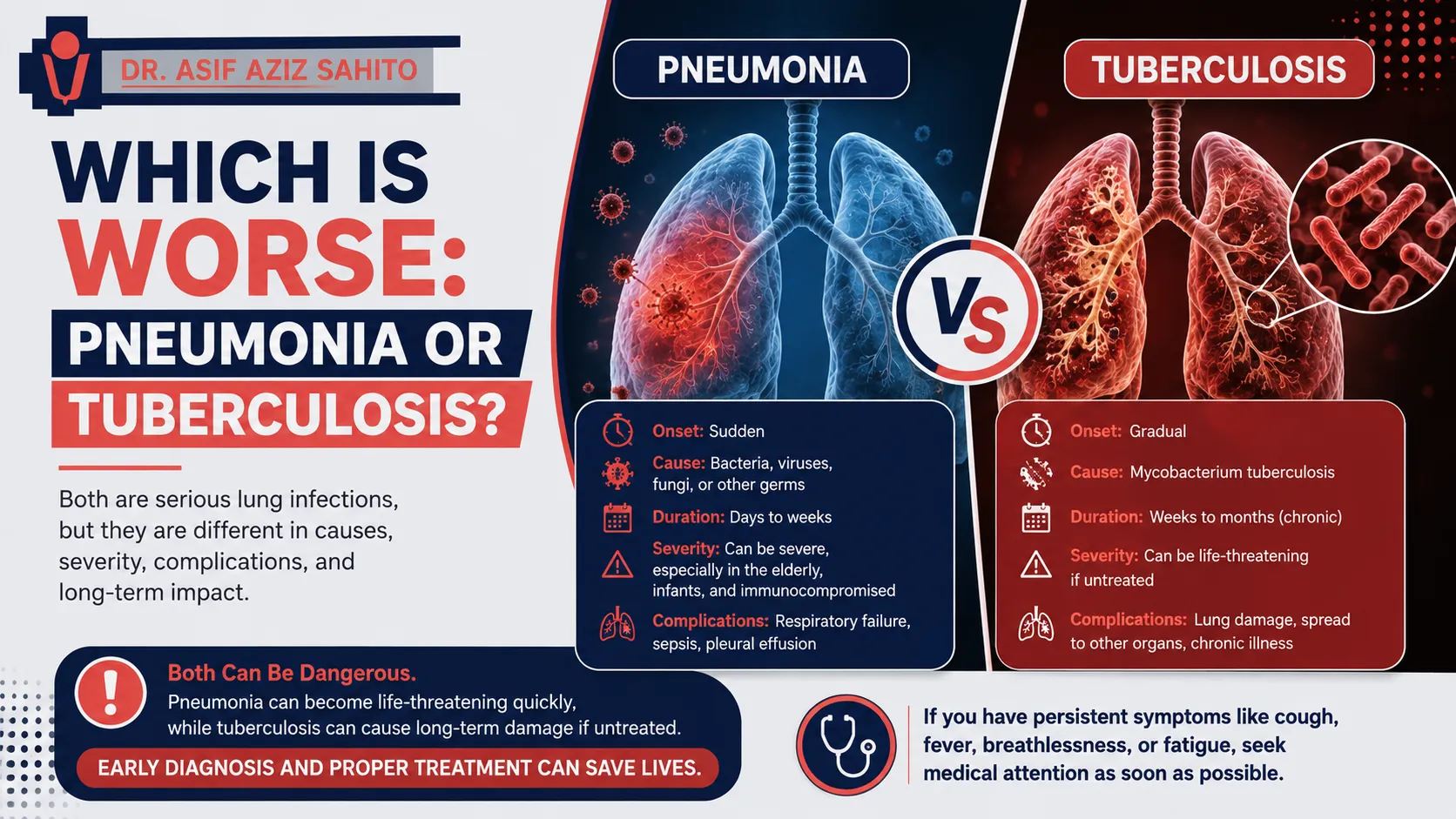
There is no simple answer to which is worse, pneumonia or tuberculosis. Both can become serious. The risk depends on the type of infection, the person’s age, overall health, and how quickly treatment starts. Severe pneumonia can cause serious breathing problems and other complications.
Untreated active TB can also cause severe illness. It can spread to other organs and may be fatal without proper treatment. TB has another important difference: active TB of the lungs or throat can spread from one person to another through the air.
So, rather than asking which disease is always worse, it is more useful to find out which condition is causing the symptoms.
Pneumonia and TB can look similar, but they are not the same disease.
Feature | Pneumonia | Tuberculosis |
What is it? | A lung infection or inflammation | An infectious disease caused by TB bacteria |
Main causes | Bacteria, viruses, fungi, and other germs | Mycobacterium tuberculosis |
How does it spread? | Depends on the cause | Mainly through the air from infectious lung or throat TB |
Onset | Often develops over a shorter period, depending on the cause | Often develops slowly |
Common symptoms | Cough, fever, chest pain, breathing problems | Persistent cough, fever, night sweats, weight loss, and chest pain |
Can it affect the lungs? | Yes | Yes, most often |
Can it affect other organs? | Some infections can cause complications outside the lungs | Yes, including the kidneys, spine, and brain |
Is it contagious? | Some causes are contagious | Active lung or throat TB can be contagious |
Treatment | Depends on the cause | Requires specific TB medicines |
Is it curable? | Many types are treatable and curable | TB disease is curable with proper treatment |
The key difference is simple: pneumonia describes a lung condition with many possible causes, while TB is a specific bacterial infection.
Yes. Tuberculosis and pneumonia can occur in the same person. A person with pulmonary TB can also develop another lung infection caused by a different germ. This can make diagnosis harder because the symptoms may overlap.
For example, a person may have a cough and fever. A chest X-ray may show lung changes. Those findings alone may not tell the doctor whether the problem is TB, pneumonia, or another condition.
If symptoms continue after a diagnosis of pneumonia, a doctor may need to review the diagnosis and consider other causes. TB may be one of the conditions considered when the symptoms and medical history suggest it.
Yes. TB disease is curable with the right treatment. WHO states that tuberculosis is preventable and curable. Treatment uses specific antibiotics, and the exact treatment plan depends on the type of TB and other patient factors.
Drug-susceptible TB is commonly treated with a combination of medicines. WHO lists rifampicin, isoniazid, pyrazinamide, and ethambutol among the most common TB medicines. Treatment is usually given for several months. Drug-resistant TB needs a different treatment plan.
The most important point is to take TB medicines exactly as prescribed. Do not stop treatment just because you start feeling better. Stopping treatment without medical advice can allow TB bacteria to survive and become resistant to medicines.
There is no single treatment called a “TB pneumonia medicine.” When TB is confirmed, treatment is aimed at the TB bacteria.
For drug-susceptible pulmonary TB, treatment usually involves a combination of anti-TB medicines. The treatment plan can vary based on the patient’s test results, age, other health conditions, previous TB treatment, and drug resistance. Common medicines include:
The treatment course commonly lasts several months. WHO currently states that TB medicines are generally taken daily for about 4 to 6 months for standard treatment, although the exact regimen can vary.
Do not self treat suspected TB with leftover antibiotics. If TB is possible, proper testing is important because ordinary pneumonia treatment may not treat TB.
Doctors do not diagnose pulmonary TB from symptoms alone. A medical evaluation may include:
WHO recommends rapid diagnostic tests as the initial tests for people who have signs and symptoms of TB. The CDC also notes that TB diagnosis may involve a chest X ray and laboratory tests on sputum. A positive TB infection test does not by itself prove that a person has active TB disease.
Not always. A TB blood test or skin test can show that a person has been infected with TB bacteria. More tests are needed to determine whether the infection is inactive or whether the person has active TB disease. This is an important difference.
Someone with inactive TB may have no symptoms and cannot spread TB to others. Without treatment, however, inactive TB can later become active disease.
If a person is not getting better after being treated for pneumonia, they should speak with a healthcare professional. It does not automatically mean they have TB.
There may be another reason for the symptoms. For example, the original infection may have a different cause, or a complication may have developed. A doctor may review:
TB testing may be considered when the symptoms or risk factors make it appropriate. This is especially important when a cough continues or when symptoms such as weight loss, night sweats, prolonged fever, or coughing up blood appear.
You should seek medical advice if you have a cough that does not go away or keeps getting worse. A TB evaluation may be especially important if you also have:
You should not wait for every symptom to appear. A person with TB may have only some of these symptoms.
Seek urgent medical care for serious breathing difficulty, severe chest pain, coughing up a large amount of blood, confusion, blue or gray lips, or other signs of a medical emergency. These symptoms can occur with severe lung disease and should not be managed at home.
Active pulmonary TB can be contagious. TB bacteria can spread through the air when a person with active TB of the lungs or throat coughs, speaks, or sings. The risk can be higher in indoor spaces with poor air circulation. However, inactive or latent TB is not contagious.
People with inactive TB have TB bacteria in their bodies, but the bacteria are not causing active disease. They do not have symptoms of active TB and cannot spread TB to others. If active pulmonary TB is suspected or confirmed, follow the infection control advice given by your healthcare team.
No. Tuberculosis is not a type of pneumonia. TB is an infectious disease caused by Mycobacterium tuberculosis. Pneumonia is a broader term for infection or inflammation of lung tissue. It can have many causes.
TB can cause changes in the lungs that look similar to some forms of pneumonia. This is why the two conditions may sometimes be confused. But they are still different conditions. The treatment is also different. TB requires a specific anti-TB treatment plan.
TB prevention starts with early testing and proper treatment. Useful steps include:
WHO recommends screening people at increased risk and using preventive treatment in people who may benefit from it.
If you live in Karachi and have symptoms that could be related to TB, the best first step is to seek assessment from a qualified healthcare professional or a recognized TB service. Do not rely on symptoms alone.
Ask about TB testing if you have a persistent cough, unexplained weight loss, night sweats, prolonged fever, coughing up blood, or known exposure to active TB.
Public health TB services may also be available through Pakistan’s TB control system. The exact testing location and services can change, so patients should confirm current availability before visiting. If you are already taking TB medicine, do not change the dose or stop treatment without speaking with your healthcare provider.
Here are the most important points to remember: