Subtotal $0.00


Medova is a convenience services to the adaptability, Spacious modern villa living room with centrally placed swimming pool blending indooroutdoor
Medova is a convenience services to the adaptability, Spacious modern villa living room with centrally placed swimming pool blending indooroutdoor
Still, suppose you are getting up, you feel weak and tired, your brain is not in focus, and you feel low all day long. You test your blood sugar level, and it is elevated. You are concerned about your future well-being and are confused by all the contradicting information on the internet.
Diabetes does not simply mean a number illustrated on a glucose meter, but it is a day-in, day-out fight that many millions of families have to deal with, as it will influence both their diets and overall well being.
It is a serious condition that is difficult to manage without constant attention and timely interventions, as well as professional guidance. Poor care may cause serious complications, hospitalization, and a lowering in the quality of life.
This is where professional care of diabetes is needed. Through systematic assistance, proper monitoring, and individually tailored advice, you will be in charge of your health.
This guide will cover it all: how to check your blood sugar and control what you eat, and how to fit in and stay in the right lifestyle and emotional support- so you can live a normal life with diabetes.
Diabetes is a disease with millions of victims across the world. When untreated, it may destroy the heart, kidneys, eyes, and nerves.
It happens that many individuals have a difficult time managing their blood sugar levels since they do not receive professional help, do not monitor their condition, or feel motivated to adhere to healthy lifestyles.
Diabetes management offers a systematic way of taking care of your illness every day. It is aimed at the prevention of complications, the optimization of the level of energy, and the quality of life.
With the right direction, patients also visit the hospital less, enjoy better mental health, and become stable in the long run.
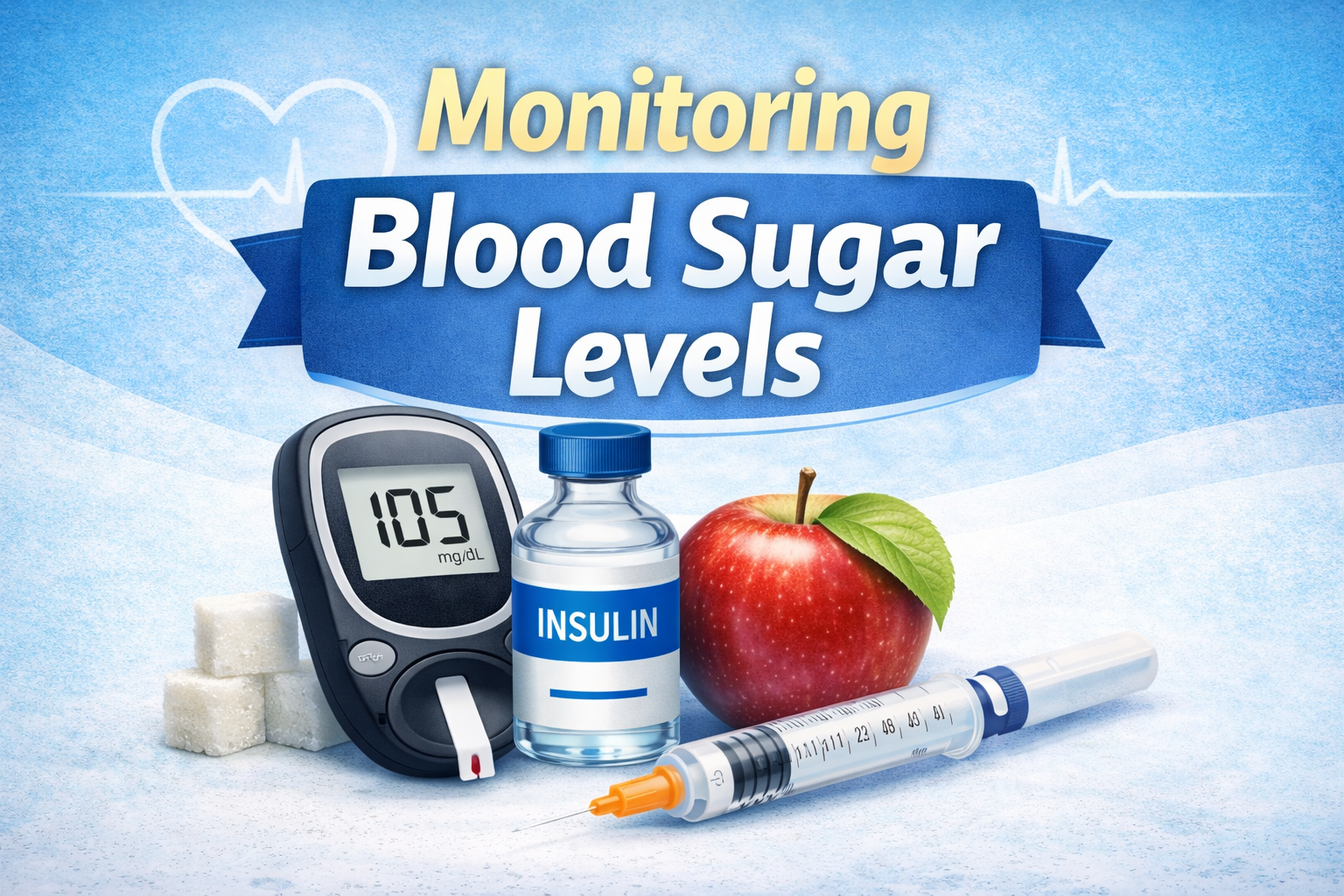
Monitoring of the level of blood sugar is among the most important facets of diabetes management.
Frequency: There is a possibility that a patient has to measure sugar several times per day, depending on the type of diabetes.
Devices: Glucometers, continuous glucose monitors, and applications are useful to track the readings effectively.
Interpretation: The knowledge of trends permits patients to make adjustments in terms of meals, physical exercise, and drugs.
Frequently checked patients will have an opportunity to intervene in time and minimize the risk of hazardous fluctuations or decreases in blood sugar levels.
Diet is essential in the management of diabetes. Unhealthy food may cause impulsive blood sugar changes.
Balanced Meals: Vegetables, whole grains, lean protein, and healthy fats.
Portion Control: Do not overeat even the healthy foods. Limit Soda and Snacks with a lot of sugar.
Medical treatment of the diabetes condition usually involves the services of dietitians who assist in designing a specific meal plan to maintain a normal blood sugar level, coupled with nutrient sufficiency.
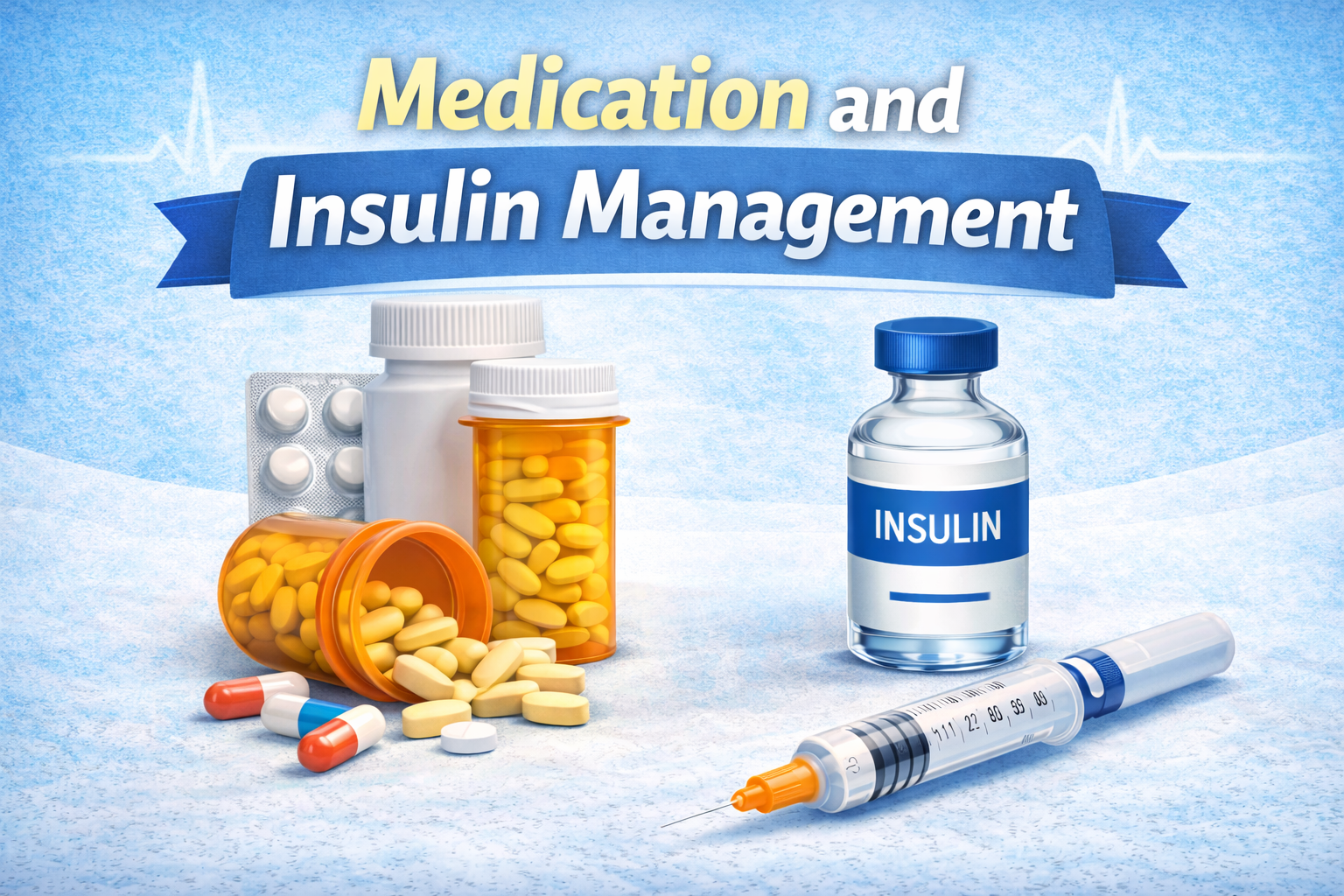
A lot of the patients need to be medicated or insulinized to control their sugar levels. They must be administered properly.
Medication Adherence: Consistency of taking medicine is important.
Insulin Dosage: This should be determined depending on meals, activity, and glucose levels.
Professional Advice: The frequent consults limit mistakes and complications.
Diabetes care facilitates effective and safe adherence to treatment plans by patients.
Daily activity:Diabetes requires management. Exercise enhances the sensitivity of insulin, increases energy, and aids in weight control.
Aerobic Activities: Walking, swimming, and cycling are good.
Strength Training: Strengthens muscles and aids in controlling blood sugar.
Regularity: Even moderate exercise every day has long-term effects.
Professional instruction can be used to make exercises safe, particularly among patients who have complications such as neuropathy and heart disease.

Living with diabetes is emotionally exhausting and stressful. Management efforts may be affected by anxiety, frustration, or depression.
Counseling: (Professional) counseling offers coping mechanisms.
Support Groups: It is better to share with others to overcome isolation.
Motivation: Frequent encouragement is used to keep the patients on their healthy habits.
Managing diabetes, it is concerned with both the physical and emotional well being of the patients.
Correct treatment of diabetes contributes to avoiding severe health problems:
Heart Disease: Checking blood and cholesterol.
Kidney Health: Testing of kidney function regularly.
Eye Health: Annual eye checkups to avoid loss of vision.
Nerve Damage: Foot care and checkups every day.
The long-term complications could be dramatically lessened with the help of early intervention, which will contribute to a high-quality life.

Home support may be very effective with patients who have a problem with daily care.
Checking Support: Experts assist in monitoring the readings of glucose correctly.
Preparing meals: Diet-conforming meals lessen the chance of spikes.
Medication Support: Reminders and oversight are provided in order to make sure that medication is taken.
Exercise Instructions: home-based, safe, and tailored exercise programs.
Home based diabetes care incorporates both convenience and professional monitoring, thus easier for the family to manage the condition by the family.
It is important to pick the appropriate service. Families should consider:
Qualifications: Certified diabetes educators, nurses, and nutritionists.
Experience: D demonstrated experience in diabetes management.
Communication: Guidance and patient education.
Reputation: Reviews, testimonials, and success stories.
Quality diabetes care fosters credibility, offers safety, and offers quantifiable health gains.
Self-management tools are used to manage diabetes:
Applications in mobile devices monitor glucose, meals, and exercise.
Teleconsultation decreases the clinic attendance.
Remote monitoring enables physicians to modify interventions based on real-time information.
Efficiency, accuracy, and convenience for patients are enhanced using technology.
Although professional diabetes care might appear to be an investment, it will save money in the long run by:
Reducing hospital visits
Avoiding the serious complications.
Enhancing productivity and energy supply.
Structured care is cheap and beneficial to the health of families in the long term.
Diabetes care is the professional assistance that helps people control the level of sugar in the blood, eat healthy, take medications correctly, and stay healthy to avoid complications.
Correct management of diabetes can help in mitigating severe complications like heart disease, kidney problems, nerve damage, and loss of sight. It is also very useful in preserving energy, concentration, and life quality.
Diabetes care can be provided by certified nurses, diabetes educators, dietitians, and trained caregivers. Under the guidance of the professional, family members may also help.
Diabetes care includes:
Blood sugar monitoring
Insulin and drug control.
Eating advice and nutrition schedule.
Exercise recommendations
Psychological and emotional assistance.
Complication prevention
You might have to be professionally attended to in case:
You are not good at sugar management.
You were recently diagnosed
You need insulin or drugs.
You would not like to end up in complications.
You require assistance with diet and lifestyle modification.
Yes. Home diabetes care is secure when it is provided by trained specialists, who observe the standards of hygiene, regularly check health conditions, and communicate with doctors effectively.
Absolutely. Structured diabetes care is beneficial to elderly patients because it guarantees medication compliance, nutrition control, mobility assistance, and constant health check-up.
Blood sugar monitoring is dependent on diabetes and the treatment regimen. There are those patients who require various checks per day, and other patients have a scheduled routine as recommended by the healthcare provider.
Healthy lifestyle modifications, including a well-balanced diet, exercise, and stress management, enhance insulin sensitivity, minimize blood sugar levels, and promote good health.
Qualified and trained specialists.
Good or positive reviews or testimonials.
Transparent communication
Personalized care plans
Preparedness for emergency response.
Using a competent provider will be a guarantee of effective, safe, and consistent management of diabetes.
Diabetes care is not just about medication; it is about a holistic system of support, comprising monitoring, nutrition, exercise, emotional guidance, and professional supervision.
Patients who adhere to a systematic care regimen have good health, reduced complications, and their life is enhanced.Families would have a sense of security because they know that the ones they love are in the hands of well-trained personnel.
Professional care of diabetes is a safe, effective, and confident investment today that will guarantee the long-term management of this chronic illness.